Goodman Cancer Institute, McGill University, Montréal, Québec, Qc, H3A 1A3, Canada; Department of Medicine, McGill University, Montréal, Québec, Qc, H3A 1A3, Canada.
Goodman Cancer Institute, McGill University, Montréal, Québec, Qc, H3A 1A3, Canada; Canadian Center for Computational Genomics, McGill University, Montréal, Québec, Qc, H3A 1A3, Canada.
Redox Biol. 2024 Sep;75:103276. doi: 10.1016/j.redox.2024.103276. Epub 2024 Jul 20.
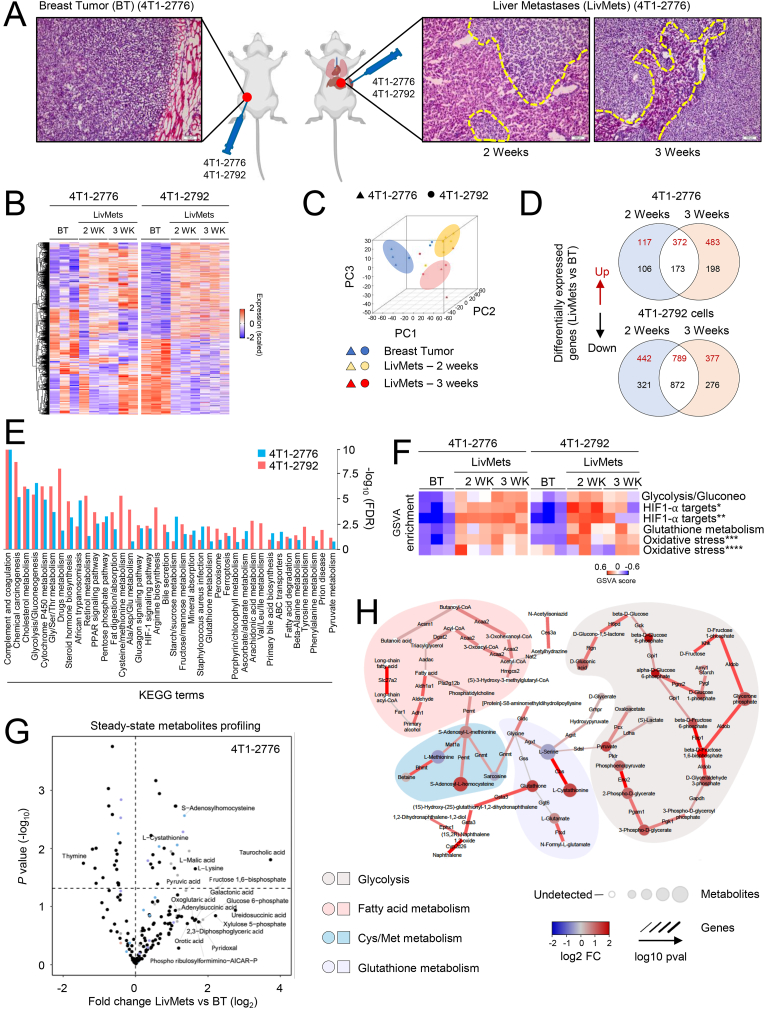
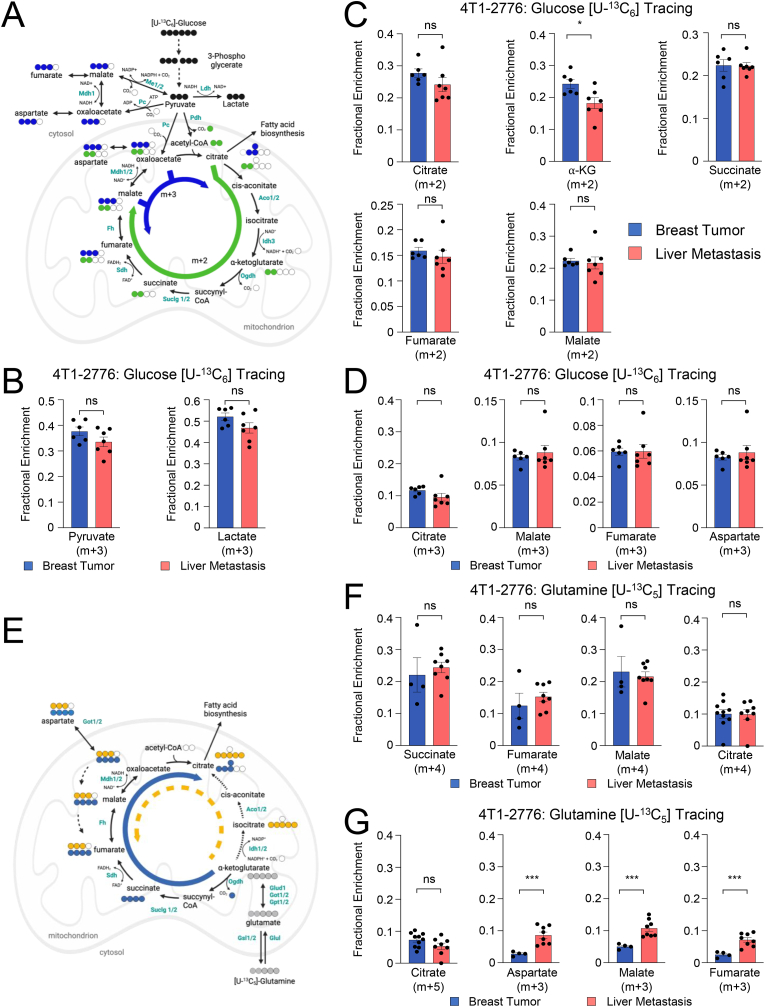
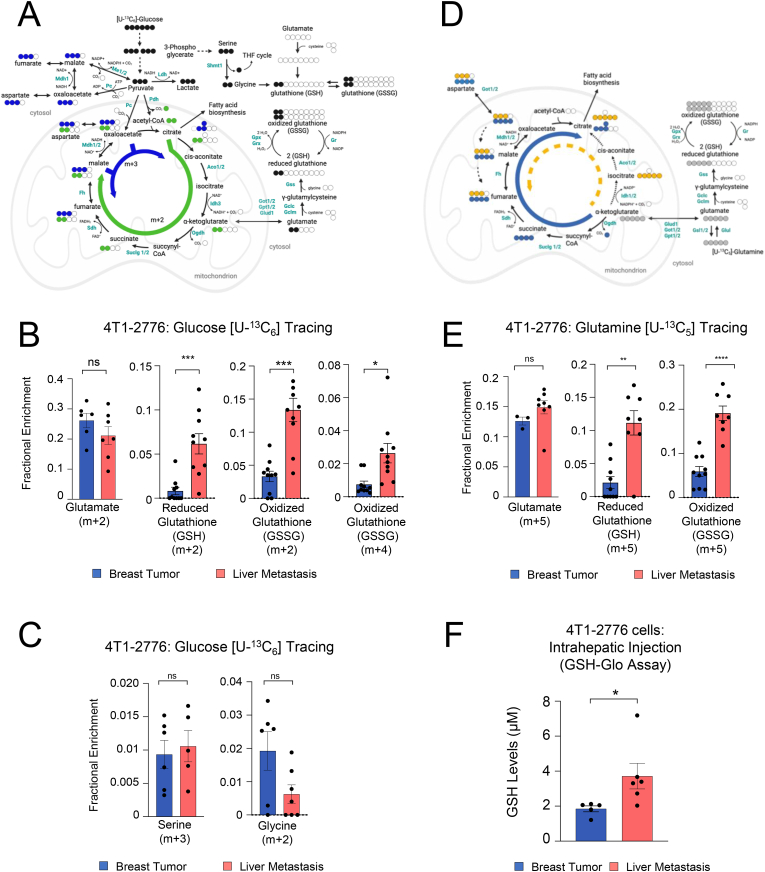
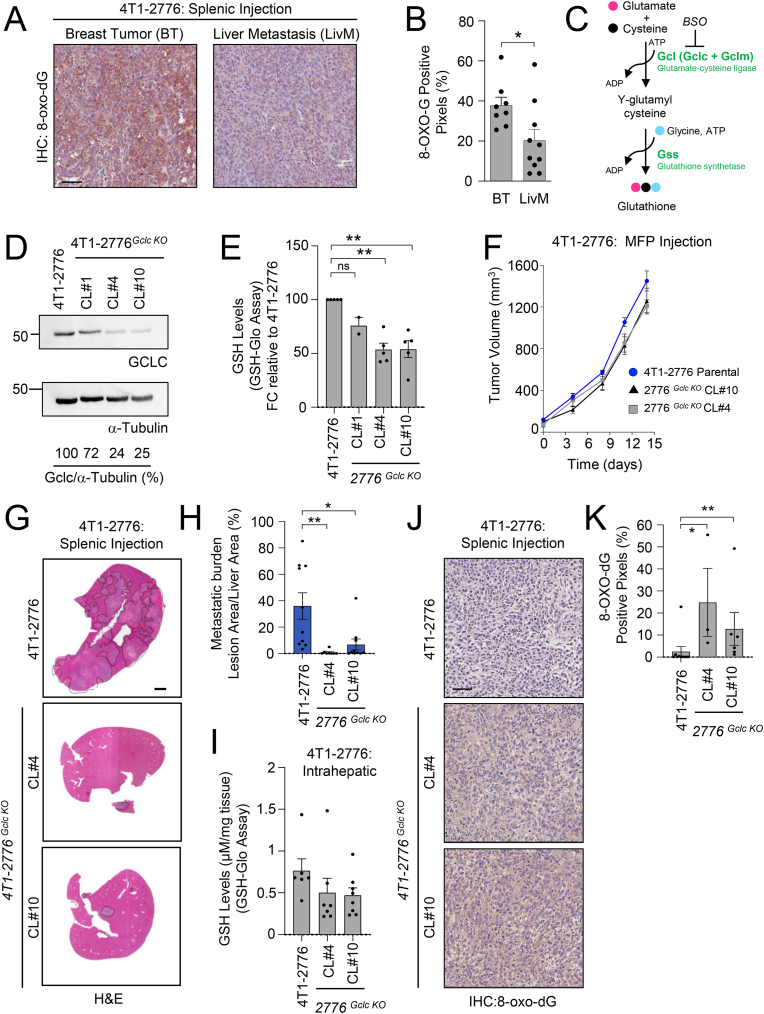
Metabolic rewiring is essential for tumor growth and progression to metastatic disease, yet little is known regarding how cancer cells modify their acquired metabolic programs in response to different metastatic microenvironments. We have previously shown that liver-metastatic breast cancer cells adopt an intrinsic metabolic program characterized by increased HIF-1α activity and dependence on glycolysis. Here, we confirm by in vivo stable isotope tracing analysis (SITA) that liver-metastatic breast cancer cells retain a glycolytic profile when grown as mammary tumors or liver metastases. However, hepatic metastases exhibit unique metabolic adaptations including elevated expression of genes involved in glutathione (GSH) biosynthesis and reactive oxygen species (ROS) detoxification when compared to mammary tumors. Accordingly, breast-cancer-liver-metastases exhibited enhanced de novo GSH synthesis. Confirming their increased capacity to mitigate ROS-mediated damage, liver metastases display reduced levels of 8-Oxo-2'-deoxyguanosine. Depletion of the catalytic subunit of the rate-limiting enzyme in glutathione biosynthesis, glutamate-cysteine ligase (GCLC), strongly reduced the capacity of breast cancer cells to form liver metastases, supporting the importance of these distinct metabolic adaptations. Loss of GCLC also affected the early steps of the metastatic cascade, leading to decreased numbers of circulating tumor cells (CTCs) and impaired metastasis to the liver and the lungs. Altogether, our results indicate that GSH metabolism could be targeted to prevent the dissemination of breast cancer cells.
代谢重编程对于肿瘤生长和转移进展至关重要,但对于癌细胞如何根据不同的转移微环境来改变其获得的代谢程序,人们知之甚少。我们之前已经表明,肝转移乳腺癌细胞采用了一种固有代谢程序,其特征是 HIF-1α 活性增加和对糖酵解的依赖。在这里,我们通过体内稳定同位素示踪分析(SITA)证实,当生长为乳腺肿瘤或肝转移时,肝转移乳腺癌细胞保留糖酵解特征。然而,与乳腺肿瘤相比,肝转移具有独特的代谢适应,包括参与谷胱甘肽(GSH)生物合成和活性氧(ROS)解毒的基因表达上调。因此,乳腺癌-肝转移瘤表现出增强的从头 GSH 合成。证实它们具有增强的减轻 ROS 介导的损伤的能力,肝转移瘤显示出 8-Oxo-2'-脱氧鸟苷的水平降低。谷氨酰胺半胱氨酸连接酶(GCLC),即谷胱甘肽生物合成的限速酶的催化亚基的耗竭,强烈降低了乳腺癌细胞形成肝转移的能力,支持这些独特的代谢适应的重要性。GCLC 的缺失也影响了转移级联的早期步骤,导致循环肿瘤细胞(CTC)数量减少,并损害了向肝脏和肺部的转移。总之,我们的结果表明,GSH 代谢可能成为预防乳腺癌细胞扩散的靶点。