Desai Deesha D, Nohria Ambika, Lo Sicco Kristen I, Shapiro Jerry
Department of Dermatology, University of Pittsburgh School of Medicine, Pittsburgh, USA.
The Ronald O. Perelman Department of Dermatology, NYU Grossman School of Medicine, New York, USA.
Cureus. 2024 Jun 25;16(6):e63120. doi: 10.7759/cureus.63120. eCollection 2024 Jun.
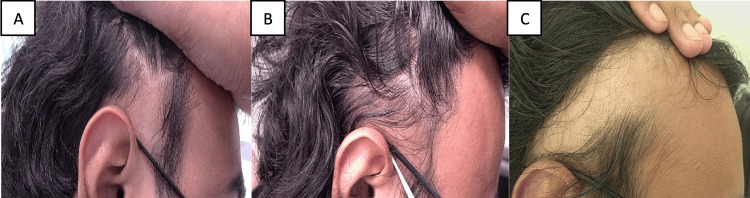
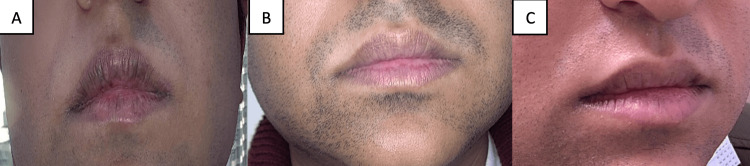
Alopecia areata (AA) has long been considered a challenging clinical condition, with dermatologists traditionally employing corticosteroids and immunosuppressants in search of effective solutions. The introduction of Janus kinase inhibitors (JAKi), specifically the Food and Drug Administration (FDA) approval of baricitinib, marked a significant breakthrough in the treatment of AA. Clinical trials have shown promising results with baricitinib, and reports of relapse after initial success are scarce. We present a unique case of a 30-year-old male with severe patch-type AA who initially responded well to baricitinib treatment but later experienced a relapse despite continued treatment.
斑秃(AA)长期以来一直被认为是一种具有挑战性的临床病症,皮肤科医生传统上使用皮质类固醇和免疫抑制剂来寻找有效的解决方案。Janus激酶抑制剂(JAKi)的引入,特别是美国食品药品监督管理局(FDA)批准巴瑞替尼,标志着斑秃治疗取得了重大突破。临床试验表明巴瑞替尼取得了令人鼓舞的结果,而且在初步成功后复发的报告很少。我们报告了一例独特的病例,一名30岁的男性患有严重的斑块型斑秃,他最初对巴瑞替尼治疗反应良好,但后来尽管继续治疗仍出现了复发。