School of Medicine, Nankai University, Tianjin, China.
Tianjin Key Laboratory of Human Development and Reproductive Regulation, Tianjin, China.
Front Immunol. 2024 Jul 11;15:1416990. doi: 10.3389/fimmu.2024.1416990. eCollection 2024.
Postpartum hemorrhage (PPH) is the primary cause of maternal mortality globally, with uterine atony being the predominant contributing factor. However, accurate prediction of PPH in the general population remains challenging due to a lack of reliable biomarkers.
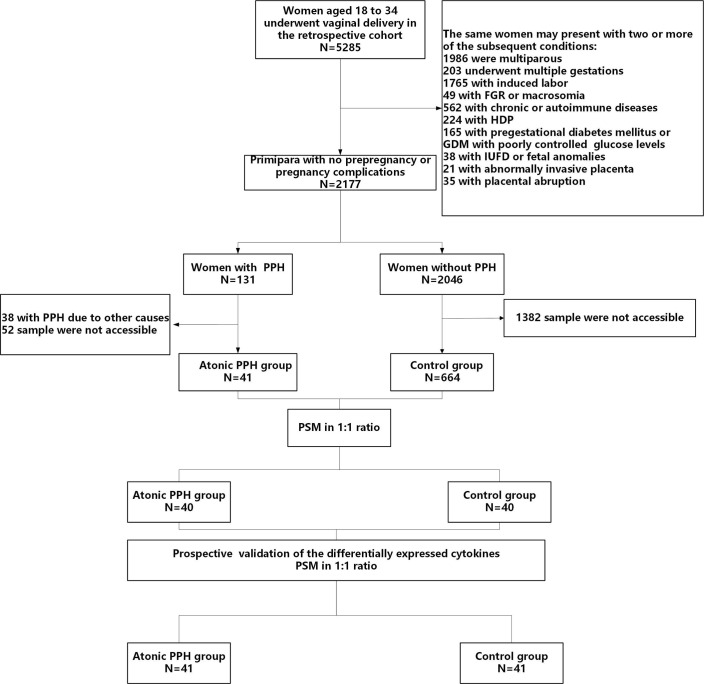
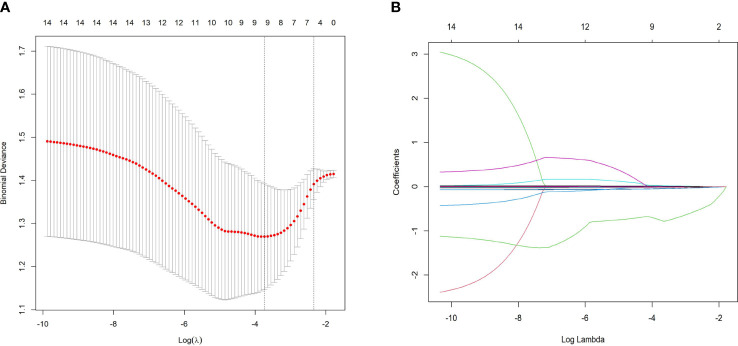
Using retrospective cohort data, we quantified 48 cytokines in plasma samples from 40 women diagnosed with PPH caused by uterine atony. We also analyzed previously reported hemogram and coagulation parameters related to inflammatory response. The least absolute shrinkage and selection operator (LASSO) and logistic regression were applied to develop predictive models. Established models were further evaluated and temporally validated in a prospective cohort.
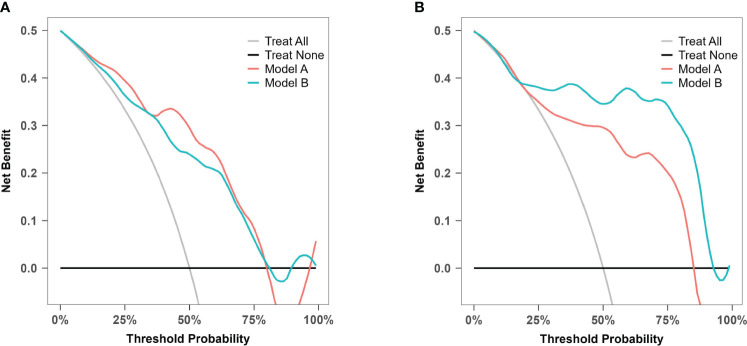
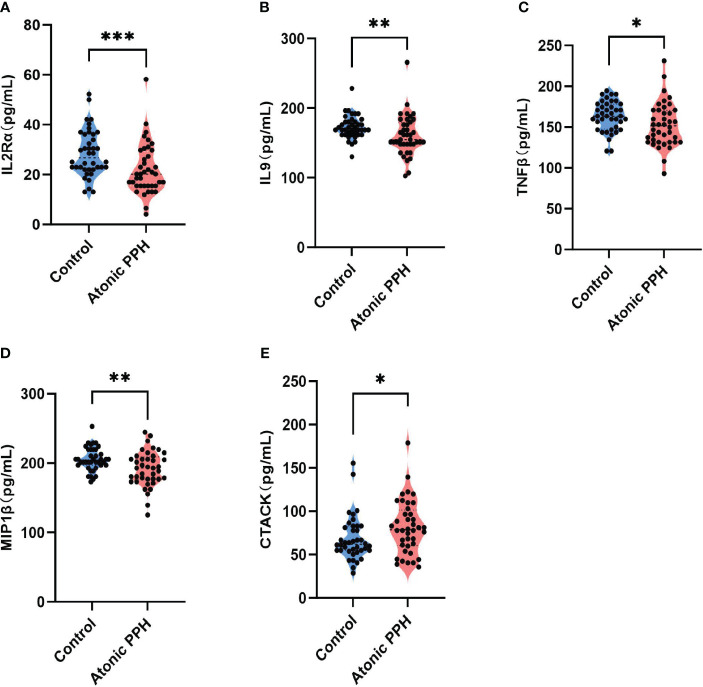
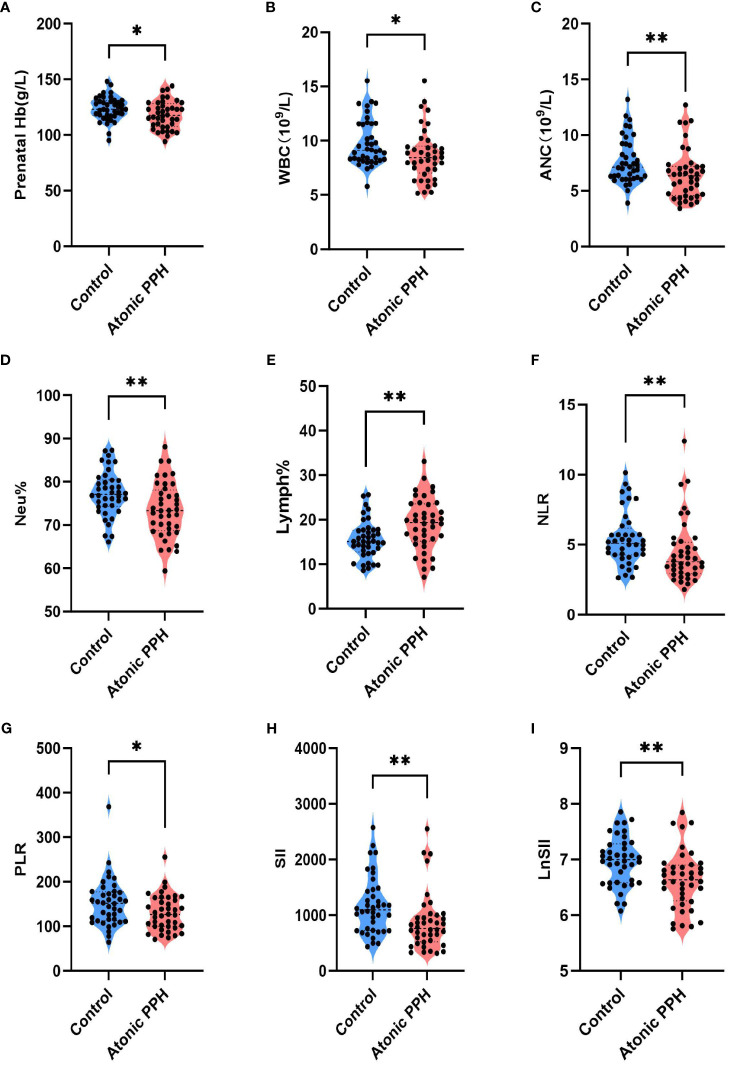
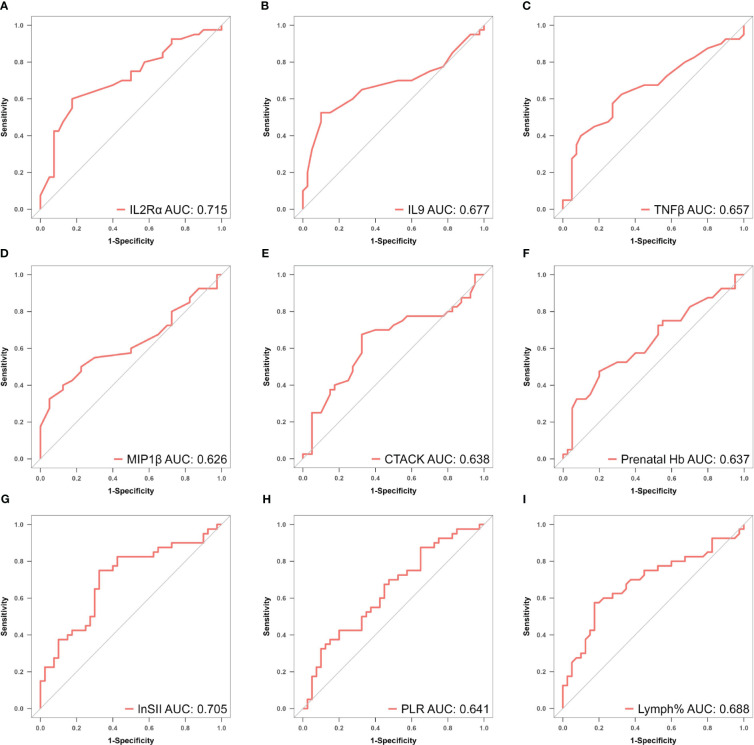
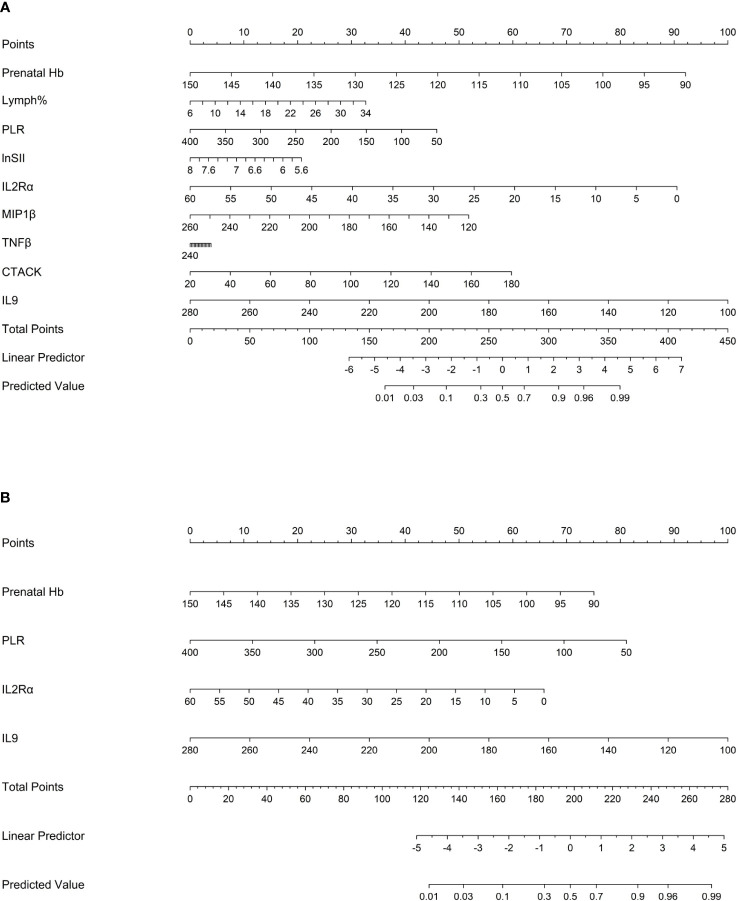
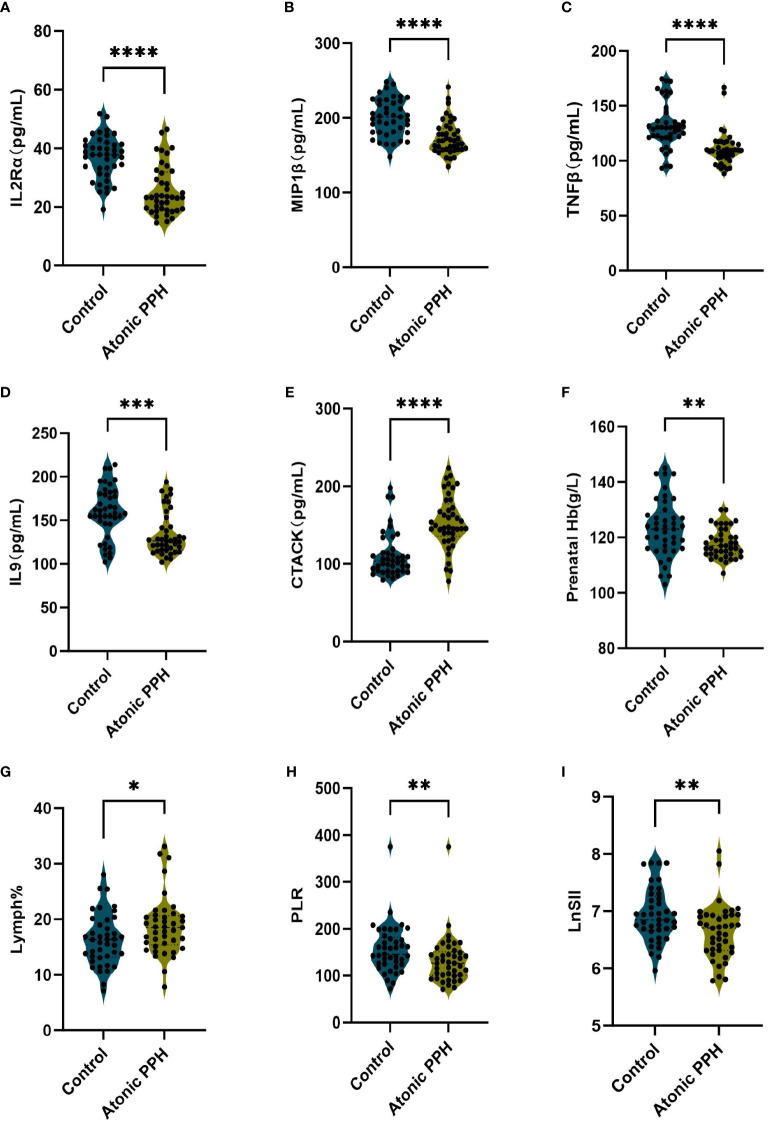
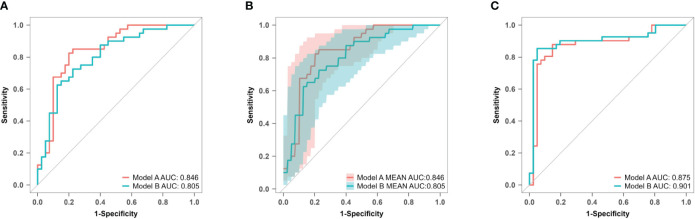
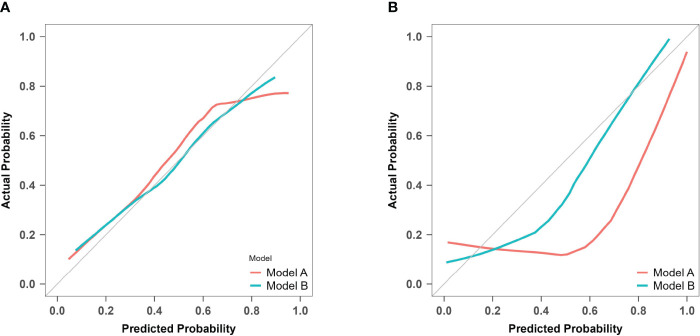
Fourteen factors showed significant differences between the two groups, among which IL2Rα, IL9, MIP1β, TNFβ, CTACK, prenatal Hb, Lymph%, PLR, and LnSII were selected by LASSO to construct predictive model A. Further, by logistic regression, model B was constructed using prenatal Hb, PLR, IL2Rα, and IL9. The area under the curve (AUC) values of model A in the training set, internal validation set, and temporal validation set were 0.846 (0.757-0.934), 0.846 (0.749-0.930), and 0.875 (0.789-0.961), respectively. And the corresponding AUC values for model B were 0.805 (0.709-0.901), 0.805 (0.701-0.894), and 0.901 (0.824-0.979). Decision curve analysis results showed that both nomograms had a high net benefit for predicting atonic PPH.
We identified novel biomarkers and developed predictive models for atonic PPH in women undergoing "low-risk" vaginal delivery, providing immunological insights for further exploration of the mechanism underlying atonic PPH.
产后出血(PPH)是全球产妇死亡的主要原因,其中子宫收缩乏力是主要的致病因素。然而,由于缺乏可靠的生物标志物,预测一般人群中的 PPH 仍然具有挑战性。
我们使用回顾性队列数据,对 40 名因子宫收缩乏力导致 PPH 的妇女的血浆样本中的 48 种细胞因子进行了定量分析。我们还分析了先前报道的与炎症反应相关的血常规和凝血参数。应用最小绝对收缩和选择算子(LASSO)和逻辑回归来建立预测模型。在一个前瞻性队列中进一步评估和验证了已建立的模型。
两组之间有 14 个因素显示出显著差异,其中 IL2Rα、IL9、MIP1β、TNFβ、CTACK、产前 Hb、Lymph%、PLR 和 LnSII 通过 LASSO 被选择用于构建预测模型 A。此外,通过逻辑回归,使用产前 Hb、PLR、IL2Rα 和 IL9 构建了模型 B。模型 A 在训练集、内部验证集和时间验证集中的曲线下面积(AUC)值分别为 0.846(0.757-0.934)、0.846(0.749-0.930)和 0.875(0.789-0.961)。模型 B 的相应 AUC 值分别为 0.805(0.709-0.901)、0.805(0.701-0.894)和 0.901(0.824-0.979)。决策曲线分析结果表明,两个列线图对预测宫缩乏力性 PPH 都具有较高的净收益。
我们发现了新的生物标志物,并为接受“低危”阴道分娩的妇女开发了宫缩乏力性 PPH 的预测模型,为进一步探讨宫缩乏力性 PPH 的发病机制提供了免疫学见解。