Immunology Outpatient Clinic, Vienna, Austria.
Doctoral School Molecular Biology and Biochemistry, Institute of Molecular Biosciences, University of Graz, Graz, Austria.
Front Immunol. 2024 Jul 11;15:1423141. doi: 10.3389/fimmu.2024.1423141. eCollection 2024.
Trichothiodystrophy-1 (TTD1) is an autosomal-recessive disease and caused by mutations in , a gene coding for a subunit of the TFIIH transcription and nucleotide-excision repair (NER) factor. In almost half of these patients infectious susceptibility has been reported but the underlying molecular mechanism leading to immunodeficiency is largely unknown.
The aim of this study was to perform extended molecular and immunological phenotyping in patients suffering from TTD1.
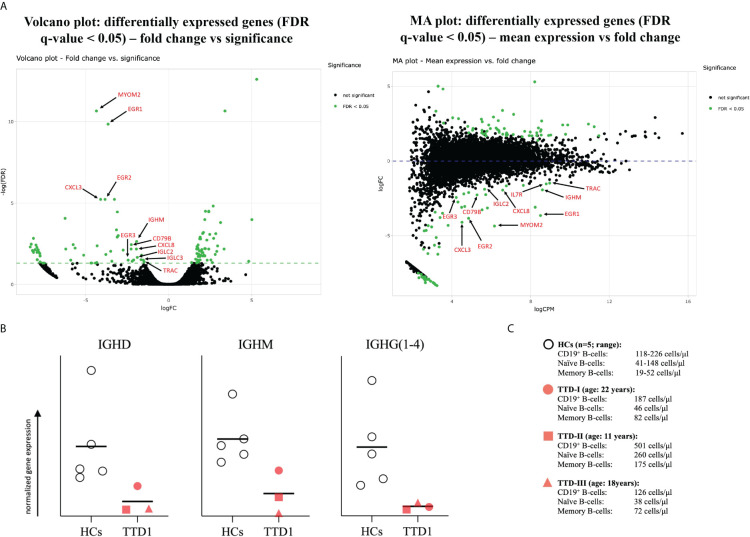
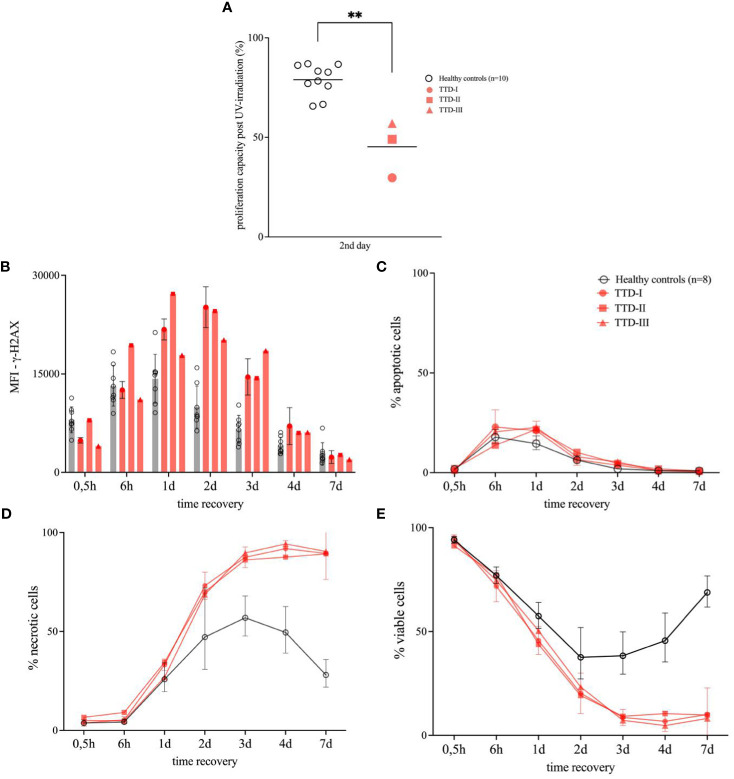
Cellular immune phenotype was investigated using multicolor flow cytometry. DNA repair efficiency was evaluated in UV-irradiation assays. Furthermore, early BCR activation events and proliferation of TTD1 lymphocytes following DNA damage induction was tested. In addition, we performed differential gene expression analysis in peripheral lymphocytes of TTD1 patients.
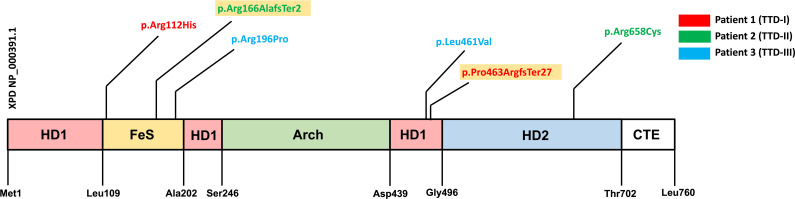
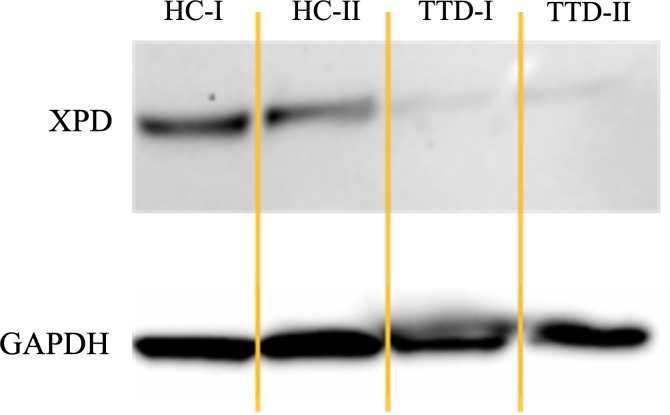
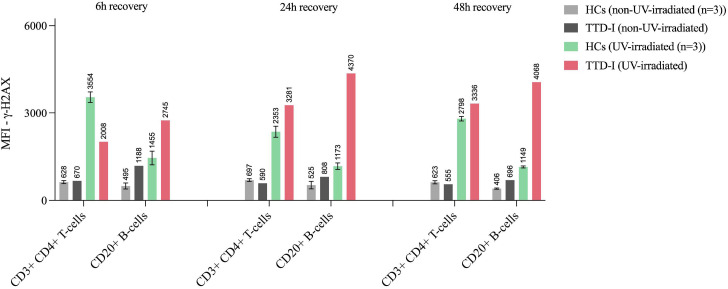
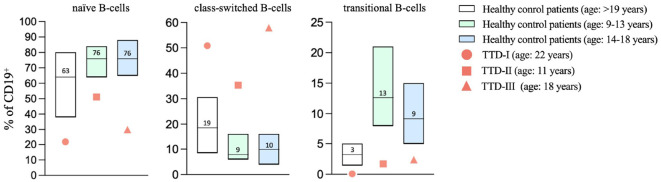
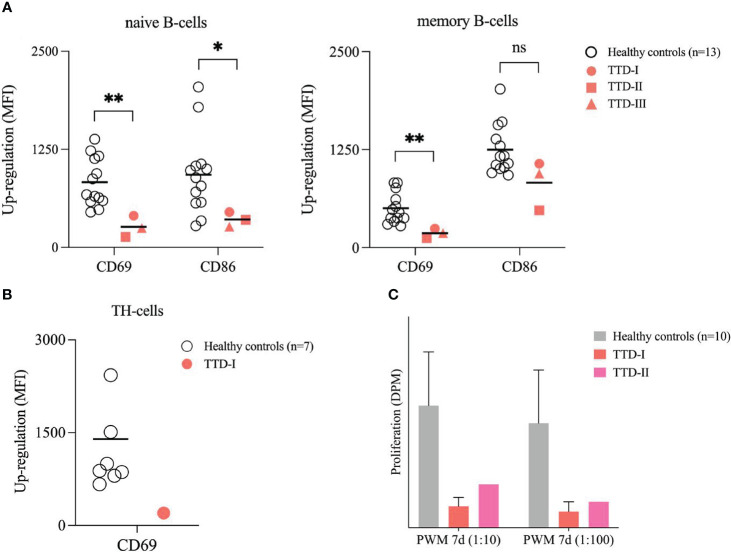
We investigated three unrelated TTD1 patients who presented with recurrent infections early in life of whom two harbored novel mutations and the third patient is a carrier of previously described pathogenic mutations. Hypogammaglobulinemia and decreased antibody responses following vaccination were found. TTD1 B-cells showed accumulation of γ-H2AX levels, decreased proliferation activity and reduced cell viability following UV-irradiation. mRNA sequencing analysis revealed significantly downregulated genes needed for B-cell development and activation. Analysis of B-cell subpopulations showed low numbers of naïve and transitional B-cells in TTD1 patients, indicating abnormal B-cell differentiation .
In summary, our analyses confirmed the pathogenicity of novel mutations and show that deficiency is associated with antibody deficiency most likely due to altered B-cell differentiation resulting from impaired BCR-mediated B-cell activation and activation-induced gene transcription.
先天性毛发硫营养不良 1 型(TTD1)是一种常染色体隐性疾病,由编码 TFIIH 转录和核苷酸切除修复(NER)因子亚单位的 基因突变引起。在这些患者中,几乎有一半报告了感染易感性,但导致免疫缺陷的潜在分子机制在很大程度上尚不清楚。
本研究旨在对 TTD1 患者进行扩展的分子和免疫学表型分析。
使用多色流式细胞术研究细胞免疫表型。在紫外线照射试验中评估 DNA 修复效率。此外,还测试了 TTD1 淋巴细胞在 DNA 损伤诱导后的早期 BCR 激活事件和增殖。此外,我们还对 TTD1 患者的外周淋巴细胞进行了差异基因表达分析。
我们研究了 3 名无关联的 TTD1 患者,他们在生命早期就出现了复发性感染,其中 2 名患者携带新的 突变,而第 3 名患者是先前描述的致病性 突变的携带者。发现低丙种球蛋白血症和接种疫苗后抗体反应下降。TTD1 B 细胞在紫外线照射后显示 γ-H2AX 水平积累、增殖活性降低和细胞活力降低。mRNA 测序分析显示,B 细胞发育和激活所需的基因表达显著下调。B 细胞亚群分析显示,TTD1 患者的幼稚和过渡 B 细胞数量减少,表明 B 细胞分化异常。
总之,我们的分析证实了新型 突变的致病性,并表明 缺乏与抗体缺乏有关,可能是由于 BCR 介导的 B 细胞激活和激活诱导基因转录受损导致的 B 细胞分化异常所致。