Simpson Elizabeth G, Fraser Ian, Woolf Hillary, Pearse William D
Department of Biology & Ecology Center Utah State University Logan Utah USA.
Avian Science Center, Wildlife Biology Program W.A. Franke College of Forestry and Conservation, University of Montana Missoula Montana USA.
Ecol Evol. 2024 Jul 24;14(7):e11656. doi: 10.1002/ece3.11656. eCollection 2024 Jul.
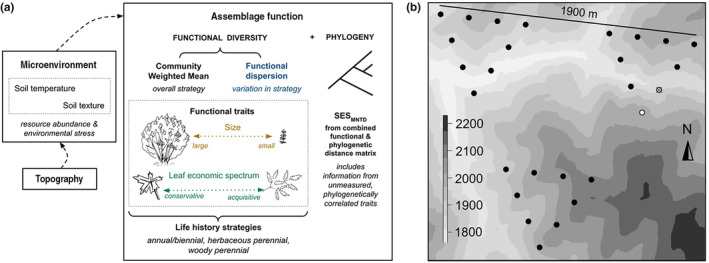
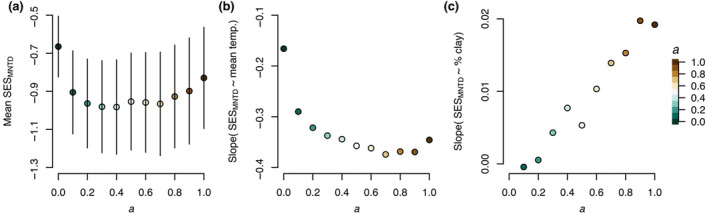
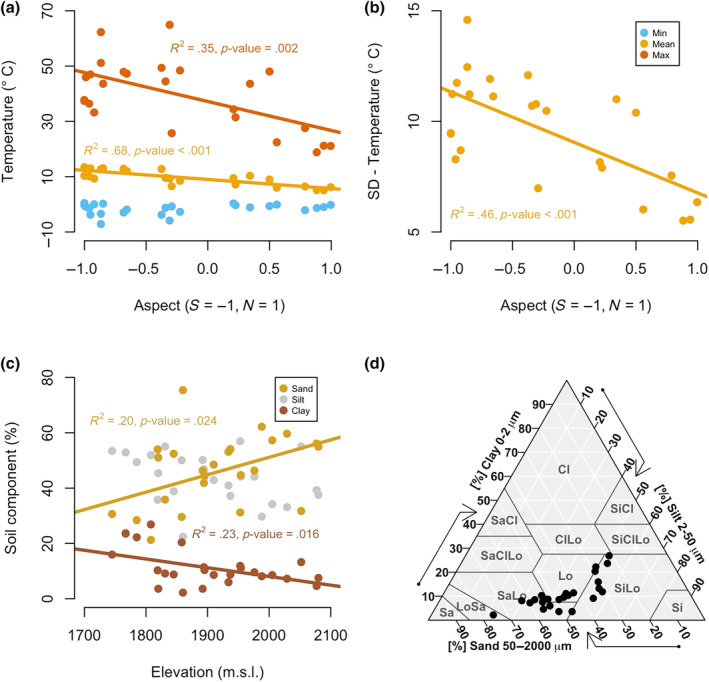
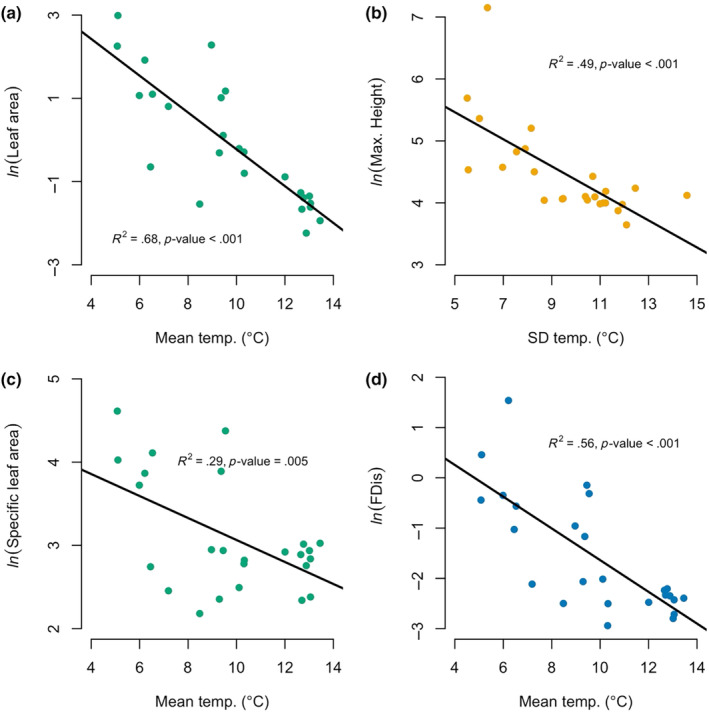
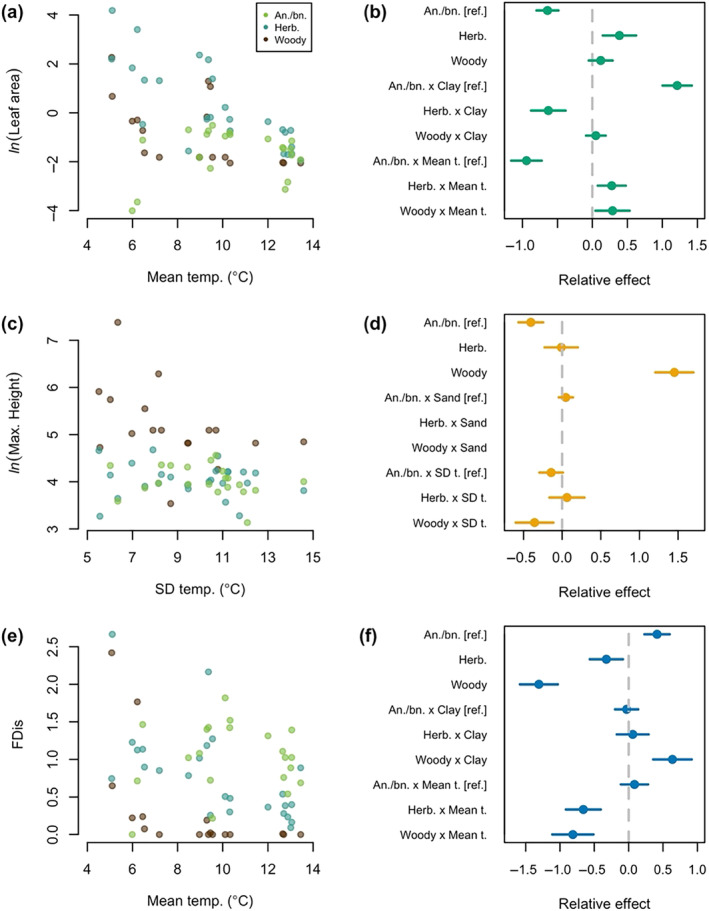
Quantifying assemblage variation across environmental gradients provides insight into the ecological and evolutionary mechanisms that differentiate assemblages locally within a larger climate regime. We assessed how vascular plant functional composition and diversity varied across microenvironment to identify ecological differences in assemblages in a mountainous fieldsite in northeastern Utah, USA. Then, we looked at how life-history strategies and information about phylogenetic differences affect the relationship between functional metrics and environment. We found less functionally dispersed assemblages that were shorter and more resource-conservative on south-facing slopes where intra-annual soil temperature was hotter and more variable. In contrast, we found more functionally dispersed assemblages, that were taller and more resource-acquisitive on north-facing slopes where intra-annual temperature was cooler and less variable. Herbaceous and woody perennials drove these trends. Additionally, including information about phylogenetic differences in a dispersion metric indicated that phylogeny accounts for traits we did not measure. At this fieldsite, soil temperature acts as an environmental filter across aspect. If soil temperature increases and becomes more variable, intra-annually, the function of north- versus south-facing assemblages may be at risk for contrasting reasons. On south-facing slopes, assemblages may not have the variance in functional diversity needed to respond to more intense, stressful conditions. Conversely, assemblages on north-facing slopes may not have the resource-conservative strategies needed to persist if temperatures become hotter and more variable intra-annually. Given these results, we advocate for the inclusion of aspect differentiation in studies seeking to understand species and assemblage shifts in response to changing climate conditions.
量化环境梯度上的群落变化,有助于深入了解在更大气候区域内使局部群落产生差异的生态和进化机制。我们评估了维管植物功能组成和多样性如何随微环境变化,以确定美国犹他州东北部一个山区实地地点群落中的生态差异。然后,我们研究了生活史策略以及系统发育差异信息如何影响功能指标与环境之间的关系。我们发现,在朝南的山坡上,年内土壤温度较高且变化较大,群落的功能分散性较小,植株较矮且资源利用更保守。相比之下,在朝北的山坡上,年内温度较低且变化较小,我们发现群落的功能分散性更大,植株较高且资源获取能力更强。草本和木本多年生植物推动了这些趋势。此外,在分散度指标中纳入系统发育差异信息表明,系统发育解释了我们未测量的性状。在这个实地地点,土壤温度在不同坡向起到了环境筛选作用。如果年内土壤温度升高且变化更大,由于不同原因,南北坡群落的功能可能面临风险。在朝南的山坡上,群落可能没有应对更强烈、压力更大条件所需的功能多样性差异。相反,如果年内温度变得更高且变化更大,朝北山坡上的群落可能没有维持生存所需的资源保守策略。基于这些结果,我们主张在试图理解物种和群落响应气候变化条件而发生变化的研究中纳入坡向差异。