Kollath-Leiß Krisztina, Repnik Urska, Winter Hannes, Winkelmann Heinrich, Freund Anna Sophia, Kempken Frank
Abt. für Botanische Genetik und Molekularbiologie, Botanisches Institut und Botanischer Garten, Christian-Albrechts-Universität, 24098 Kiel, Germany.
Zentrale Mikroskopie, Christian-Albrechts-Universität, 24118 Kiel, Germany.
J Fungi (Basel). 2024 Jul 14;10(7):487. doi: 10.3390/jof10070487.
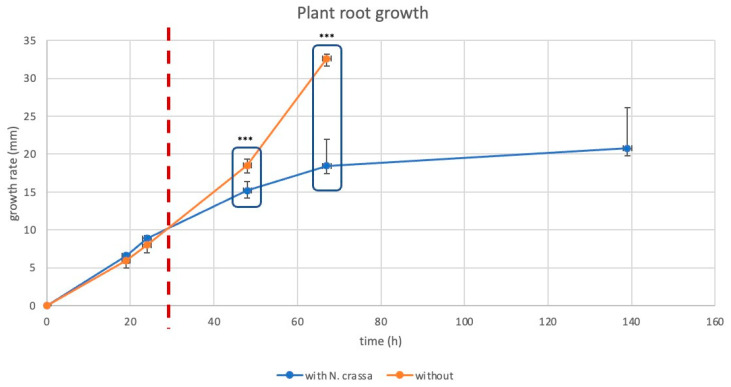
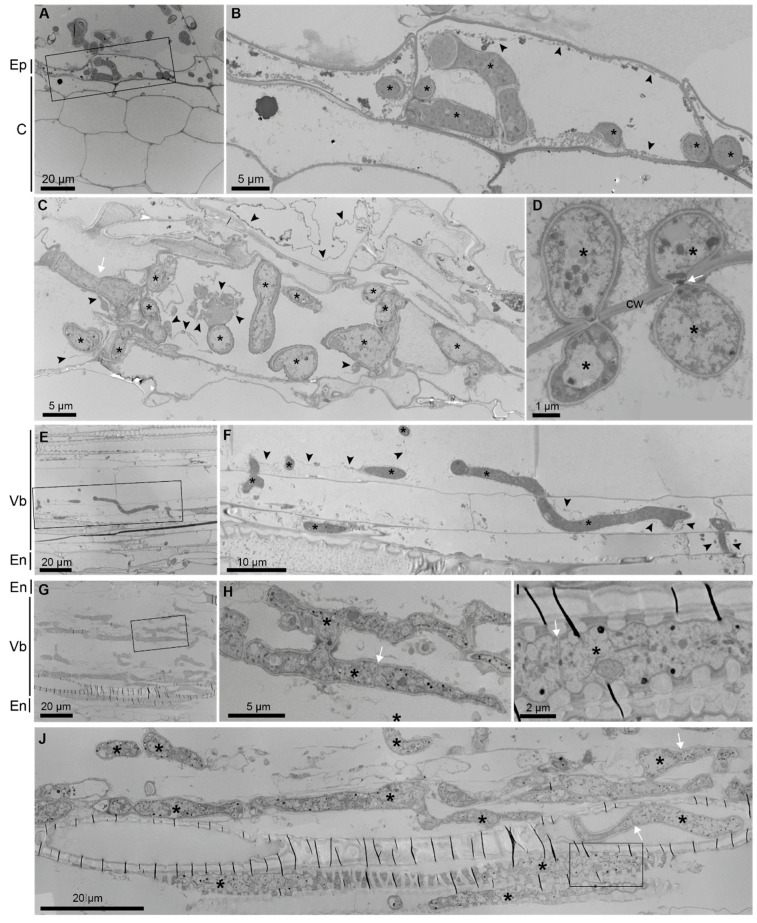
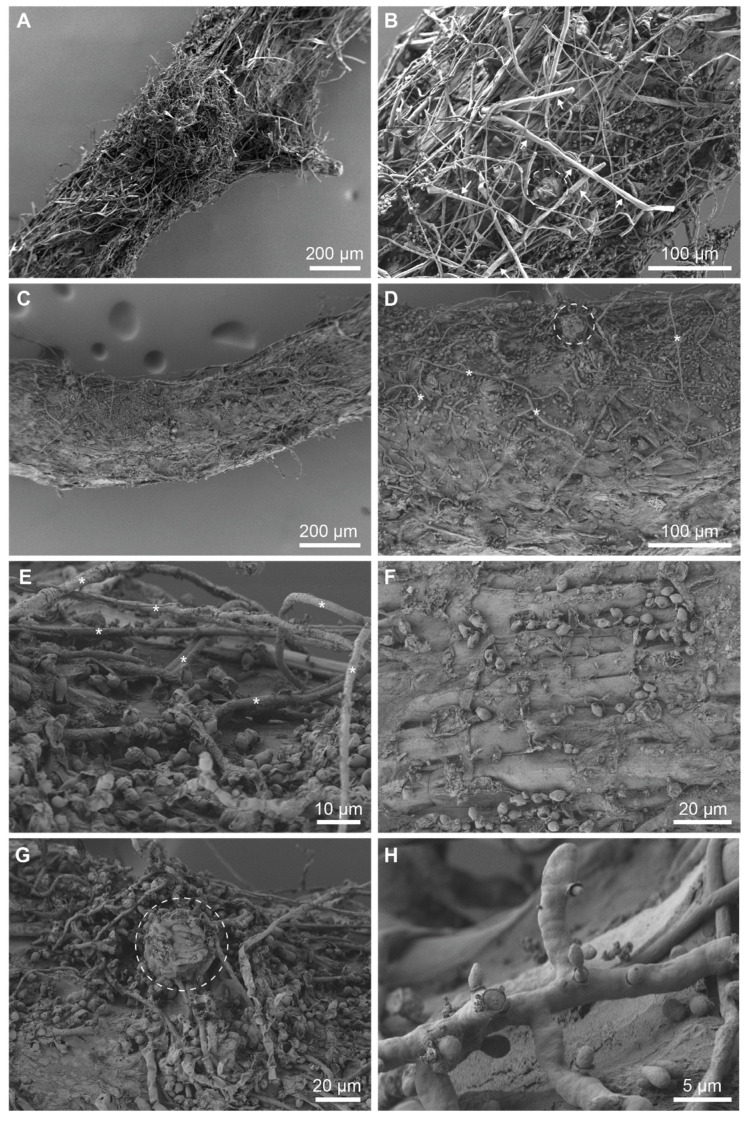
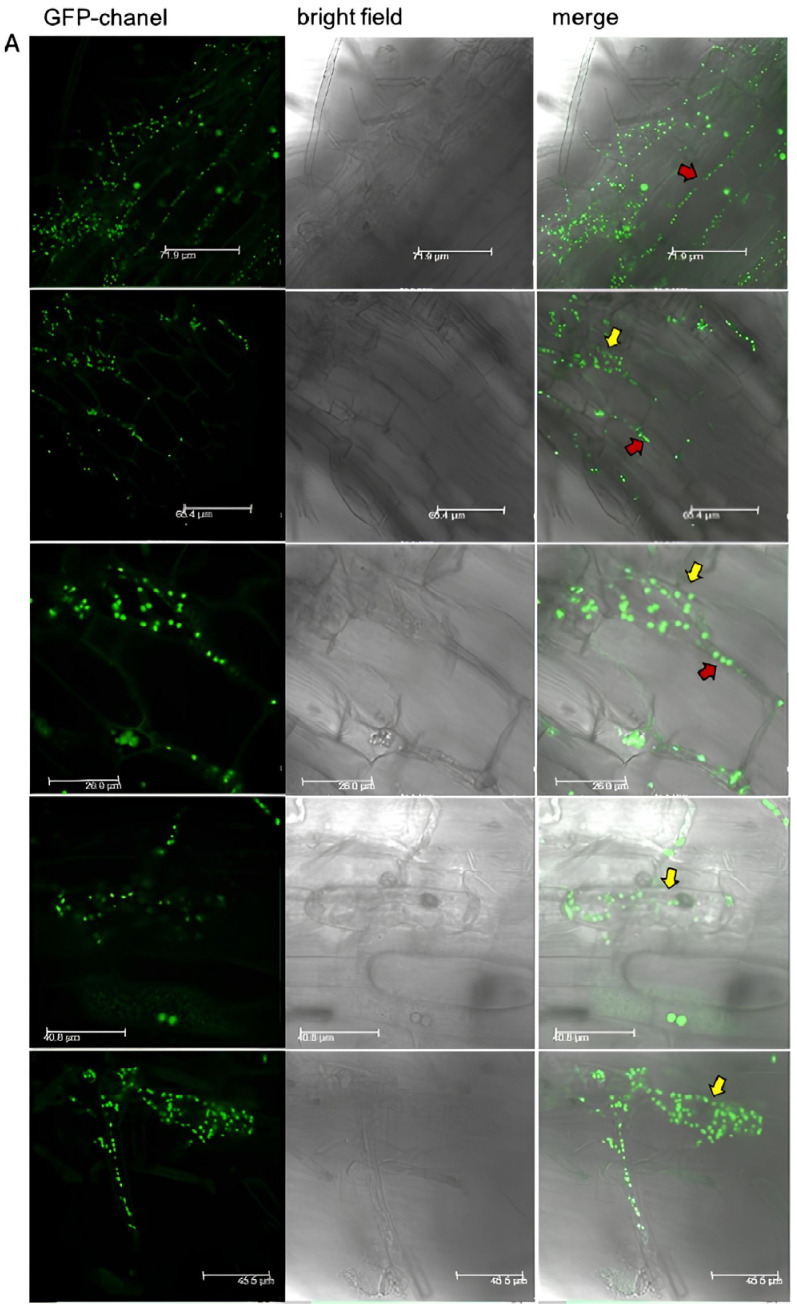
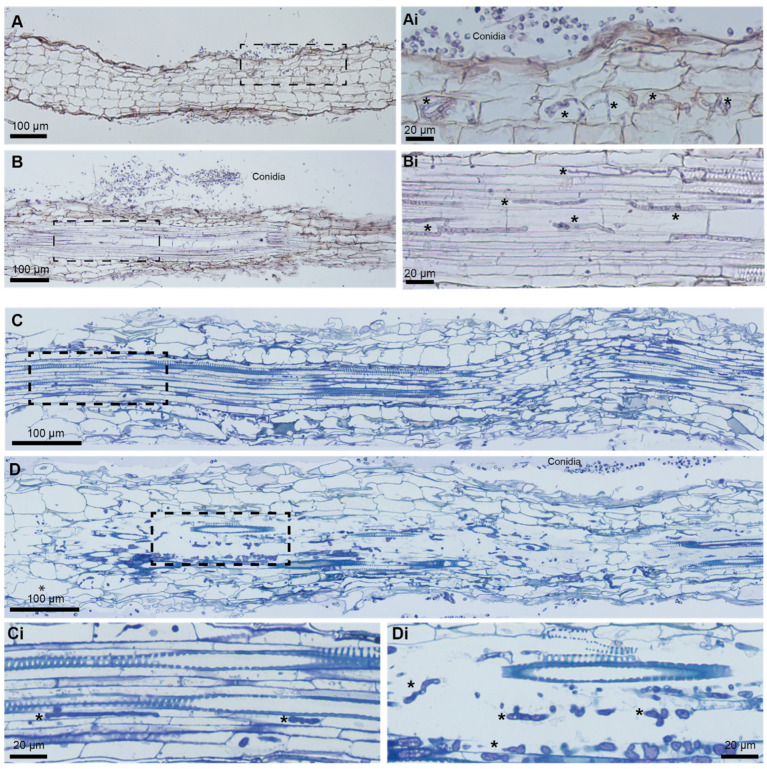
The model organism has been cultivated in laboratories since the 1920s and its saprotrophic lifestyle has been established for decades. However, beyond their role as saprotrophs, fungi engage in intricate relationships with plants, showcasing diverse connections ranging from mutualistic to pathogenic. Although has been extensively investigated under laboratory conditions, its ecological characteristics remain largely unknown. In contrast, , a sweet grass closely related to significant crops, demonstrates remarkable ecological flexibility and participates in a variety of fungal interactions, encompassing both mutualistic and harmful associations. Through a comprehensive microscopic analysis using electron, fluorescence, and confocal laser scanning microscopy, we discovered a novel endophytic interaction between and roots, where fungal hyphae not only thrive in the apoplastic space and vascular bundle but also may colonize plant root cells. This new and so far hidden trait of one of the most important fungal model organisms greatly enhances our view of , opening new perspectives concerning the fungus' ecological role. In addition, we present a new tool for studying plant-fungus interspecies communication, combining two well-established model systems, which improves our possibilities of experimental design on the molecular level.
自20世纪20年代以来,这种模式生物就在实验室中进行培养,其腐生生活方式已确立了数十年。然而,除了作为腐生生物的角色外,真菌还与植物建立了复杂的关系,展现出从共生到致病的多样联系。尽管在实验室条件下已对其进行了广泛研究,但其生态特征在很大程度上仍不为人知。相比之下,一种与重要作物密切相关的甜草,表现出显著的生态适应性,并参与了多种真菌相互作用,包括共生和有害关联。通过使用电子显微镜、荧光显微镜和共聚焦激光扫描显微镜进行的全面微观分析,我们发现了这种甜草与该真菌根部之间一种新的内生相互作用,其中真菌菌丝不仅在质外体空间和维管束中生长,还可能定殖于植物根细胞中。这种最重要的真菌模式生物之一的新的且迄今为止隐藏的特性极大地拓展了我们对该真菌的认识,为其生态作用开启了新的视角。此外,我们提出了一种研究植物 - 真菌种间通讯的新工具,它结合了两个成熟的模式系统,提高了我们在分子水平上进行实验设计的可能性。