Lucas-Noll Jorgina, Clua-Espuny José L, Carles-Lavila Misericòrdia, Solà-Adell Cristina, Roca-Burgueño Íngrid, Panisello-Tafalla Anna, Gavaldà-Espelta Ester, Queralt-Tomas Lluïsa, Lleixà-Fortuño Mar
Terres de l'Ebre Healh Region, Catalan Health Service, 43500 Tortosa, Spain.
Department of Primary Care, Institut Català de la Salut, 43500 Tortosa, Spain.
Healthcare (Basel). 2024 Jul 9;12(14):1369. doi: 10.3390/healthcare12141369.
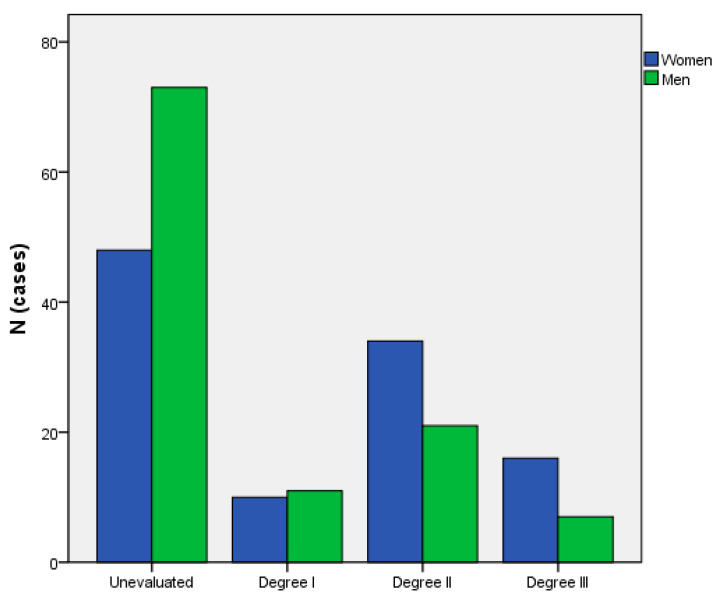
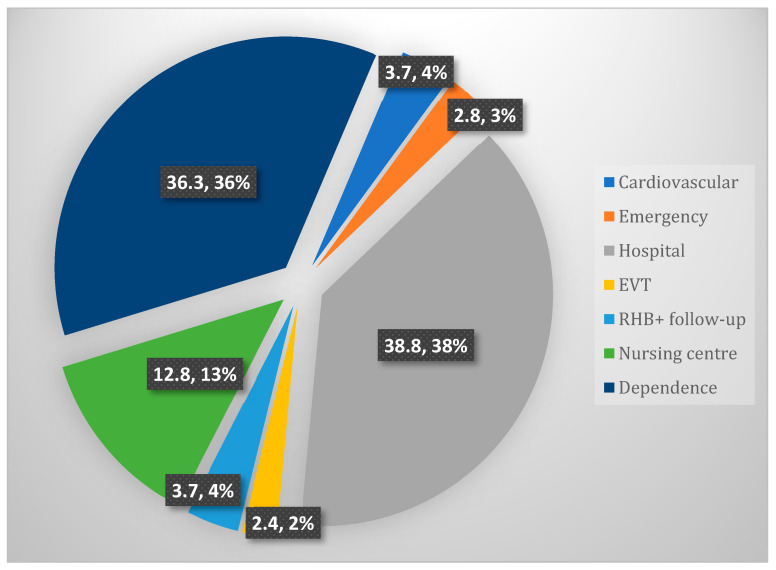
(1) Background: Previous studies have identified disparities in stroke care and outcomes by sex. Therefore, the main objective of this study was to evaluate the average cost of stroke care and the existence of differences in care provision by biological sex. (2) Methods: This observational study adhered to the recommendations of the STROBE statement. The calculation of costs was performed based on the production cost of the service or the rate paid for a set of services, depending on the availability of the corresponding information. (3) Results: A total of 336 patients were included, of which 47.9% were women, with a mean age of 73.3 ± 11.6 years. Women were typically older, had a higher prevalence of hypertension ( = 0.005), lower pre-stroke proportion of mRS 0-2 ( = 0.014), greater stroke severity ( < 0.001), and longer hospital stays ( = 0.017), and more were referred to residential services ( = 0.001) at 90 days. Women also required higher healthcare costs related to cardiovascular risk factors, transient ischemic strokes, institutionalization, and support needs; in contrast, they necessitated lower healthcare costs when undergoing endovascular therapy and receiving rehabilitation services. The unadjusted averaged cost of stroke care was EUR 22,605.66 (CI95% 20,442.8-24,768.4), being higher in women [ = 0.027]. The primary cost concept was hospital treatment (38.8%), followed by the costs associated with dependence and support needs (36.3%). At one year post-stroke, the percentage of women not evaluated for a degree of dependency was lower ( = 0.008). (4) Conclusions: The total unadjusted costs averaged EUR 22,605.66 (CI95% EUR 20,442.8-24,768.4), being higher in women compared to men. The primary cost concept was hospital treatment (38.8%), followed by the costs associated with dependence and support needs (36.3%).
(1) 背景:以往研究已发现中风护理及预后存在性别差异。因此,本研究的主要目的是评估中风护理的平均成本以及按生物学性别划分的护理差异情况。(2) 方法:本观察性研究遵循了STROBE声明的建议。成本计算根据服务的生产成本或一组服务的支付费率进行,具体取决于相应信息的可获取性。(3) 结果:共纳入336例患者,其中47.9%为女性,平均年龄为73.3±11.6岁。女性通常年龄更大,高血压患病率更高(P = 0.005),中风前mRS 0 - 2比例更低(P = 0.014),中风严重程度更高(P < 0.001),住院时间更长(P = 0.017),且90天时更多人被转诊至寄宿服务机构(P = 0.001)。女性在心血管危险因素、短暂性脑缺血发作、机构化和支持需求方面所需的医疗保健成本也更高;相比之下,她们在接受血管内治疗和康复服务时所需的医疗保健成本较低。未调整的中风护理平均成本为22,605.66欧元(95%置信区间20,442.8 - 24,768.4),女性的成本更高 [P = 0.027]。主要成本概念是住院治疗(38.8%),其次是与依赖和支持需求相关的成本(36.3%)。中风后一年,未评估依赖程度的女性比例更低(P = 0.008)。(4) 结论:未调整的总成本平均为22,605.66欧元(95%置信区间20,442.8 - 24,768.4),女性的成本高于男性。主要成本概念是住院治疗(38.8%),其次是与依赖和支持需求相关的成本(36.3%)。