Amsterdam Institute of Molecular and Life Sciences, Division of BioAnalytical Chemistry, Department of Chemistry and Pharmaceutical Sciences, Faculty of Science, Vrije Universiteit Amsterdam, De Boelelaan 1085, 1081 HV Amsterdam, The Netherlands.
Centre for Analytical Sciences Amsterdam (CASA), 1012 WX Amsterdam, The Netherlands.
Toxins (Basel). 2024 Jul 1;16(7):300. doi: 10.3390/toxins16070300.
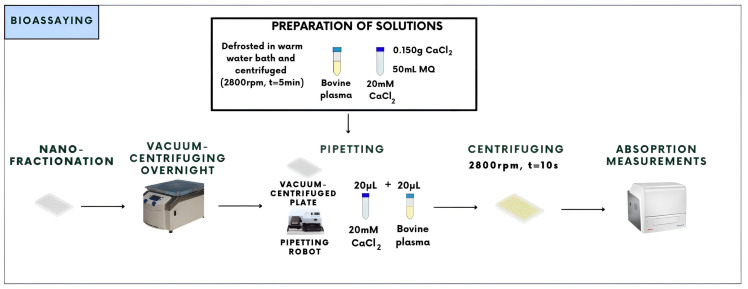
Envenoming resulting from snakebites is recognized as a priority neglected tropical disease by The World Health Organization. The genus, consisting of different pitviper species, is considered the most medically significant taxa in Central and South America. Further research into venom composition is important to aid in the development of safer and more effective snakebite treatments. In addition, the discovery of toxins that could potentially be used for medical or diagnostic purposes is of interest to the pharmaceutical industry. This study aimed to employ high-throughput (HT) venomics to qualitatively analyze venom composition while utilizing coagulation bioassays for identifying coagulopathic toxins and characterizing coagulopathic activity in various venoms. Using the recently demonstrated HT venomics workflow in combination with post-column coagulopathic bioassaying, focus was placed at anticoagulant toxins. Well-known procoagulant toxins were also investigated, taking into account that using the HT venomics workflow, procoagulant toxins are especially prone to denaturation during the reversed-phase chromatographic separations performed in the workflow. The findings revealed that the venoms of and harbored procoagulant toxins, whereas those of and contained both procoagulant and anticoagulant toxins. In general, anticoagulation was associated with phospholipases As, while procoagulation was associated with snake venom metalloproteinases and snake venom serine proteases. These results showed the identification of coagulopathic venom toxins in the venoms analyzed using multiple analytical methods that complement each other. Additionally, each venom underwent qualitative characterization of its composition.
由蛇咬伤引起的中毒被世界卫生组织确认为优先被忽视的热带病。该属由不同的烙铁头蛇种组成,被认为是中美洲和南美洲最重要的医学分类群。进一步研究毒液成分对于开发更安全、更有效的蛇伤治疗方法很重要。此外,发现可能用于医疗或诊断目的的毒素对制药行业也很有兴趣。本研究旨在采用高通量(HT)毒液组学技术对毒液成分进行定性分析,同时利用凝血生物测定法鉴定凝血毒素,并对各种毒液的凝血活性进行特征分析。该研究使用最近展示的 HT 毒液组学工作流程,并结合柱后凝血生物测定法,重点关注抗凝毒素。同时还研究了众所周知的促凝毒素,因为考虑到使用 HT 毒液组学工作流程,在工作流程中进行的反相色谱分离过程中,促凝毒素特别容易变性。研究结果表明,和的毒液中含有促凝毒素,而和的毒液中则同时含有促凝毒素和抗凝毒素。总的来说,抗凝作用与磷脂酶 A 有关,而促凝作用则与蛇毒金属蛋白酶和蛇毒丝氨酸蛋白酶有关。这些结果表明,使用互补的多种分析方法在分析的毒液中鉴定了凝血毒素,并对每种毒液进行了定性组成特征分析。