Leung Joseph Wai-Hin, Loan Allison, Xu Yilin, Yang Guang, Wang Jing, Chan Hing Man
Regenerative Medicine Program, Ottawa Hospital Research Institute, Ottawa, ON K1H 8L6, Canada.
Department of Biology, Faculty of Science, University of Ottawa, Ottawa, ON K1H 8M5, Canada.
Toxics. 2024 Jun 22;12(7):449. doi: 10.3390/toxics12070449.
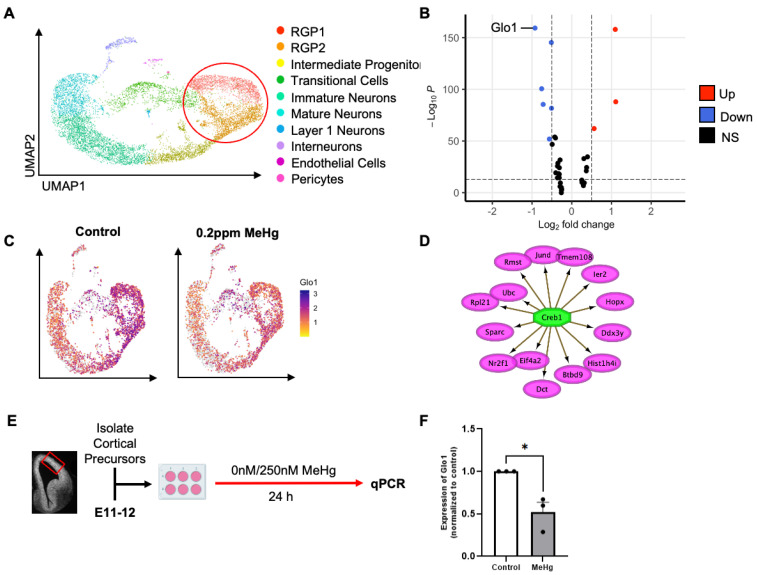
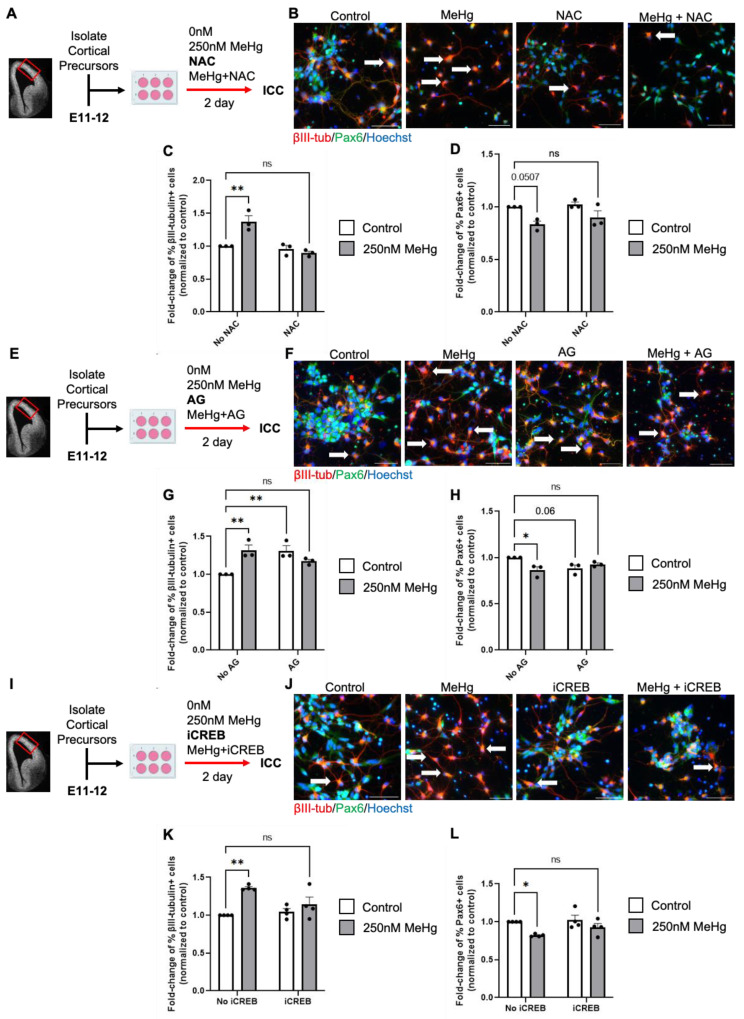
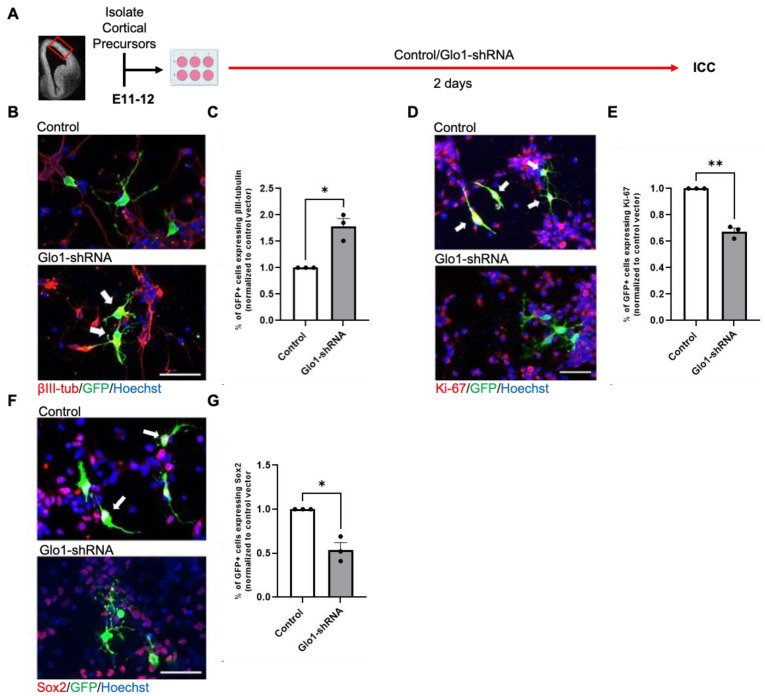
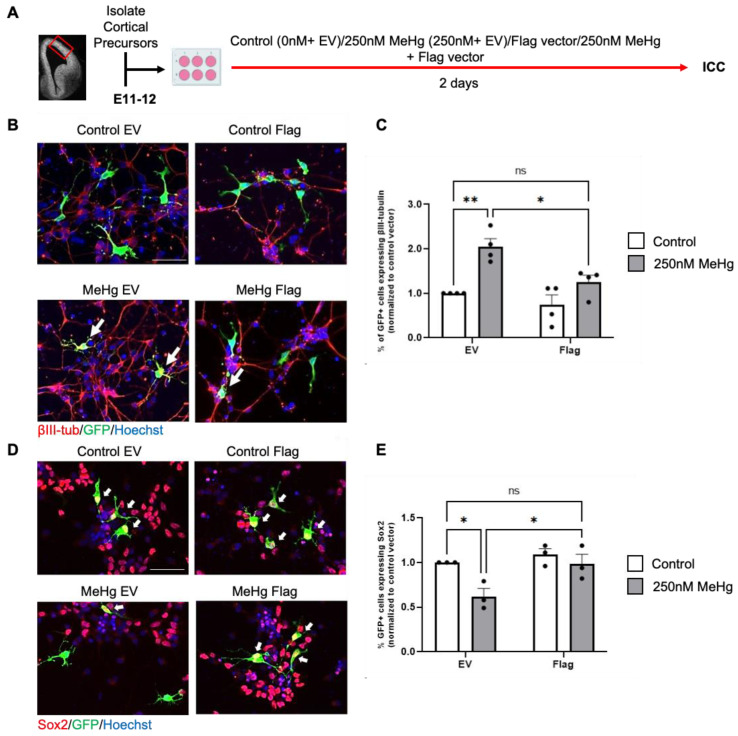
Glyoxalase 1 (Glo1) is an essential enzyme to detoxify methylglyoxal (MGO), a cytotoxic byproduct of glycolysis. Accumulating studies have shown an important role of Glo1 in regulating cortical development and neurogenesis, potentially contributing to the pathogenesis of autism spectrum disorder (ASD) when impaired. We have previously shown that prenatal exposure to non-apoptotic low-dose methylmercury (MeHg), an environmental pollutant, induces premature cortical neurogenesis and ASD-like behaviors in a rodent model. In this study, we aimed to determine the underlying molecular mechanisms that mediate prenatal MeHg-induced premature neuronal differentiation and abnormal neurodevelopment. Using single-cell RNA sequencing (scRNA-seq) and real-time quantitative PCR (RT-qPCR), we found that prenatal MeHg exposure at a non-apoptotic dose significantly reduced gene expression in embryonic cultured radial glia precursors (RGPs). In cultured RGPs, the knockdown of expression increased neuronal production at the expense of the cultured RGPs population, while overexpression of restored MeHg-induced neuronal differentiation back to normal levels. Furthermore, we found that co-treatment with both MeHg and multiple MGO scavengers or a CREB inhibitor (iCREB) mitigated MeHg-induced premature neuronal differentiation, reinforcing the role of Glo1 and CREB in mediating MeHg-induced neuronal differentiation. Our findings demonstrate a direct link between MeHg exposure and expression of an ASD risk gene in cortical development, supporting the important role of gene-environment interaction in contributing to the etiology of neural developmental disorders, such as ASD.
乙二醛酶1(Glo1)是一种将甲基乙二醛(MGO,糖酵解的一种细胞毒性副产物)解毒的必需酶。越来越多的研究表明,Glo1在调节皮层发育和神经发生中具有重要作用,当其受损时可能导致自闭症谱系障碍(ASD)的发病机制。我们之前已经表明,产前暴露于环境污染物非凋亡低剂量甲基汞(MeHg)会在啮齿动物模型中诱导过早的皮层神经发生和ASD样行为。在本研究中,我们旨在确定介导产前MeHg诱导的过早神经元分化和异常神经发育的潜在分子机制。使用单细胞RNA测序(scRNA-seq)和实时定量PCR(RT-qPCR),我们发现非凋亡剂量的产前MeHg暴露显著降低了胚胎培养的放射状胶质细胞前体(RGPs)中的基因表达。在培养的RGPs中,敲低表达以培养的RGPs群体为代价增加了神经元的产生,而的过表达将MeHg诱导的神经元分化恢复到正常水平。此外,我们发现MeHg与多种MGO清除剂或CREB抑制剂(iCREB)共同处理可减轻MeHg诱导的过早神经元分化,强化了Glo1和CREB在介导MeHg诱导的神经元分化中的作用。我们的研究结果证明了MeHg暴露与皮层发育中一个ASD风险基因的表达之间存在直接联系,支持了基因-环境相互作用在导致神经发育障碍(如ASD)病因中的重要作用。