Selvaraj Divya Bharathi, Panneerselvam Anusiya, Vergil Andrews Jemi Feiona, Kandasamy Mahesh
Laboratory of Stem Cells and Neuroregeneration, Department of Animal Science, School of Life Sciences, Bharathidasan University, Tiruchirappalli 620024, India.
Department of Biotechnology, Bharathidasan University, Tiruchirappalli 620024, India.
Brain Sci. 2024 Jun 24;14(7):632. doi: 10.3390/brainsci14070632.
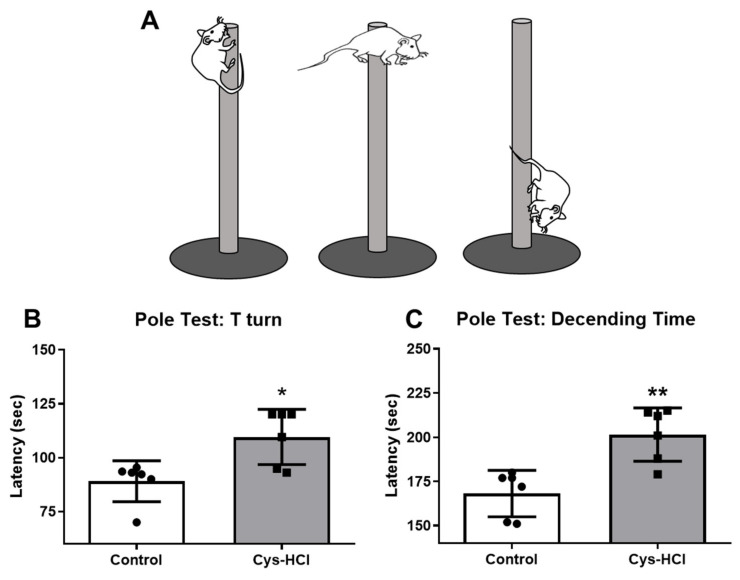
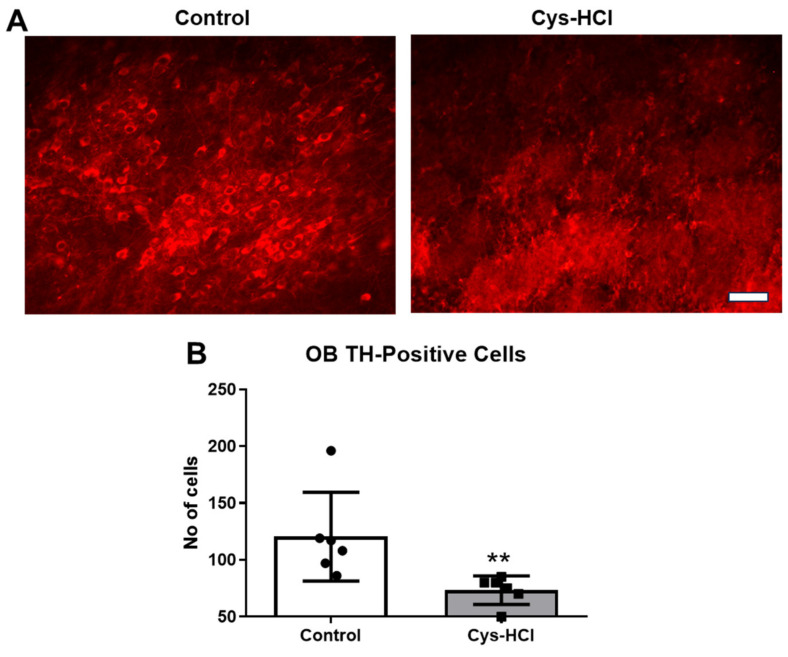
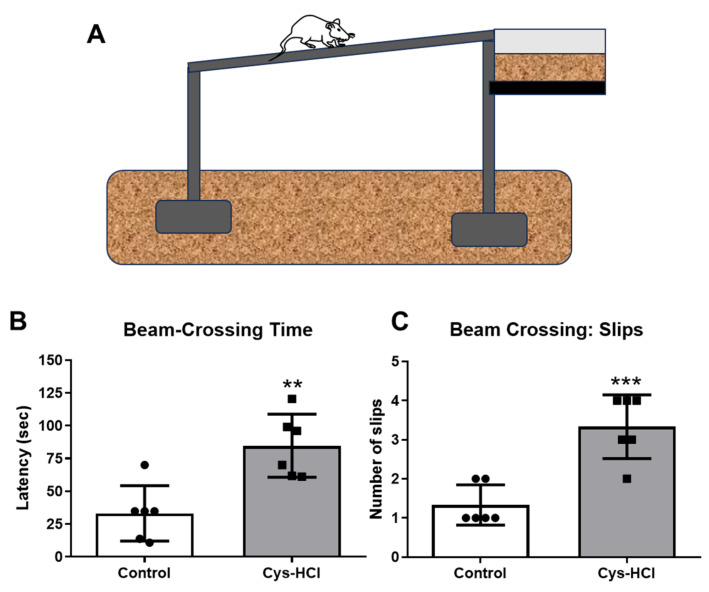
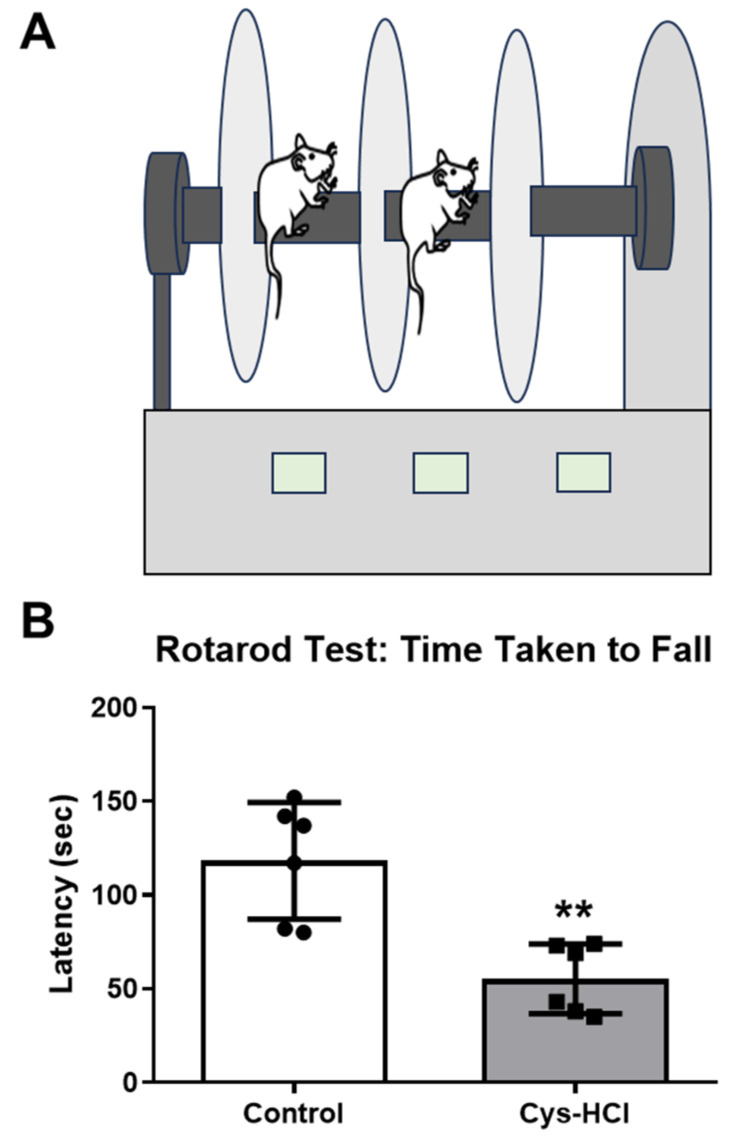
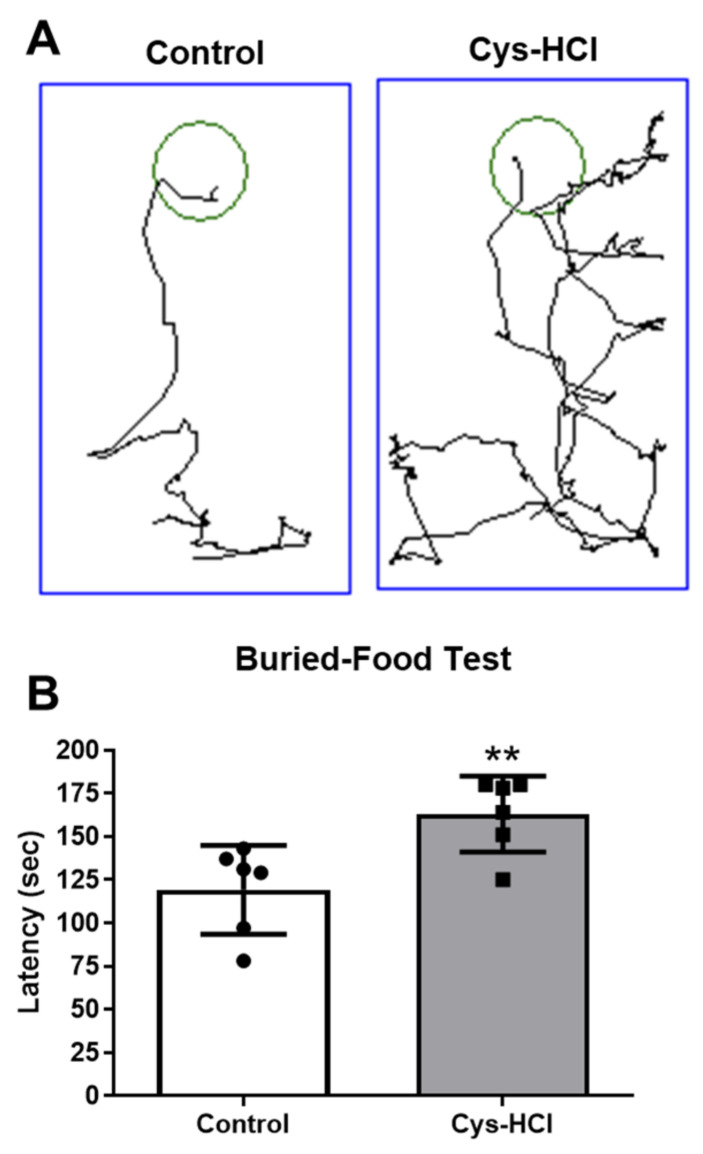
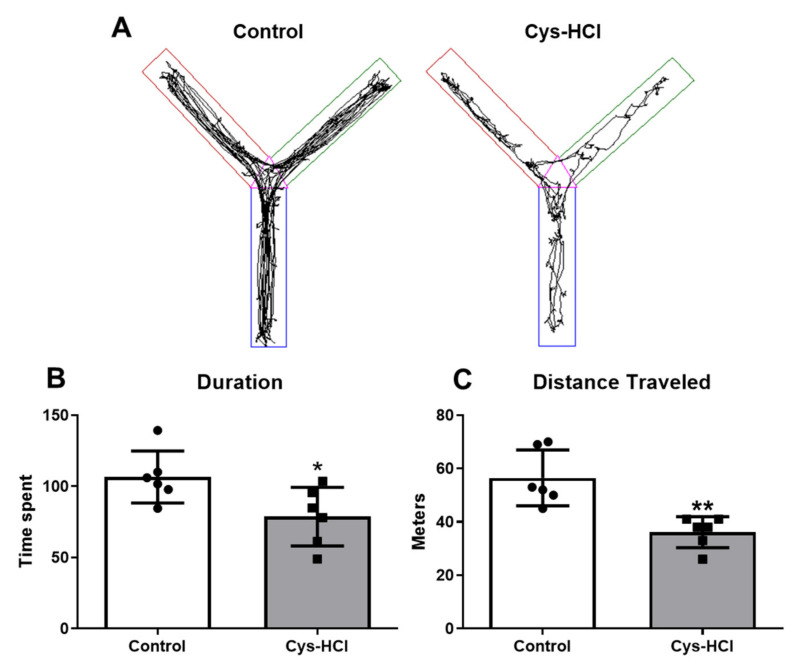
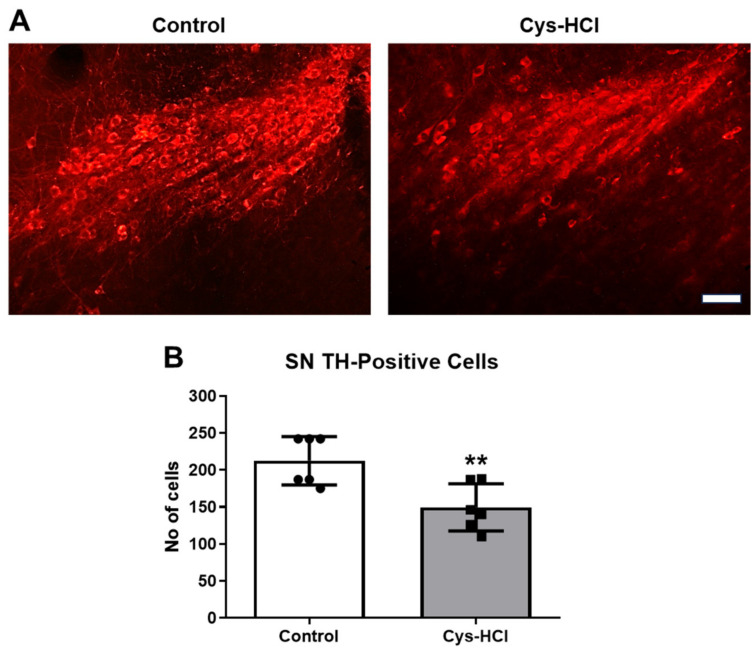
Cysteamine hydrochloride (Cys-HCl) has been established as a potent ulcerogenic agent of the gastrointestinal (GI) system. GI dysfunction and olfactory deficits are the most common clinical symptoms of many movement disorders, including Parkinson's disease (PD). Cys-HCl has been shown to interfere with dopamine, a neurotransmitter crucial for motor, olfactory, and cognitive functions. However, the reports on the effect of Cys-HCl treatment on the behavioral aspects and functions of the dopamine system appear to be inconsistent. Therefore, we revisited the impact of Cys-HCl on the motor function in experimental mice using a battery of behavioral tests, such as the pole test (PT), beam-walking test (BWT), and rotarod test (RDT), while the olfactory ability and cognitive functions were examined through the buried-food test (BFT) and Y-maze test. Furthermore, we investigated the effect of Cys-HCl on the number of dopaminergic tyrosine hydroxylase (TH)-positive cells in the substantia nigra (SN) and olfactory bulb (OB) of the experimental mice using immunohistochemistry. The results revealed that Cys-HCl administration in the mice induced significant impairments in their motor balance and coordination, as their movement-related performances were markedly reduced in terms of the behavioral tasks. Mice exposed to Cys-HCl showed pronounced reductions in their odor discrimination abilities as well as cognitive impairments. Strikingly, the number of TH-positive neurons was found to be reduced in the SN and OB of the Cys-HCl-treated group, which is a bonafide neuropathogenic hallmark of PD. This study highlights the potential neurotoxic effects of Cys-HCl in experimental brains and suggests further investigation into its role in the pathogenesis of Parkinsonism.
盐酸半胱胺(Cys-HCl)已被确认为胃肠道(GI)系统的一种强效致溃疡剂。胃肠道功能障碍和嗅觉缺陷是许多运动障碍(包括帕金森病(PD))最常见的临床症状。已表明Cys-HCl会干扰多巴胺,多巴胺是一种对运动、嗅觉和认知功能至关重要的神经递质。然而,关于Cys-HCl治疗对多巴胺系统行为方面和功能影响的报道似乎并不一致。因此,我们使用一系列行为测试(如杆试验(PT)、走梁试验(BWT)和转棒试验(RDT))重新研究了Cys-HCl对实验小鼠运动功能的影响,同时通过埋食试验(BFT)和Y迷宫试验检测嗅觉能力和认知功能。此外,我们使用免疫组织化学研究了Cys-HCl对实验小鼠黑质(SN)和嗅球(OB)中多巴胺能酪氨酸羟化酶(TH)阳性细胞数量的影响。结果显示,给小鼠施用Cys-HCl会导致其运动平衡和协调能力显著受损,因为它们在行为任务中的运动相关表现明显降低。暴露于Cys-HCl的小鼠在气味辨别能力以及认知能力方面均表现出明显下降。令人惊讶的是,在Cys-HCl处理组的SN和OB中发现TH阳性神经元数量减少,这是PD真正的神经病理特征。这项研究突出了Cys-HCl在实验性大脑中的潜在神经毒性作用,并建议进一步研究其在帕金森病发病机制中的作用。