Mohr Alex E, Ortega-Santos Carmen P, Whisner Corrie M, Klein-Seetharaman Judith, Jasbi Paniz
Systems Precision Engineering and Advanced Research (SPEAR), Theriome Inc., Phoenix, AZ 85004, USA.
College of Health Solutions, Arizona State University, Phoenix, AZ 85004, USA.
Biomedicines. 2024 Jul 5;12(7):1496. doi: 10.3390/biomedicines12071496.
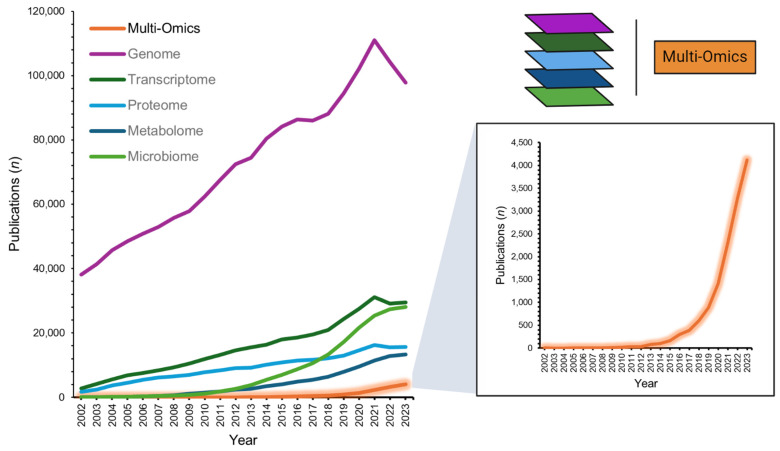
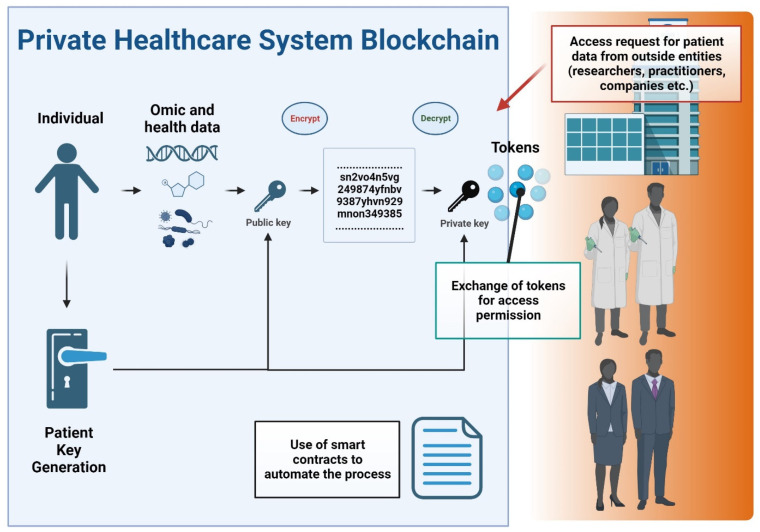
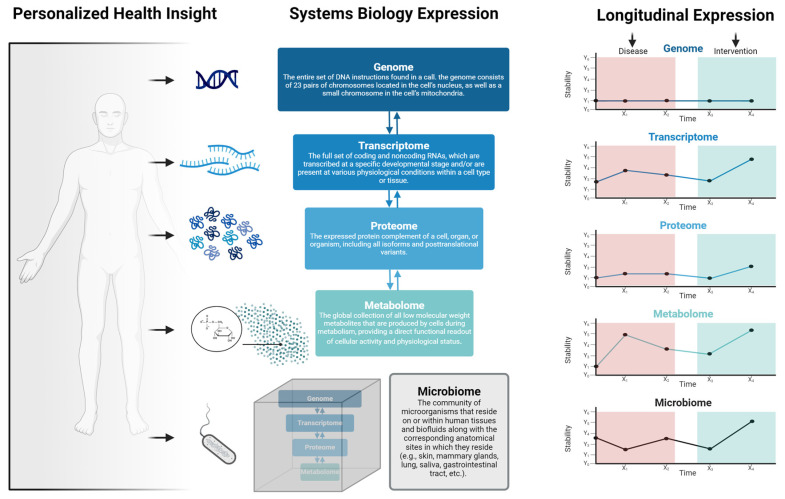
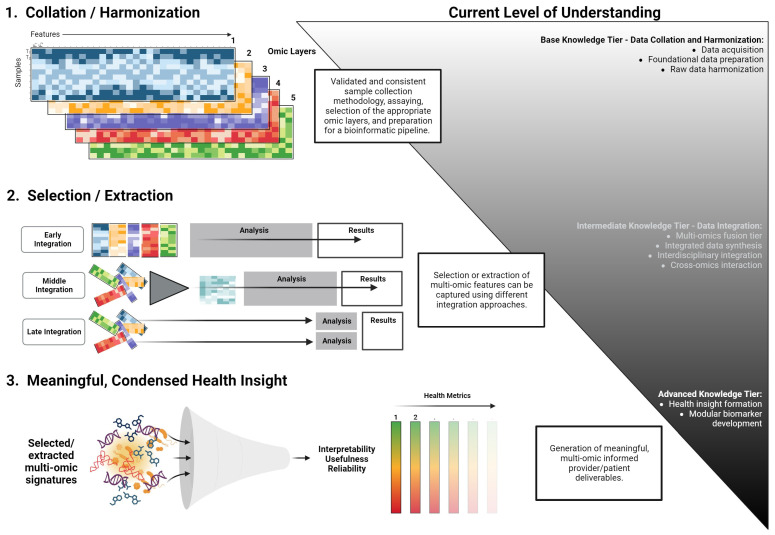
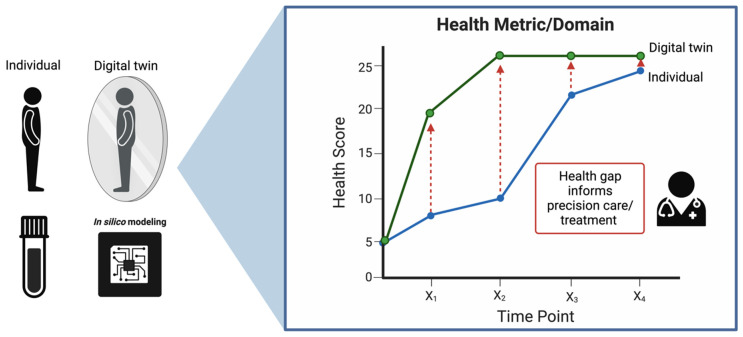
The field of multi-omics has witnessed unprecedented growth, converging multiple scientific disciplines and technological advances. This surge is evidenced by a more than doubling in multi-omics scientific publications within just two years (2022-2023) since its first referenced mention in 2002, as indexed by the National Library of Medicine. This emerging field has demonstrated its capability to provide comprehensive insights into complex biological systems, representing a transformative force in health diagnostics and therapeutic strategies. However, several challenges are evident when merging varied omics data sets and methodologies, interpreting vast data dimensions, streamlining longitudinal sampling and analysis, and addressing the ethical implications of managing sensitive health information. This review evaluates these challenges while spotlighting pivotal milestones: the development of targeted sampling methods, the use of artificial intelligence in formulating health indices, the integration of sophisticated -of-1 statistical models such as digital twins, and the incorporation of blockchain technology for heightened data security. For multi-omics to truly revolutionize healthcare, it demands rigorous validation, tangible real-world applications, and smooth integration into existing healthcare infrastructures. It is imperative to address ethical dilemmas, paving the way for the realization of a future steered by omics-informed personalized medicine.
多组学领域经历了前所未有的发展,融合了多个科学学科和技术进步。自2002年首次被提及以来,仅在两年内(2022 - 2023年),多组学科学出版物数量就增长了一倍多,这一增长由美国国立医学图书馆索引证明。这个新兴领域已展示出其为复杂生物系统提供全面见解的能力,代表着健康诊断和治疗策略中的变革力量。然而,在合并各种组学数据集和方法、解释大量数据维度、简化纵向采样和分析以及解决管理敏感健康信息的伦理问题时,存在一些明显的挑战。本综述评估了这些挑战,同时突出了关键里程碑:靶向采样方法的发展、人工智能在制定健康指数中的应用、复杂的单病例统计模型(如数字孪生)的整合以及区块链技术的纳入以提高数据安全性。为了使多组学真正变革医疗保健,它需要严格的验证、切实的实际应用以及顺利融入现有的医疗保健基础设施。解决伦理困境势在必行,为实现由组学驱动的个性化医学引领的未来铺平道路。