Zong Qiushuo, He Chengyi, Long Binbin, Huang Qingyun, Chen Yunfei, Li Yiqing, Dang Yiping, Cai Chuanqi
Department of Vascular Surgery, Union Hospital, Tongji Medical College, Huazhong University of Science and Technology, Wuhan 430022, China.
Department of Vascular Surgery, Fujian University of Traditional Chinese Medicine, Fuzhou 350122, China.
Biomedicines. 2024 Jul 6;12(7):1504. doi: 10.3390/biomedicines12071504.
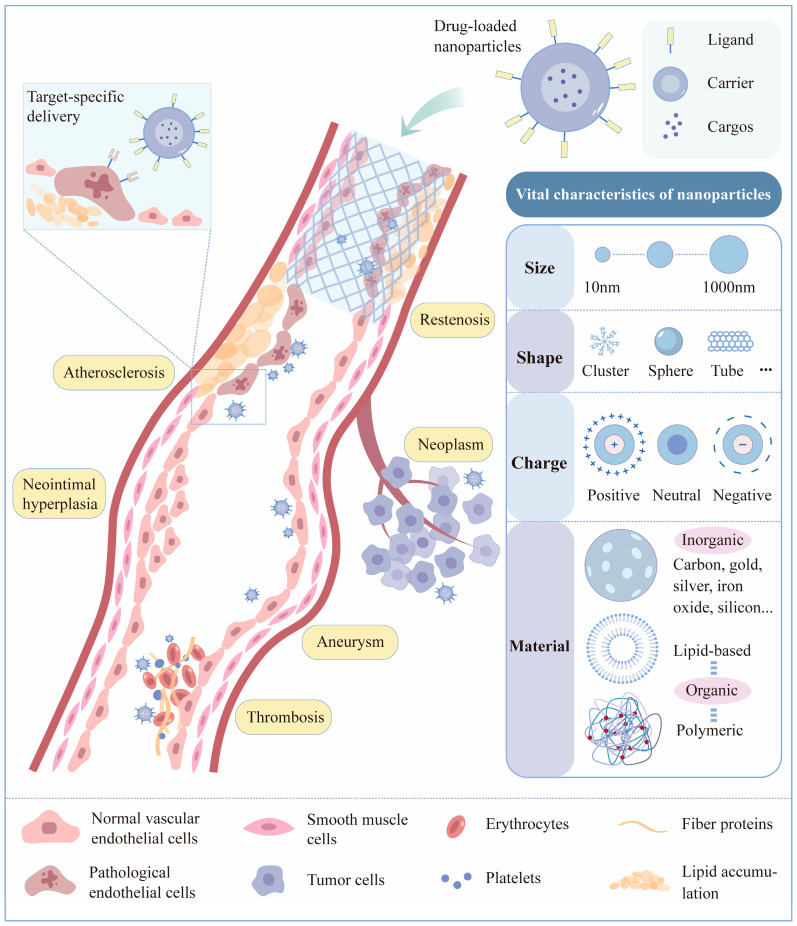
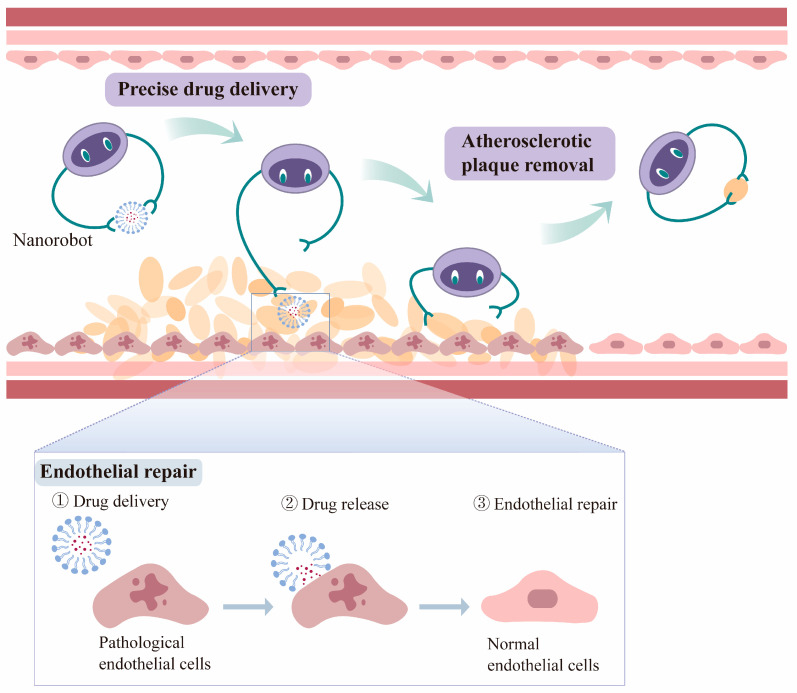
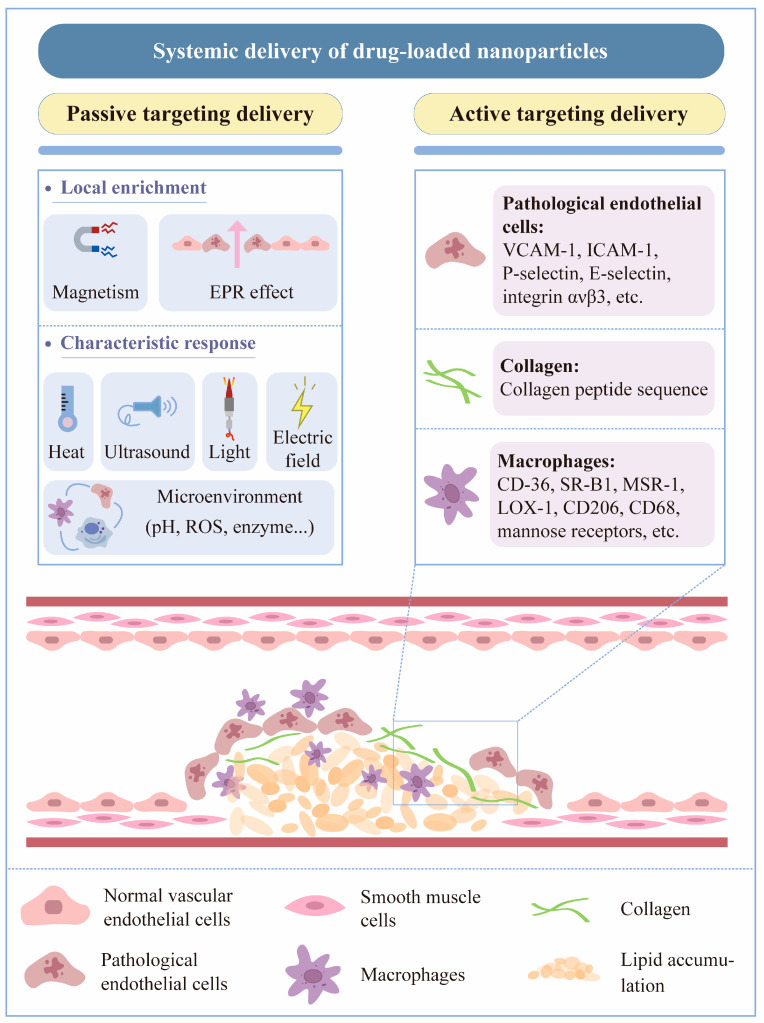
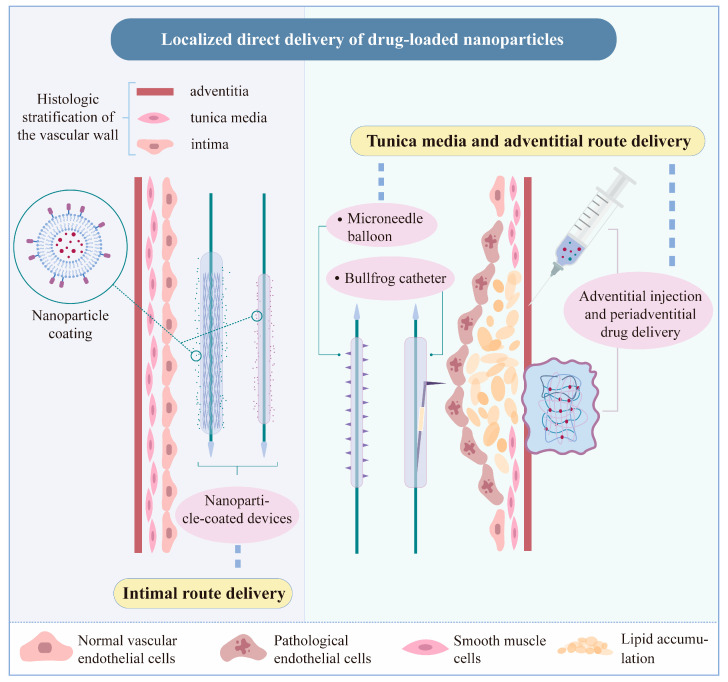
Atherosclerosis is a common form of cardiovascular disease, which is one of the most prevalent causes of death worldwide, particularly among older individuals. Surgery is the mainstay of treatment for severe stenotic lesions, though the rate of restenosis remains relatively high. Current medication therapy for atherosclerosis has limited efficacy in reversing the formation of atherosclerotic plaques. The search for new drug treatment options is imminent. Some potent medications have shown surprising therapeutic benefits in inhibiting inflammation and endothelial proliferation in plaques. Unfortunately, their use is restricted due to notable dose-dependent systemic side effects or degradation. Nevertheless, with advances in nanotechnology, an increasing number of nano-related medical applications are emerging, such as nano-drug delivery, nano-imaging, nanorobots, and so forth, which allow for restrictions on the use of novel atherosclerotic drugs to be lifted. This paper reviews new perspectives on the targeted delivery of nanoparticles to blood vessels for the treatment of atherosclerosis in both systemic and local drug delivery. In systemic drug delivery, nanoparticles inhibit drug degradation and reduce systemic toxicity through passive and active pathways. To further enhance the precise release of drugs, the localized delivery of nanoparticles can also be accomplished through blood vessel wall injection or using endovascular interventional devices coated with nanoparticles. Overall, nanotechnology holds boundless potential for the diagnosis and treatment of atherosclerotic diseases in the future.
动脉粥样硬化是心血管疾病的一种常见形式,它是全球范围内最普遍的死亡原因之一,在老年人中尤为常见。手术是严重狭窄性病变的主要治疗方法,尽管再狭窄率仍然相对较高。目前用于治疗动脉粥样硬化的药物疗法在逆转动脉粥样硬化斑块形成方面疗效有限。寻找新的药物治疗方案迫在眉睫。一些强效药物在抑制斑块炎症和内皮细胞增殖方面显示出惊人的治疗效果。不幸的是,由于明显的剂量依赖性全身副作用或降解,它们的使用受到限制。然而,随着纳米技术的进步,越来越多的纳米相关医学应用正在出现,如纳米药物递送、纳米成像、纳米机器人等等,这使得新型动脉粥样硬化药物的使用限制得以解除。本文综述了纳米颗粒靶向递送至血管用于全身和局部药物递送治疗动脉粥样硬化的新观点。在全身药物递送中,纳米颗粒通过被动和主动途径抑制药物降解并降低全身毒性。为了进一步增强药物的精确释放,纳米颗粒的局部递送也可以通过血管壁注射或使用涂有纳米颗粒的血管内介入装置来实现。总体而言,纳米技术在未来动脉粥样硬化疾病的诊断和治疗方面具有无限潜力。