Laboratory of Animal Center, Medical Experiment Center, Shaanxi University of Chinese Medicine, Xianyang 712046, China.
Department of Experimental Surgery, Tangdu Hospital, Fourth Military Medical University, Xi'an 710038, China.
Biomolecules. 2024 Jul 14;14(7):847. doi: 10.3390/biom14070847.
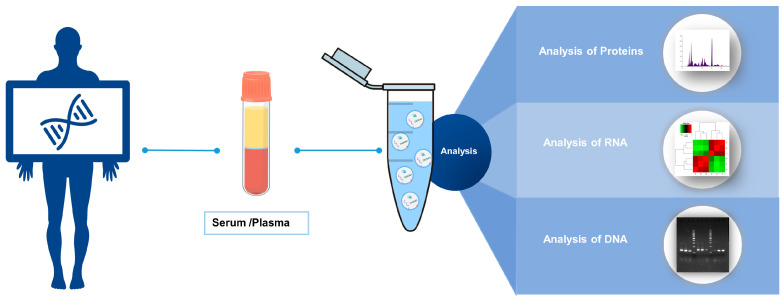
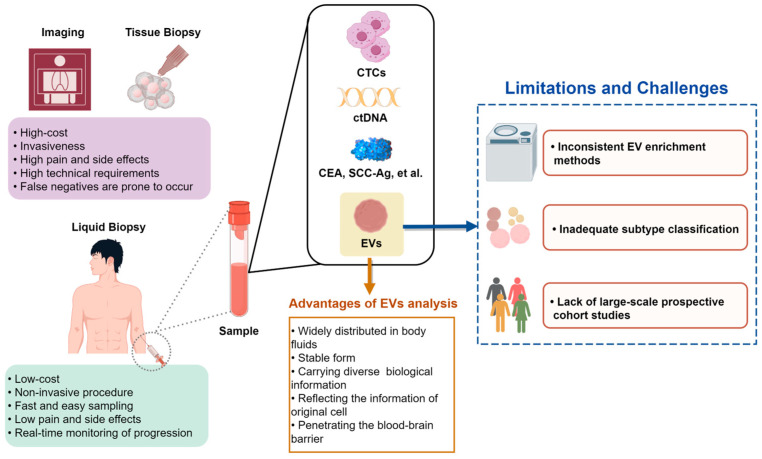
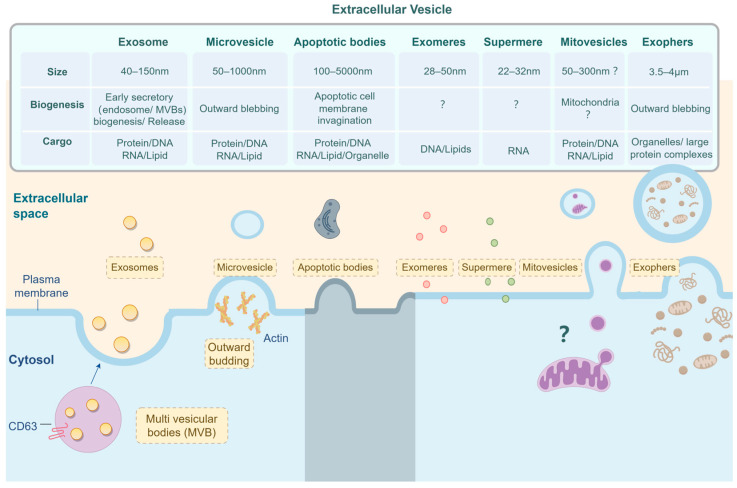
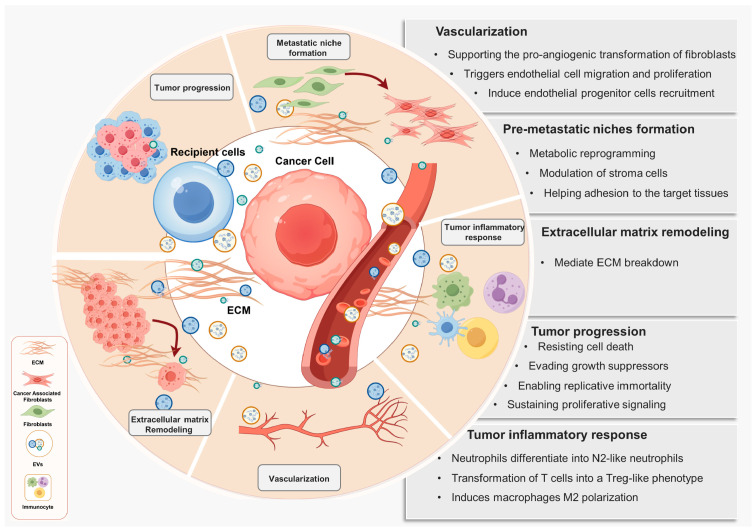
Cancer poses a significant public health challenge worldwide, and timely screening has the potential to mitigate cancer progression and reduce mortality rates. Currently, early identification of most tumors relies on imaging techniques and tissue biopsies. However, the use of low-cost, highly sensitive, non-invasive detection methods for early cancer screening has become more attractive. Extracellular Vesicles (EVs) released by all living cells contain distinctive biological components, such as nucleic acids, proteins, and lipids. These vesicles play crucial roles in the tumor microenvironment and intercellular communication during tumor progression, rendering liquid biopsy a particularly suitable method for diagnosis. Nevertheless, challenges related to purification methods and validation of efficacy currently hinder its widespread clinical implementation. These limitations underscore the importance of refining isolation techniques and conducting comprehensive investigations on EVs. This study seeks to evaluate the potential of liquid biopsy utilizing blood-derived EVs as a practical, cost-effective, and secure approach for early cancer detection.
癌症是全球面临的重大公共卫生挑战,及时筛查有可能减缓癌症进展并降低死亡率。目前,大多数肿瘤的早期发现依赖于影像学技术和组织活检。然而,用于癌症早期筛查的低成本、高灵敏度、非侵入性检测方法变得更具吸引力。所有活细胞释放的细胞外囊泡(EVs)含有独特的生物成分,如核酸、蛋白质和脂质。这些囊泡在肿瘤微环境和肿瘤进展过程中的细胞间通讯中发挥关键作用,使液体活检成为一种特别适合诊断的方法。然而,目前纯化方法和疗效验证方面的挑战阻碍了其广泛的临床应用。这些局限性凸显了改进分离技术和对 EVs 进行全面研究的重要性。本研究旨在评估利用血液衍生的 EVs 进行液体活检作为一种实用、经济有效且安全的早期癌症检测方法的潜力。