Department of Molecular Biology and Biochemistry, Rutgers University, Piscataway, NJ, 08855, USA.
Department of Neuroscience, Albert Einstein College of Medicine, Rose F. Kennedy Center, Bronx, NY, 10461, USA.
Nat Commun. 2023 Jul 24;14(1):4450. doi: 10.1038/s41467-023-39700-1.
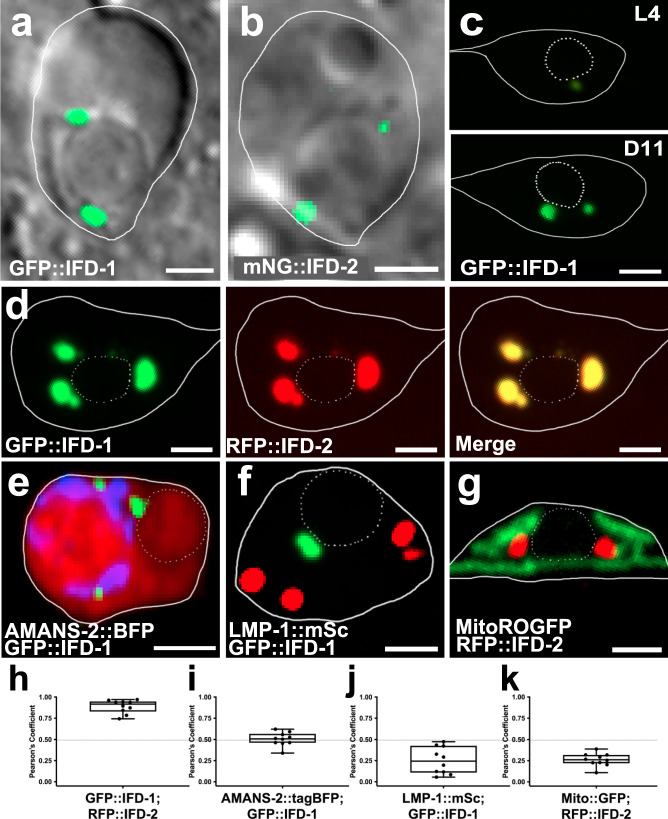
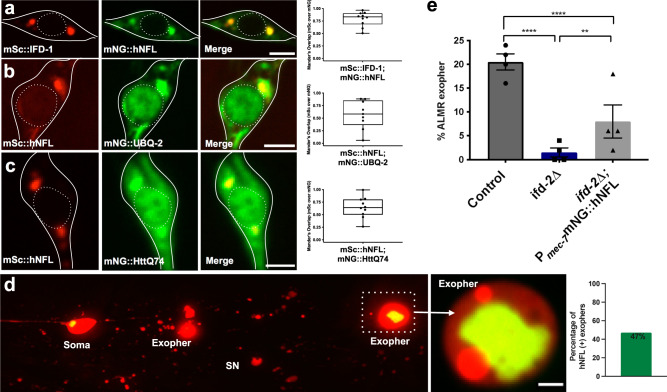
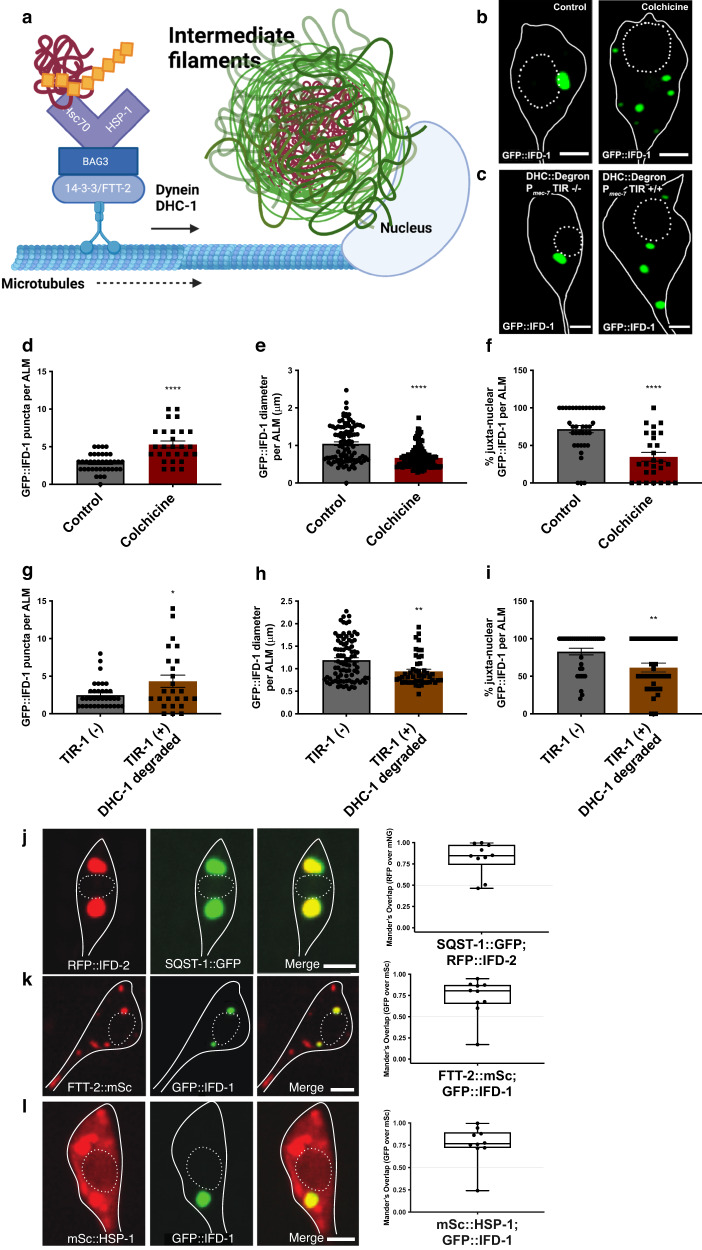
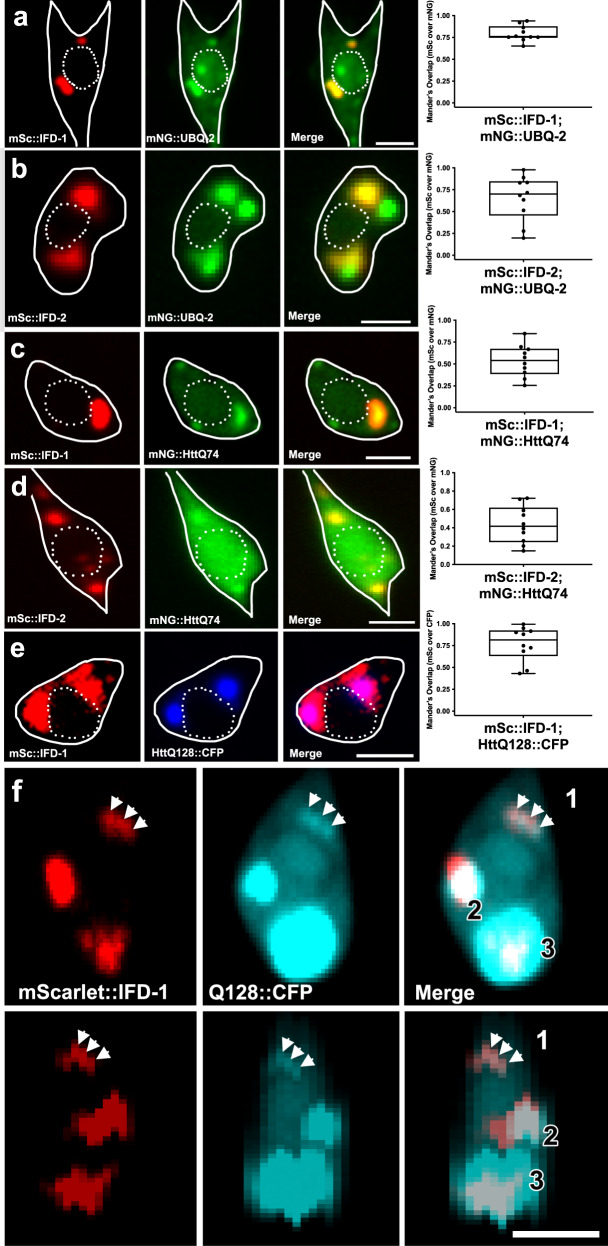
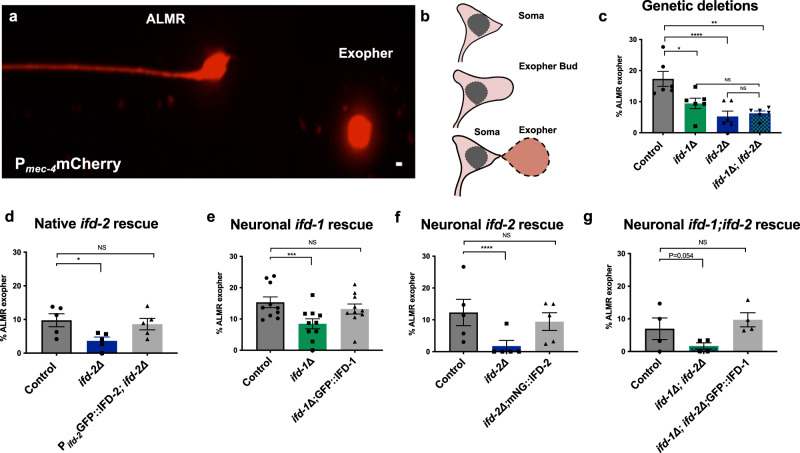
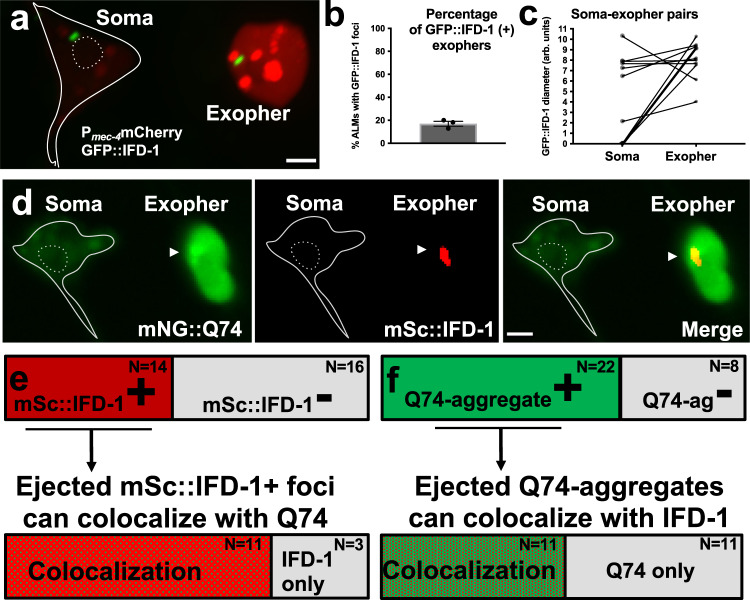
Toxic protein aggregates can spread among neurons to promote human neurodegenerative disease pathology. We found that in C. elegans touch neurons intermediate filament proteins IFD-1 and IFD-2 associate with aggresome-like organelles and are required cell-autonomously for efficient production of neuronal exophers, giant vesicles that can carry aggregates away from the neuron of origin. The C. elegans aggresome-like organelles we identified are juxtanuclear, HttPolyQ aggregate-enriched, and dependent upon orthologs of mammalian aggresome adaptor proteins, dynein motors, and microtubule integrity for localized aggregate collection. These key hallmarks indicate that conserved mechanisms drive aggresome formation. Furthermore, we found that human neurofilament light chain (NFL) can substitute for C. elegans IFD-2 in promoting exopher extrusion. Taken together, our results suggest a conserved influence of intermediate filament association with aggresomes and neuronal extrusions that eject potentially toxic material. Our findings expand understanding of neuronal proteostasis and suggest implications for neurodegenerative disease progression.
有毒蛋白聚集体可以在神经元之间传播,从而促进人类神经退行性疾病的发病机制。我们发现,在秀丽隐杆线虫的触神经元中,中间丝蛋白 IFD-1 和 IFD-2 与类聚集体细胞器结合,并自主地促进神经元外泌体(能够将聚集体从起源神经元中运走的巨大囊泡)的有效产生。我们鉴定的秀丽隐杆线虫类聚集体细胞器位于核周,富含 HttPolyQ 聚集体,并依赖于哺乳动物聚集体衔接蛋白、动力蛋白和微管完整性的同源物,用于局部聚集物的收集。这些关键特征表明保守的机制驱动了聚集体的形成。此外,我们发现人神经丝轻链(NFL)可以替代秀丽隐杆线虫的 IFD-2 来促进外泌体的排出。总之,我们的研究结果表明中间丝与聚集体和神经元排出物的关联具有保守的影响,这些排出物可以排出潜在的毒性物质。我们的发现扩展了对神经元蛋白稳态的理解,并暗示了对神经退行性疾病进展的影响。