Pennells Jordan, Trigona Louise, Patel Hetvi, Ying Danyang
CSIRO Agriculture & Food, 671 Sneydes Rd, Werribee, VIC 3030, Australia.
Department of Food Processing & Biological Engineering, École Nationale Supérieure de Matériaux, d'Agroalimentaire et de Chimie (ENSMAC), University of Bordeaux, 16 Av. Pey Berland, 33600 Pessac, France.
Foods. 2024 Jul 9;13(14):2168. doi: 10.3390/foods13142168.
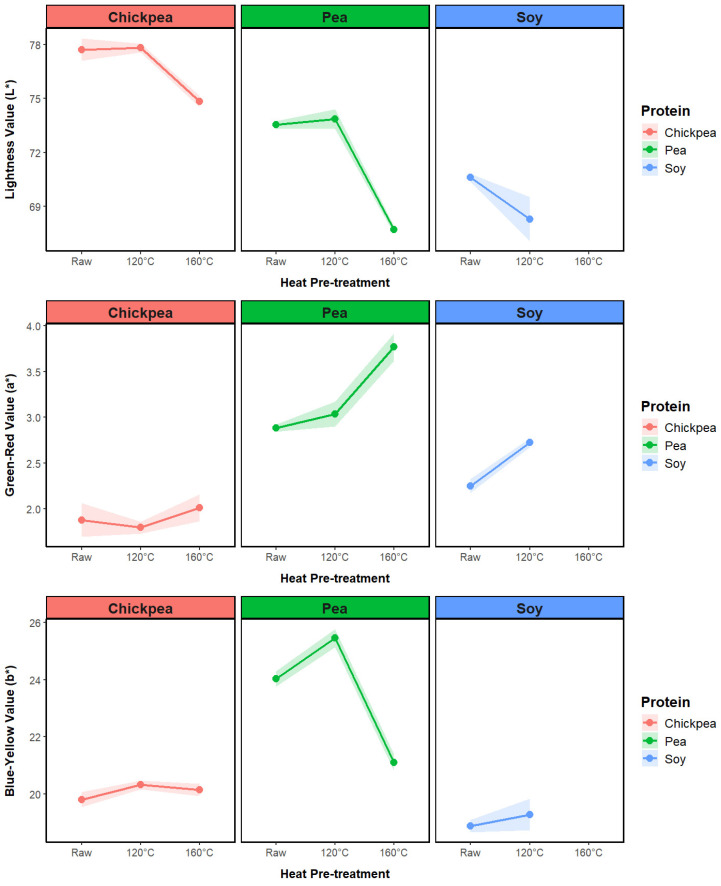
This study investigates the impact of dry heat pretreatment on the functionality of soy, chickpea, and pea protein ingredients for use in texturized vegetable protein (TVP) production via low moisture extrusion. The protein powders were heat-treated at temperatures ranging from 80 °C to 160 °C to modulate the extent of protein denaturation and assess their effects on RVA pasting behavior, water absorption capacity (WAC), and color attributes. The results indicate that the pretreatment temperature significantly influenced the proteins' functional properties, with an optimal temperature of 120 °C enhancing pasting properties and maintaining WAC, while a higher pretreatment temperature of 160 °C led to diminished ingredient functionality. Different protein sources exhibited distinct responses to heat pretreatment. The subsequent extrusion processing revealed significant changes in extrudate density and color, with increased density and darkness observed at higher pretreatment temperatures. This research provides insights into the interplay between protein sources, pretreatment conditions, and extrusion outcomes, highlighting the importance of controlled protein denaturation for developing high-quality, plant-based meat analogues. The findings have broad implications for the optimization of meat analogue manufacturing, with the aim of enhancing the sensory experience and sustainability of plant-based foods.
本研究调查了干热预处理对大豆、鹰嘴豆和豌豆蛋白成分功能的影响,这些蛋白成分用于通过低水分挤压生产组织化植物蛋白(TVP)。将蛋白粉在80℃至160℃的温度范围内进行热处理,以调节蛋白质变性程度,并评估其对RVA糊化行为、吸水能力(WAC)和颜色属性的影响。结果表明,预处理温度显著影响蛋白质的功能特性,120℃的最佳温度可增强糊化特性并保持WAC,而1�0℃的较高预处理温度会导致成分功能下降。不同的蛋白质来源对热预处理表现出不同的反应。随后的挤压加工显示出挤出物密度和颜色的显著变化,在较高的预处理温度下观察到密度增加和颜色变深。本研究深入探讨了蛋白质来源、预处理条件和挤压结果之间的相互作用,强调了控制蛋白质变性对开发高质量植物基肉类替代品的重要性。这些发现对肉类替代品制造的优化具有广泛意义,旨在提升植物性食品的感官体验和可持续性。