Department of Environmental Health Science and Technology, Jimma University, Jimma P.O. Box 378, Ethiopia.
Department of Disease Control, Faculty of Infectious Tropical Disease, London School of Hygiene and Tropical Medicine, London WC1E 7HT, UK.
Int J Environ Res Public Health. 2024 Jun 24;21(7):823. doi: 10.3390/ijerph21070823.
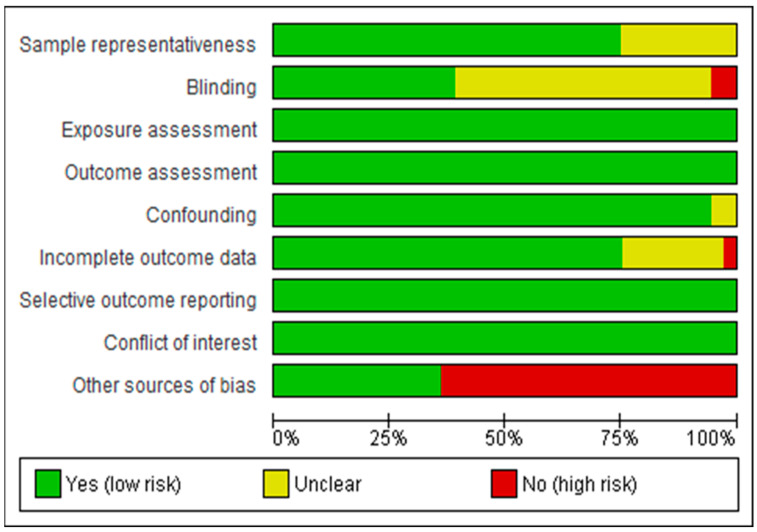
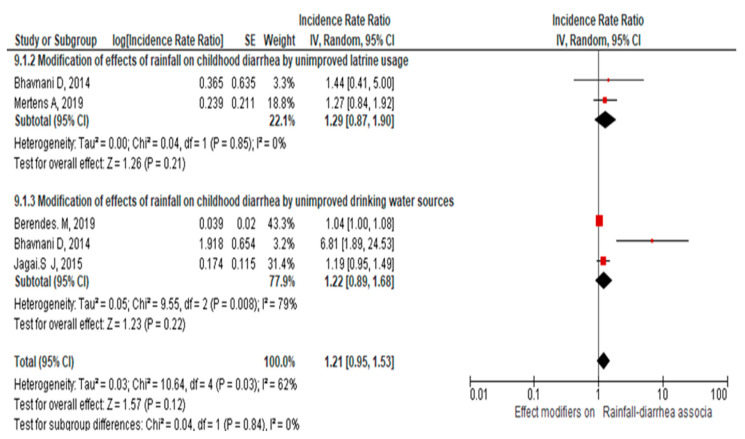
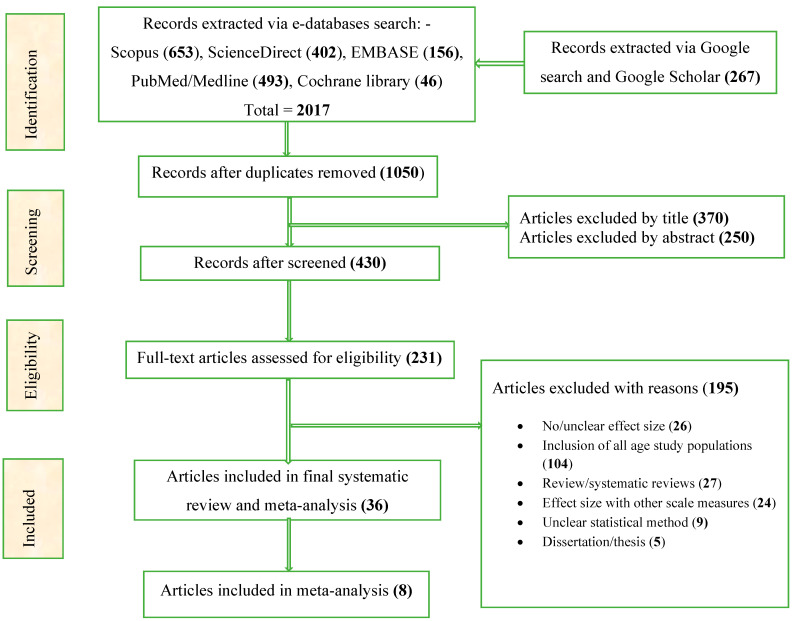
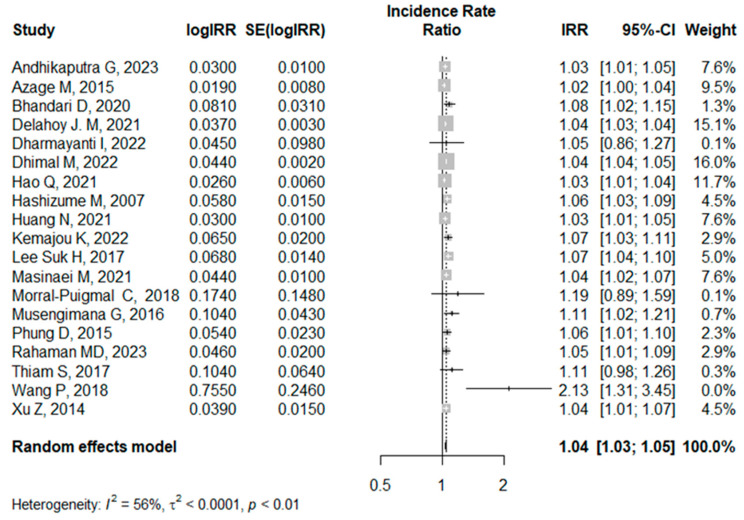
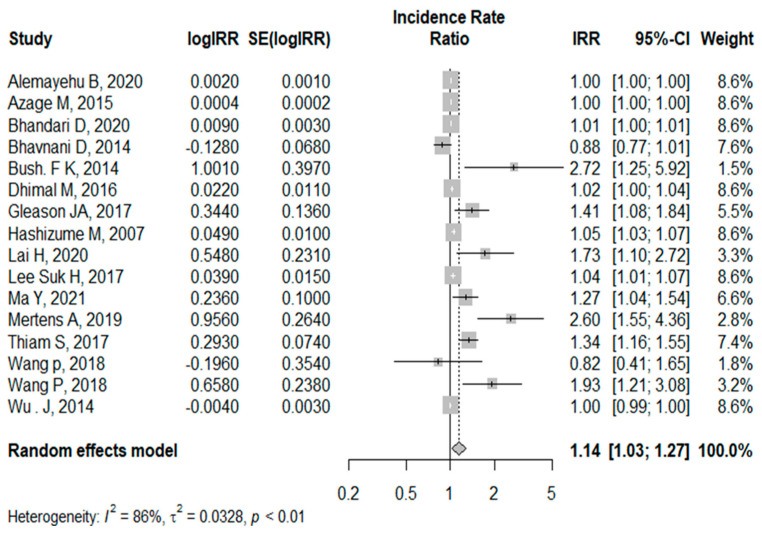
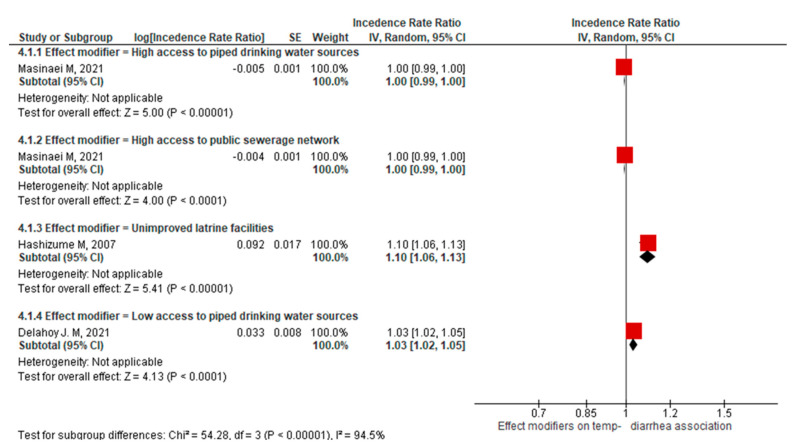
The latest report from the Intergovernmental Panel on Climate Change (IPCC) highlighted the worsening impacts of climate change. Two climate factors-temperature and rainfall uncertainties-influence the risk of childhood diarrhea, which remains a significant cause of morbidity and mortality in low- and middle-income countries. They create a conducive environment for diarrhea-causing pathogens and overwhelm environmental prevention measures. This study aimed to produce comprehensive evidence on the association of temperature and rainfall variability with the risk of childhood diarrhea and the influence of water and sanitation conditions on those associations. We conducted a systematic review and meta-analysis using the Preferred Reporting Items for Systematic Review and Meta-Analysis (PRISMA) approach. Records published in English from 2006 to 2023 were searched on 8 January 2024 via PubMed, EMBASE, ScienceDirect, Scopus, the Cochrane Library, and Google/Google Scholar using comprehensive search terms. We assessed studies for any risk of bias using the Navigation Guide and rated the quality of the evidence using the GRADE approach. The heterogeneity among estimates was assessed using I-squared statistics (I). The findings of the analysis were presented with forest plots using an incidence rate ratio (IRR). A meta-analysis was conducted on effect modifiers (water supply and sanitation conditions) using a random effects model with a 95% confidence interval (CI). The statistical analyses were conducted using R 4.3.2 software and Review Manager 5.3. A total of 2017 records were identified through searches, and only the 36 articles that met the inclusion criteria were included. The analysis suggests a small positive association between increased temperature and the occurrence of under-five diarrhea, with the pooled IRR = 1.04; 95% CI [1.03, 1.05], at I = 56% and -value < 0.01, and increased rainfall and U5 diarrhea, with IRR = 1.14; 95% CI [1.03, 1.27], at I = 86% and -value < 0.01. The meta-analysis indicated a positive association between unimproved latrine facilities and drinking water sources with a rainfall-modified effect on U5 diarrhea, with IRR = 1.21; 95% CI [0.95, 1.53], at I = 62% and -value = 0.03. We found that an increase in mean temperature and rainfall was associated with an increased risk of childhood diarrhea. Where there were unimproved latrine facilities and drinking water sources, the increase in mean rainfall or temperature would increase the incidence of childhood diarrhea. The results of this review help in assessing the effectiveness of current intervention programs, making changes as needed, or creating new initiatives to lower the prevalence of childhood diarrhea.
政府间气候变化专门委员会(IPCC)的最新报告强调了气候变化影响的恶化。两个气候因素——温度和降雨不确定性——影响儿童腹泻的风险,腹泻仍是低收入和中等收入国家发病率和死亡率的主要原因。它们为导致腹泻的病原体创造了有利环境,并使环境预防措施不堪重负。本研究旨在提供关于温度和降雨变化与儿童腹泻风险之间关联的综合证据,并研究水和卫生条件对这些关联的影响。我们采用系统评价和荟萃分析的首选报告项目(PRISMA)方法进行了系统评价和荟萃分析。2024 年 1 月 8 日,通过 PubMed、EMBASE、ScienceDirect、Scopus、Cochrane 图书馆和 Google/Google Scholar 以综合检索词搜索了 2006 年至 2023 年发表的英文记录。我们使用导航指南评估了研究的任何偏倚风险,并使用 GRADE 方法评估了证据的质量。使用 I 平方统计量(I)评估估计值之间的异质性。使用森林图以发病率比(IRR)呈现分析结果。使用随机效应模型和 95%置信区间(CI)对效应修饰剂(供水和卫生条件)进行荟萃分析。使用 R 4.3.2 软件和 Review Manager 5.3 进行了统计分析。通过搜索共确定了 2017 条记录,仅纳入了符合纳入标准的 36 篇文章。分析表明,温度升高与五岁以下儿童腹泻的发生呈小的正相关,汇总 IRR = 1.04;95%CI [1.03, 1.05],I = 56%,- 值<0.01,降雨增加与 U5 腹泻呈正相关,IRR = 1.14;95%CI [1.03, 1.27],I = 86%,- 值<0.01。荟萃分析表明,未改善的厕所设施和饮用水源与降雨修正的 U5 腹泻之间存在正相关,IRR = 1.21;95%CI [0.95, 1.53],I = 62%,- 值= 0.03。我们发现,平均温度和降雨量的增加与儿童腹泻风险的增加有关。在没有改善的厕所设施和饮用水源的情况下,平均降雨量或温度的增加会增加儿童腹泻的发病率。本综述的结果有助于评估当前干预计划的有效性,根据需要进行更改,或制定新举措降低儿童腹泻的流行率。