School of Nursing, Federal University of Rio Grande, Rio Grande 96203-900, Brazil.
Faculty of Nursing, Federal University of Pelotas, Pelotas 96010-610, Brazil.
Int J Environ Res Public Health. 2024 Jun 28;21(7):847. doi: 10.3390/ijerph21070847.
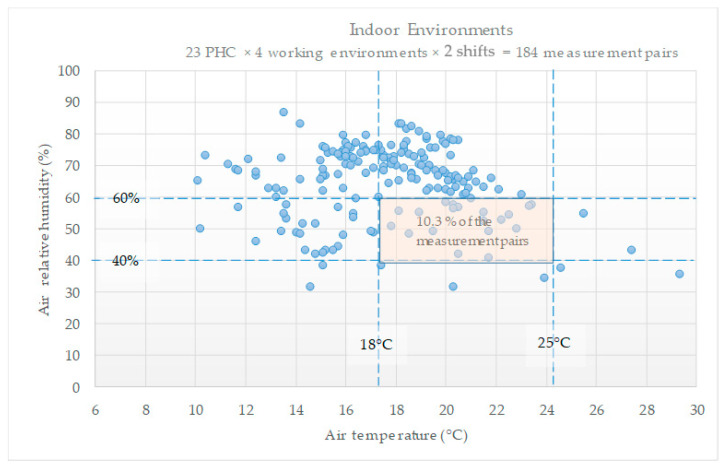
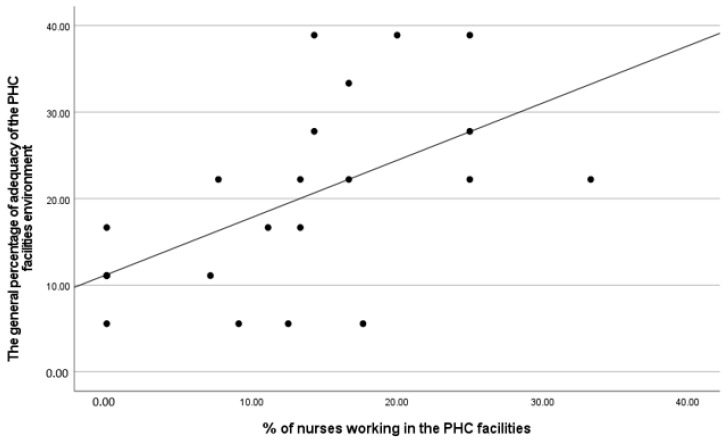
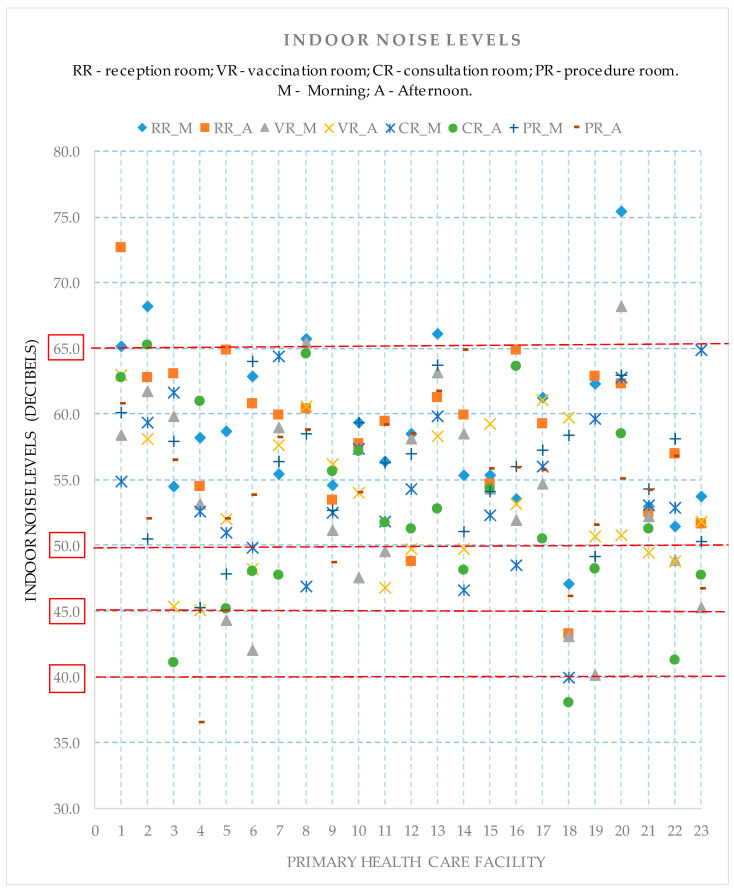
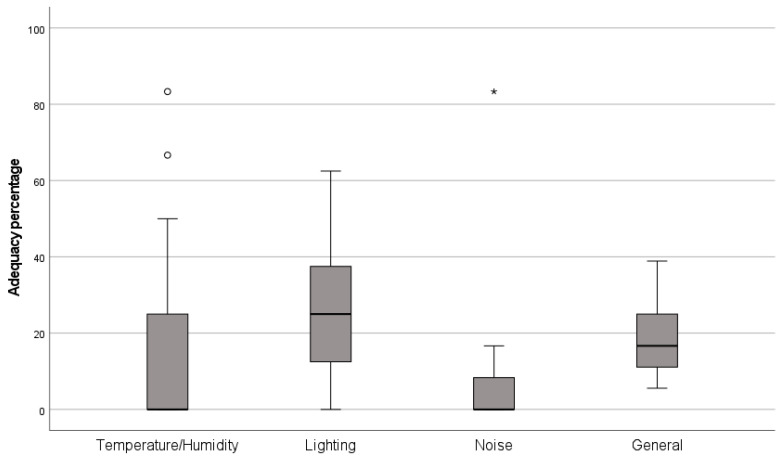
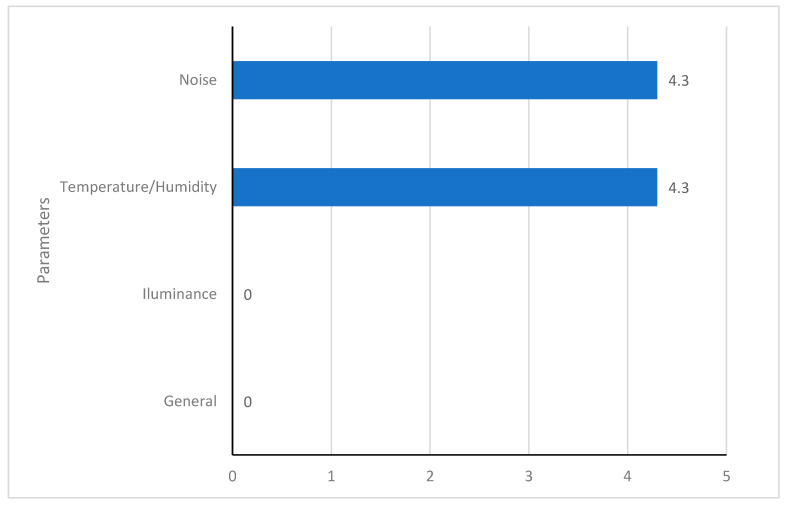
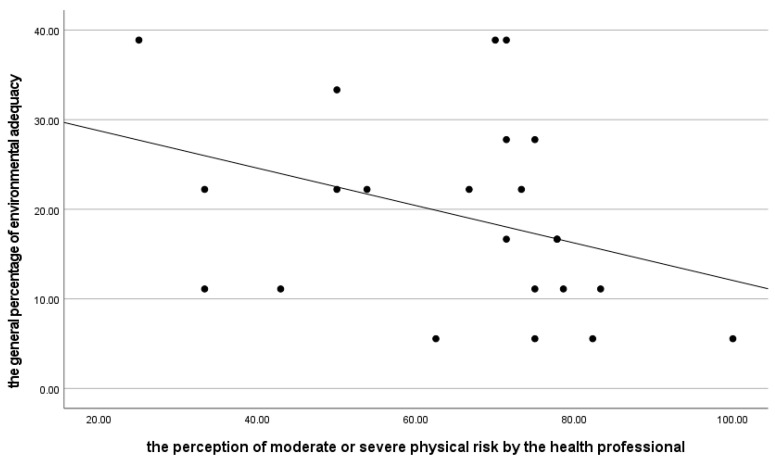
The objectives of this study were to assess the adequacy of physical parameters/factors (temperature, relative humidity, noise, and illuminance levels) of the work environment in PHC facilities, to evaluate the association between the adequacy of these measured physical parameters and the physical characteristics of the PHC facilities and their surroundings and to assess the association between health professionals' perceptions about exposure to physical risks in the PHC work environment and the adequacy of physical parameters measured in the same facilities. The study monitored 23 PHC facilities in southern Brazil and interviewed 210 health professionals. Data analysis involved Pearson's chi-square, Fisher's exact test, Spearman's correlation, and multivariate linear regression analysis was used to control for confounding factors. The significance level was set at 5% ( ≤ 0.05). The combination of temperature and relative humidity presented thermal comfort levels outside the adopted criteria for adequacy in consultation (outdoor relative humidity, = 0.013) and procedure rooms (front door open, = 0.034). Inadequate sound comfort (noise) levels in the morning shift were found in the vaccination (front door open, = 0.021) and consultation rooms (movement of people, = 0.016). In PHC facilities where reception rooms had insufficient lighting, internal curtains were opened less frequently ( = 0.047). The analysis of health professionals' perceptions of physical factors demonstrated that physicians more frequently perceive the physical risk of temperature and humidity ( = 0.044). The higher the number of nurses ( = 0.004) and oral health technicians in the PHC facilities ( = 0.031), the greater the general percentage of adequacy of monitored physical parameters. It was also confirmed that the higher the perception of moderate or severe physical risk among health professionals, the lower the general percentage of the adequacy of the physical parameters of the work environment of the PHC facilities evaluated (r = -0.450, = 0.031). This study's evidence contributes to a better understanding of physical conditions and future occupational interventions to ensure the comfort, safety, and well-being of PHC workers.
本研究的目的是评估基层医疗设施工作环境中物理参数(温度、相对湿度、噪声和光照水平)的充足性,评估这些测量物理参数与基层医疗设施及其周围环境的物理特征之间的关联,并评估卫生专业人员对基层医疗环境中物理风险暴露的看法与同一设施中测量的物理参数充足性之间的关联。该研究监测了巴西南部的 23 个基层医疗设施,并采访了 210 名卫生专业人员。数据分析包括 Pearson's chi-square、Fisher's exact test、Spearman's 相关分析和多元线性回归分析,以控制混杂因素。显著性水平设置为 5%(≤0.05)。温度和相对湿度的组合在咨询(室外相对湿度,=0.013)和诊室(前门打开,=0.034)中表现出不符合充足性标准的热舒适度水平。在接种(前门打开,=0.021)和咨询室(人员移动,=0.016)中发现早晨班次的声音舒适度(噪声)水平不足。在接待室照明不足的基层医疗设施中,内部窗帘打开的频率较低(=0.047)。对卫生专业人员对物理因素看法的分析表明,医生更频繁地感知到温度和湿度的物理风险(=0.044)。基层医疗设施中护士人数越多(=0.004)和口腔卫生技术人员越多(=0.031),监测物理参数的充足性总比例就越高。还证实,卫生专业人员对中度或重度物理风险的感知程度越高,评估的基层医疗设施工作环境物理参数的充足性总比例就越低(r=-0.450,=0.031)。本研究的证据有助于更好地了解物理条件,并为未来的职业干预措施提供信息,以确保基层医疗工作者的舒适、安全和福祉。