Regenerative Medicine Institute (REMEDI), Biomedical Sciences Building, University of Galway, Galway, Ireland.
Front Endocrinol (Lausanne). 2024 Jul 15;15:1396794. doi: 10.3389/fendo.2024.1396794. eCollection 2024.
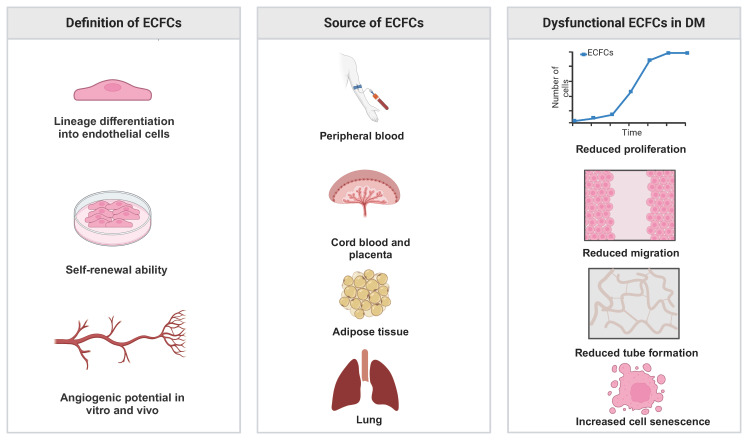
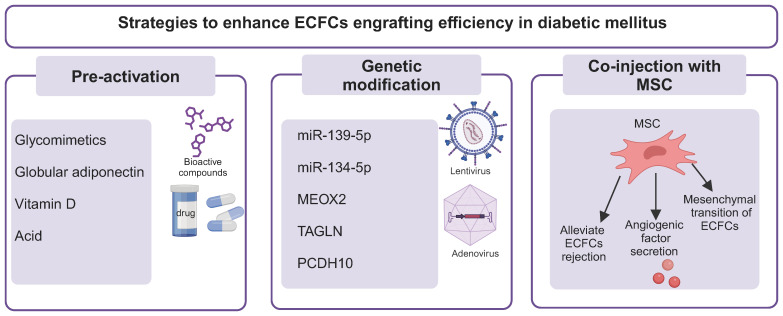
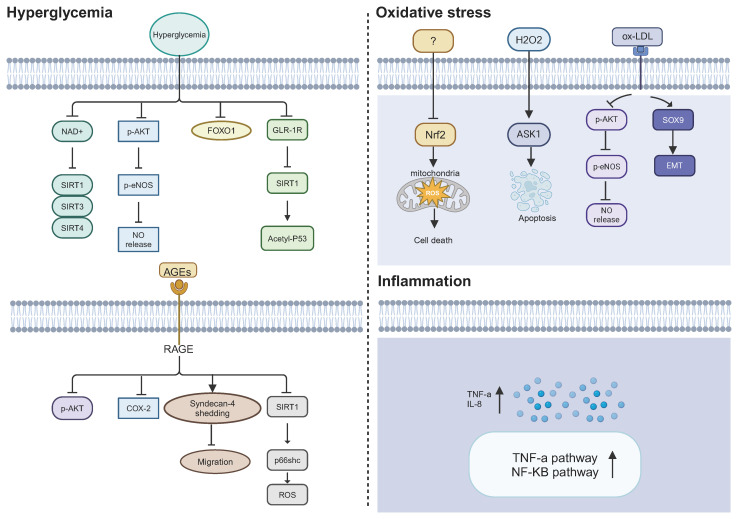
Diabetes mellitus (DM) is a metabolic disease characterized by hyperglycemia, leading to various vascular complications. Accumulating evidence indicates that endothelial colony-forming cells (ECFCs) have attractive prospects for repairing and restoring blood vessels. Thus, ECFCs may be a novel therapeutic option for diabetic patients with vascular complications who require revascularization therapy. However, it has been reported that the function of ECFCs is impaired in DM, which poses challenges for the autologous transplantation of ECFCs. In this review, we summarize the molecular mechanisms that may be responsible for ECFC dysfunction and discuss potential strategies for improving the therapeutic efficacy of ECFCs derived from patients with DM. Finally, we discuss barriers to the use of ECFCs in human studies in light of the fact that there are no published reports using these cells in humans.
糖尿病(DM)是一种以高血糖为特征的代谢性疾病,可导致各种血管并发症。越来越多的证据表明,内皮祖细胞(ECFCs)在修复和重建血管方面具有广阔的应用前景。因此,ECFCs 可能是需要血运重建治疗的合并血管并发症的糖尿病患者的一种新的治疗选择。然而,据报道,DM 患者的 ECFC 功能受损,这给 ECFC 的自体移植带来了挑战。在这篇综述中,我们总结了可能导致 ECFC 功能障碍的分子机制,并讨论了改善 DM 患者来源的 ECFC 治疗效果的潜在策略。最后,我们根据目前尚无使用这些细胞的人类研究报告这一事实,讨论了在人类研究中使用 ECFCs 的障碍。