McGillen Kathryn, Aljabban Nabeal, Wu Robert, Shin Benjamin, Schreibman Ian, Luke Franklin, Birkholz James
Penn State Health Milton S Hershey Medical Center, Department of Radiology, 500 University Drive, Hershey, PA 17033, USA.
Penn State Health Milton S Hershey Medical Center, Department of Medicine, 500 University Drive, Hershey, PA 17033, USA.
Res Diagn Interv Imaging. 2024 Feb 7;9:100039. doi: 10.1016/j.redii.2023.100039. eCollection 2024 Mar.
Screening ultrasound for hepatocellular carcinoma (HCC) identifies lesions which require further characterization by a contrast-enhanced exam to non-invasively diagnose HCC. While ultrasound is recommended in screening, some HCC can be occult on grayscale imaging. The purpose of this study was to determine if the addition of ultrasound contrast (sulfahexafluoride) to screening ultrasound for HCC can identify more HCC lesions than grayscale sonographic imaging alone.
All HCC screening ultrasounds that also had contrast were evaluated in this retrospective study. Patients with a focal lesion seen only after administration of contrast (OAC) were noted, as well as any follow-up imaging or pathology results. Additional variables collected included patient demographics, cirrhosis type, and laboratory values.
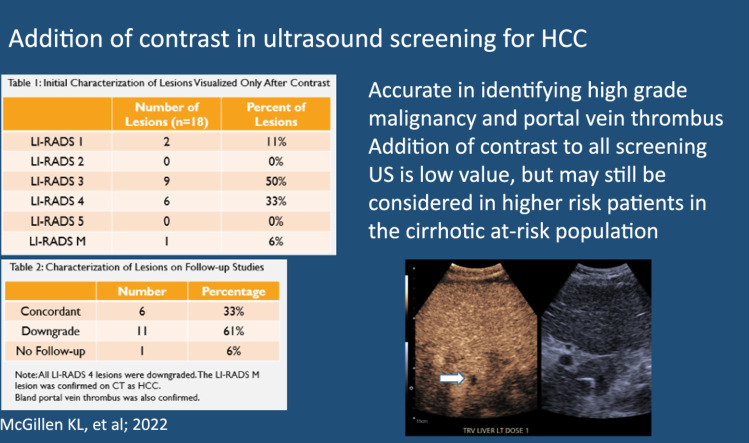
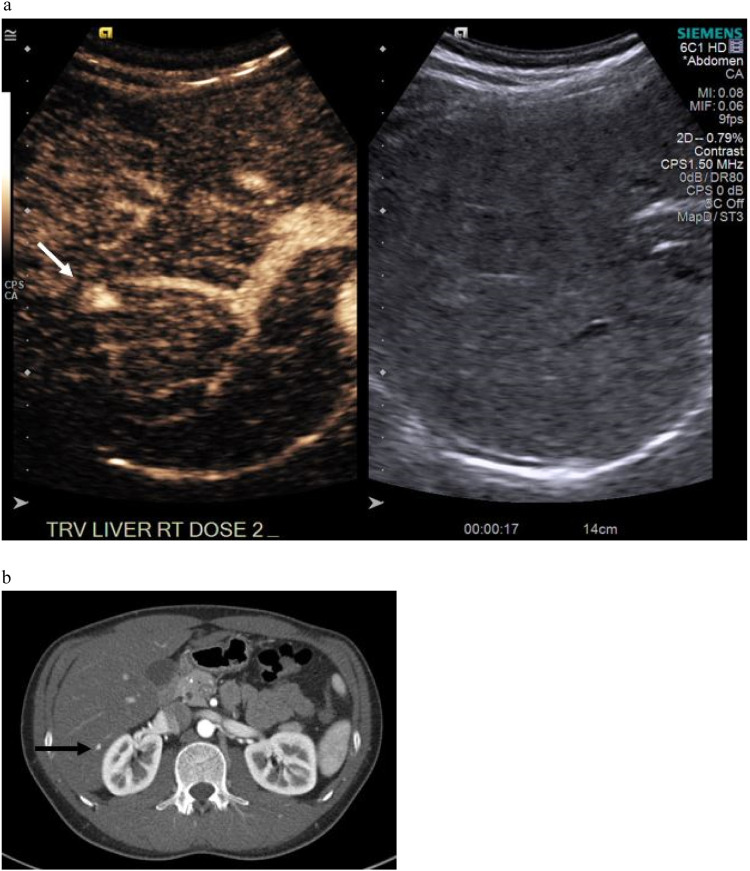
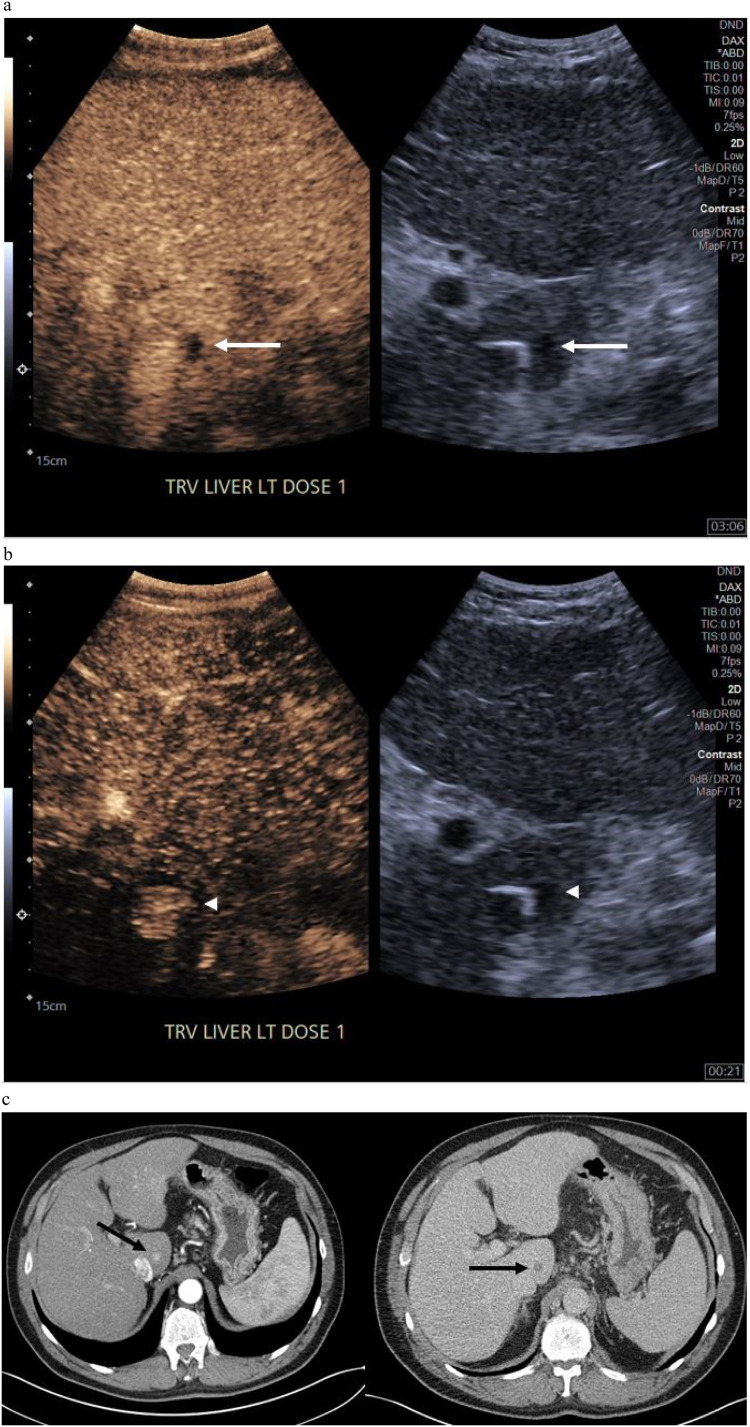
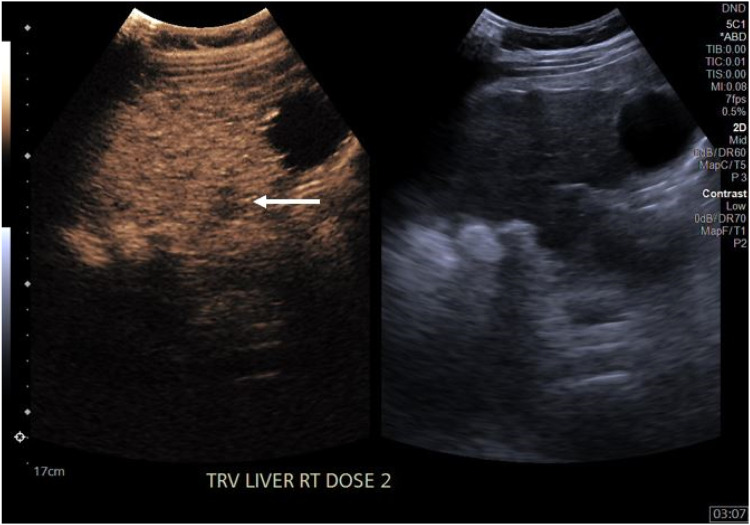
230 unique patients were included, of which 160 had imaging or pathology follow-up. 18 of these patients had an OAC lesion, of which 17 had follow-up. Among these OACs, there was one LIRADS M lesion (1/18, 5.6 %) and one bland portal vein thrombus identified, which were both confirmed on follow-up imaging. All LIRADS 4 OAC lesions were downgraded. No additional HCC were identified on follow-up imaging or pathology of these patients.
Addition of contrast to screening ultrasound did identify additional lesions, portal vein thrombus, and high grade malignancy. However, as the incidence of OAC lesions was low (7.8 %, 18/230) and most of the lesions were not malignant, addition of post contrast sweeps through the liver is of low value in the low to medium at-risk cirrhotic population in identifying occult HCC.
用于肝细胞癌(HCC)筛查的超声检查可发现需要通过增强检查进一步定性以无创诊断HCC的病变。虽然推荐超声用于筛查,但某些HCC在灰阶成像上可能隐匿。本研究的目的是确定在HCC筛查超声中添加超声造影剂(六氟化硫)是否比单纯灰阶超声成像能发现更多的HCC病变。
在这项回顾性研究中评估了所有同时进行了超声造影的HCC筛查超声检查。记录仅在注射造影剂后才发现局灶性病变(OAC)的患者,以及任何后续的成像或病理结果。收集的其他变量包括患者人口统计学特征、肝硬化类型和实验室值。
纳入了230例独特患者,其中160例有成像或病理随访。这些患者中有18例有OAC病变,其中17例有随访。在这些OAC病变中,有1例LIRADS M类病变(1/18,5.6%)和1例单纯门静脉血栓被发现,两者均在后续成像中得到证实。所有LIRADS 4类OAC病变均被降级。在这些患者的后续成像或病理检查中未发现其他HCC。
在筛查超声中添加造影剂确实发现了额外的病变、门静脉血栓和高级别恶性肿瘤。然而,由于OAC病变的发生率较低(7.8%,18/230)且大多数病变并非恶性,在中低风险肝硬化人群中,对肝脏进行造影剂增强扫描在识别隐匿性HCC方面价值较低。