Li Qiang, Huang Haozhang, Lu Xiaozhao, Yang Yajuan, Zhang Yunhan, Chen Weihua, Lai Wenguang, Liang Guoxiao, Shi Shanshan, Wang Xiaoyan, Chen Jiyan, Chen Shiqun, Yan Xiaoming
Department of Cardiology, Guangdong Cardiovascular Institute, Guangdong Provincial People's Hospital, Guangdong Academy of Medical Sciences, 510080 Guangzhou, Guangdong, China.
Department of Guangdong Provincial Key Laboratory of Coronary Heart Disease Prevention, Guangdong Cardiovascular Institute, Guangdong Provincial People's Hospital, Guangdong Academy of Medical Sciences, 510080 Guangzhou, Guangdong, China.
Rev Cardiovasc Med. 2023 Mar 8;24(3):84. doi: 10.31083/j.rcm2403084. eCollection 2023 Mar.
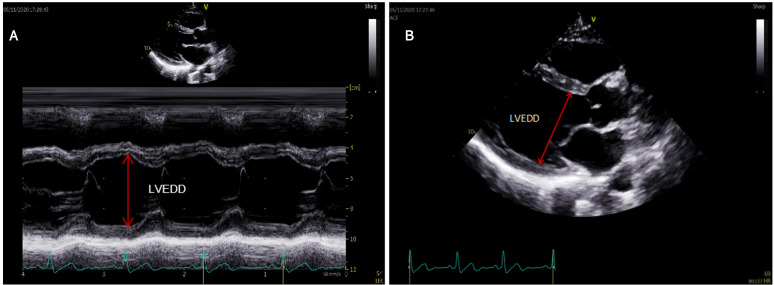
Left ventricular end-diastolic diameter (LVEDD) is a common parameter in echocardiography. Increased LVEDD is associated with left ventricular (LV) dysfunction. However, the association between LVEDD and all-cause mortality in patients with coronary artery disease (CAD) is uncertain.
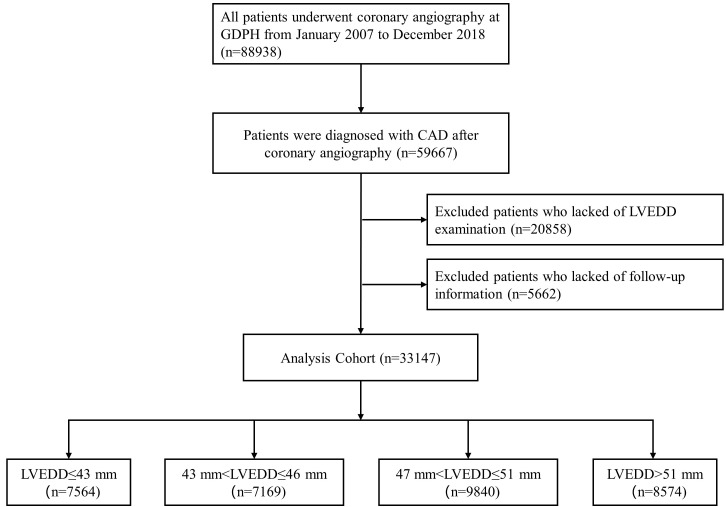
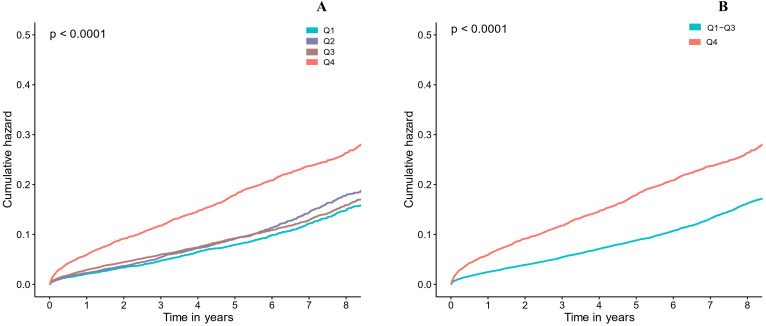
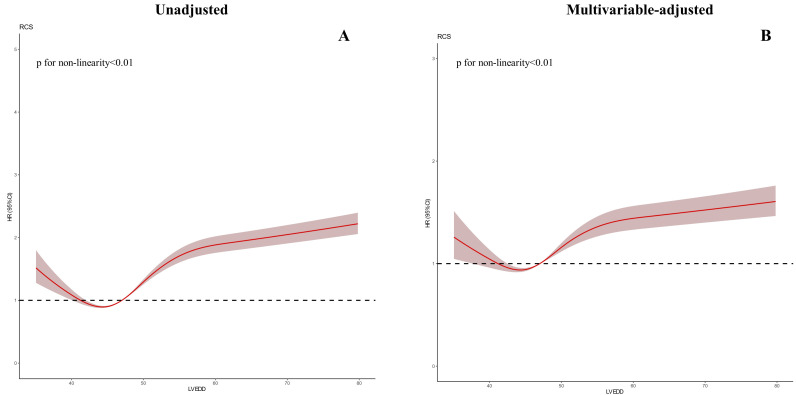
This study enrolled 33,147 patients with CAD who had undergone transthoracic echocardiography between January 2007 and December 2018 from the Cardiorenal Improvement study (NCT04407936). The patients were stratified into four groups based on the quartile of LVEDD (Quartile 1: LVEDD 43 mm, Quartile 2: 43 mm LVEDD 46 mm, Quartile 3: 46 mm LVEDD 51 mm, Quartile 4: LVEDD 51 mm) and were categorized into two groups (Quartile 1-3 versus Quartile 4). Survival curves were generated with the Kaplan-Meier analysis, and the differences between groups were assessed by log-rank test. Restricted cubic splines and cox proportional hazards models were used to investigate the association with LVEDD and all-cause mortality.
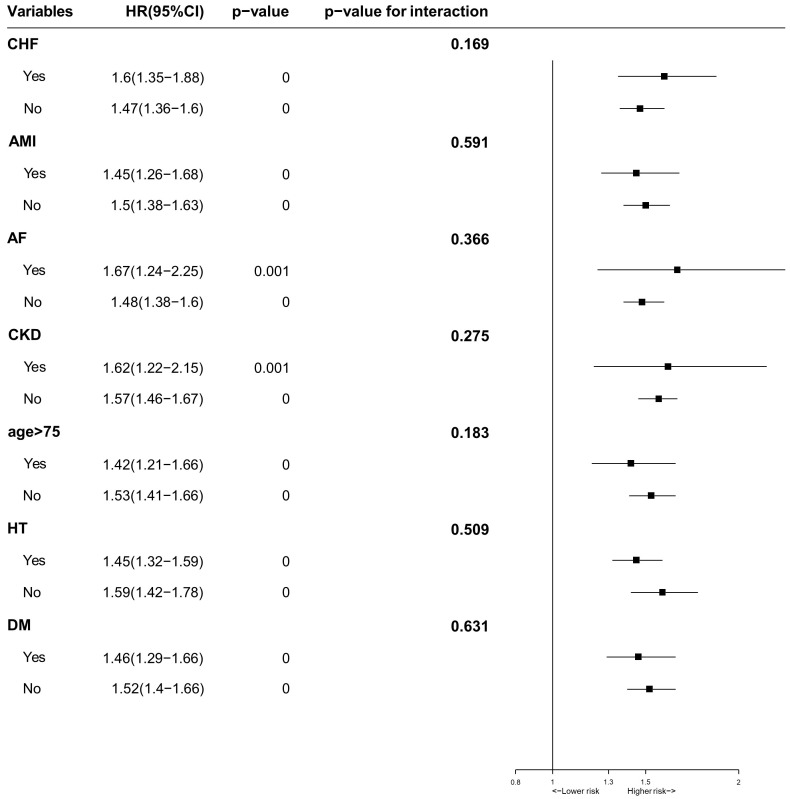
A total of 33,147 patients (average age: 63.0 10.6 years; 24.0% female) were included in the final analysis. In the average follow-up period of 5.2 years, a total of 4288 patients died. The mortality of the larger LVEDD group (Quartile 4) was significantly higher than the lower LVEDD groups (Quartile 1-3) (18.05% vs 11.15%, 0.001). After adjusting for confounding factors, patients with the larger LVEDD (Quartile 4) had a 1.19-fold risk for all-cause mortality (95% CI: 1.09-1.30) compared with the lower quartile (Quartile 1-3).
Enlarged LVEDD is an independent predictor of all-cause mortality in patients with CAD. LVEDD measurements may be helpful for risk stratification and providing therapeutic targets for the management of CAD patients.
左心室舒张末期内径(LVEDD)是超声心动图中的一个常见参数。LVEDD增大与左心室(LV)功能障碍相关。然而,LVEDD与冠状动脉疾病(CAD)患者全因死亡率之间的关联尚不确定。
本研究纳入了33147例CAD患者,这些患者于2007年1月至2018年12月期间接受了来自心肾改善研究(NCT04407936)的经胸超声心动图检查。根据LVEDD的四分位数将患者分为四组(四分位数1:LVEDD≤43mm,四分位数2:43mm<LVEDD≤46mm,四分位数3:46mm<LVEDD≤51mm,四分位数4:LVEDD>51mm),并分为两组(四分位数1 - 3与四分位数4)。采用Kaplan - Meier分析生成生存曲线,并通过对数秩检验评估组间差异。使用受限立方样条和Cox比例风险模型来研究LVEDD与全因死亡率之间的关联。
最终分析共纳入33147例患者(平均年龄:63.0±10.6岁;24.0%为女性)。在平均5.2年的随访期内,共有4288例患者死亡。LVEDD较大组(四分位数4)的死亡率显著高于LVEDD较低组(四分位数1 - 3)(18.05%对11.15%,P<0.001)。在调整混杂因素后,与较低四分位数(四分位数1 - 3)相比,LVEDD较大(四分位数4)的患者全因死亡风险增加1.19倍(95%CI:1.09 - 1.30)。
LVEDD增大是CAD患者全因死亡的独立预测因素。LVEDD测量可能有助于CAD患者的风险分层并为管理提供治疗靶点。