Lin Zijie, Lin Xinyi, Zhao Xin, Xu Chenchao, Yu Bokang, Shen Yiwen, Li Liliang
Department of Forensic Medicine, School of Basic Medical Sciences, Fudan University, 200032 Shanghai, China.
Department of Cardiology, Shanghai Institute of Cardiovascular Diseases, Zhongshan Hospital, Fudan University, 200032 Shanghai, China.
Rev Cardiovasc Med. 2022 May 16;23(5):175. doi: 10.31083/j.rcm2305175. eCollection 2022 May.
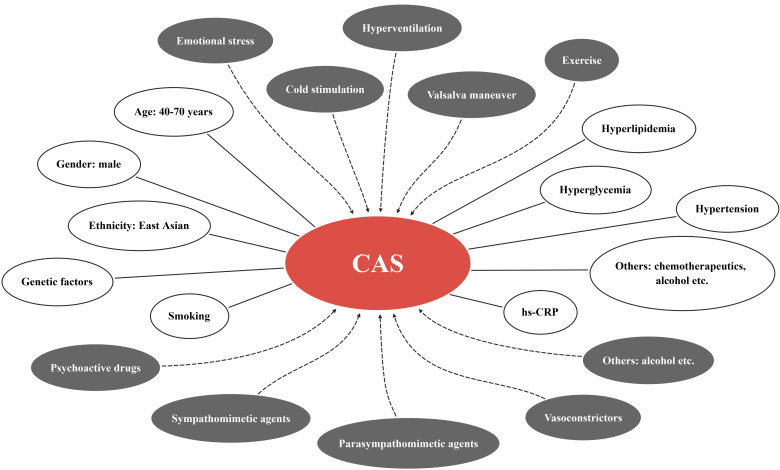
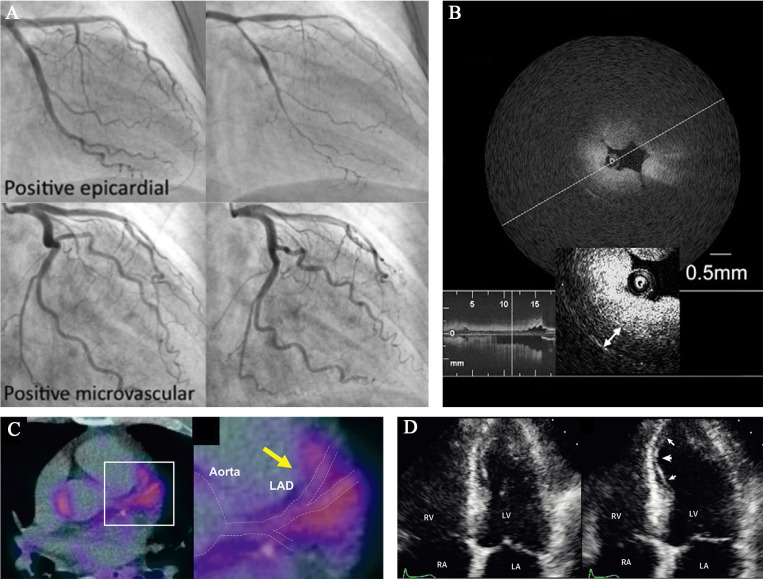
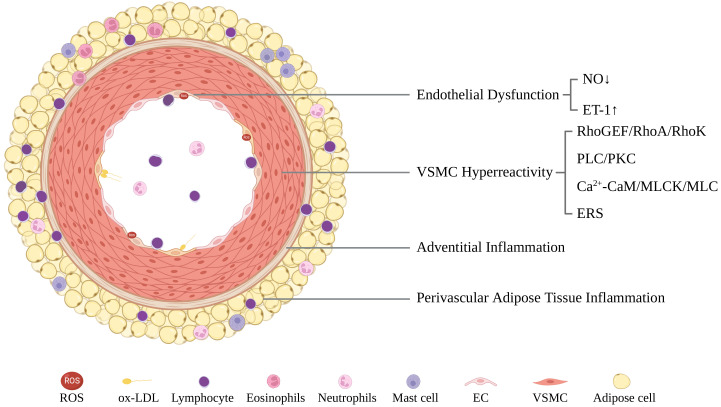
Coronary artery spasm (CAS) is a transient reversible subtotal or complete occlusion induced by coronary hypercontraction and the critical cause of myocardial ischaemia with non-obstructive coronary arteries. During the past decades, our knowledge of the risk factors and pathophysiological mechanisms of CAS have been increasingly progressed, and various diagnostic approaches, including imaging technologies and novel biomarkers, have been proposed to serve well to diagnose CAS clinically. This review aims to summarize these research progresses on the risk factors of CAS and introduce current knowledge about the mechanisms accounting for CAS, including endothelial dysfunction, vascular smooth muscle cell hyperreactivity, and adventitial and perivascular adipose tissue inflammation. We also gathered the recently evolved diagnostic approaches and analyzed their advantages/disadvantages, in purpose of enhancing the diagnostic yield on the basis of ensuring accuracy.
冠状动脉痉挛(CAS)是一种由冠状动脉过度收缩引起的短暂可逆性次全或完全闭塞,是非阻塞性冠状动脉心肌缺血的关键原因。在过去几十年中,我们对CAS的危险因素和病理生理机制的认识不断进步,并且已经提出了包括成像技术和新型生物标志物在内的各种诊断方法,以很好地用于临床诊断CAS。这篇综述旨在总结CAS危险因素的这些研究进展,并介绍目前关于CAS发生机制的知识,包括内皮功能障碍、血管平滑肌细胞高反应性以及外膜和血管周围脂肪组织炎症。我们还收集了最近发展的诊断方法并分析了它们的优缺点,目的是在确保准确性的基础上提高诊断率。