i3S, Institute for Research and Innovation in Health, University of Porto, Porto, Portugal.
ICBAS, School of Medicine and Biomedical Sciences, University of Porto, Porto, Portugal.
Nat Immunol. 2024 Sep;25(9):1692-1703. doi: 10.1038/s41590-024-01916-8. Epub 2024 Jul 30.
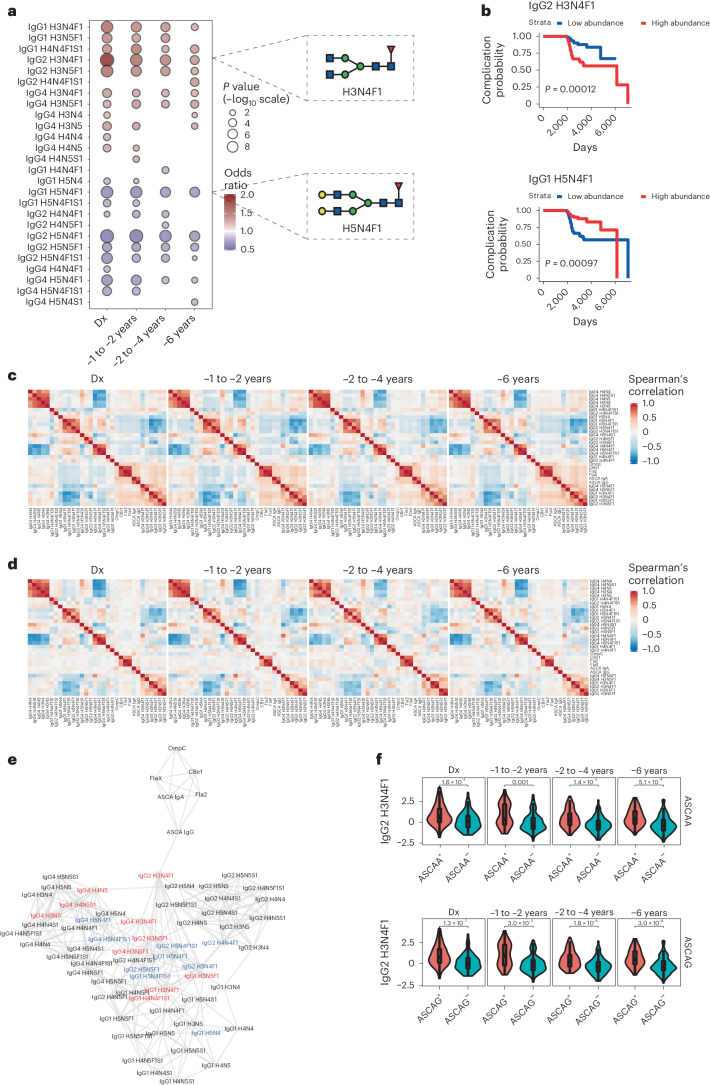
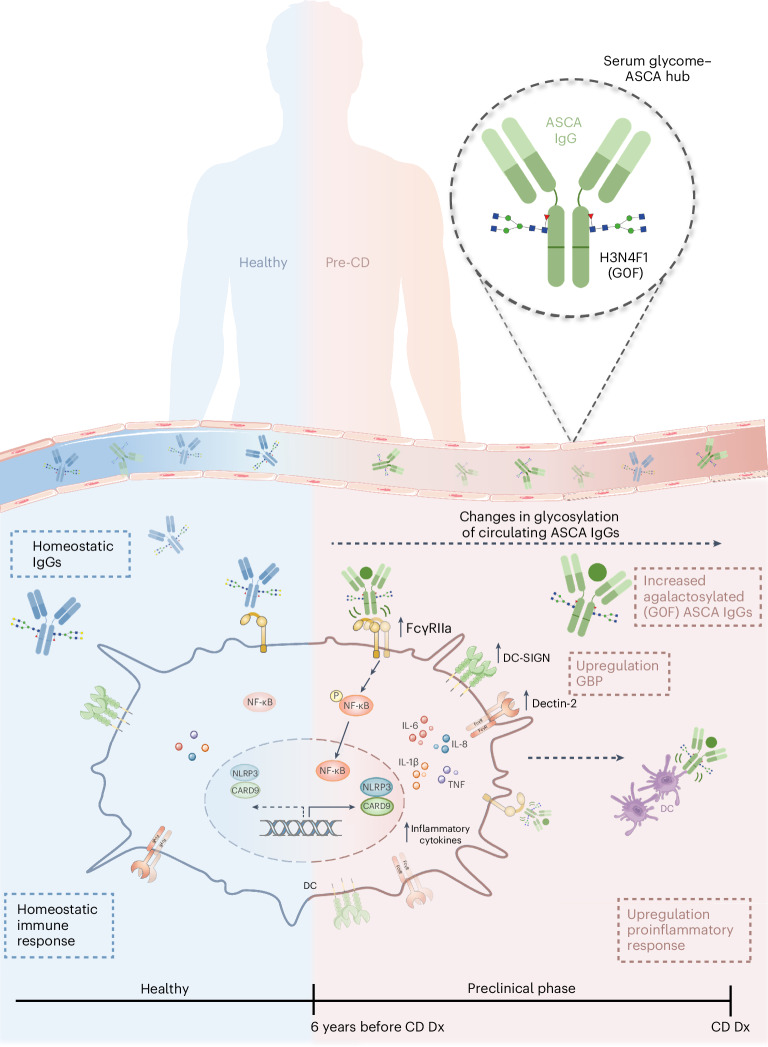
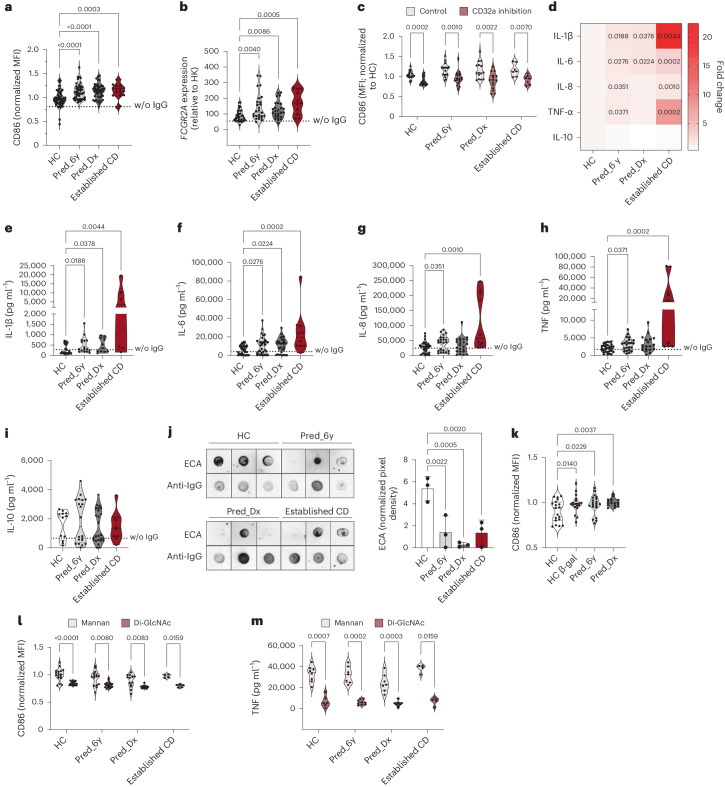
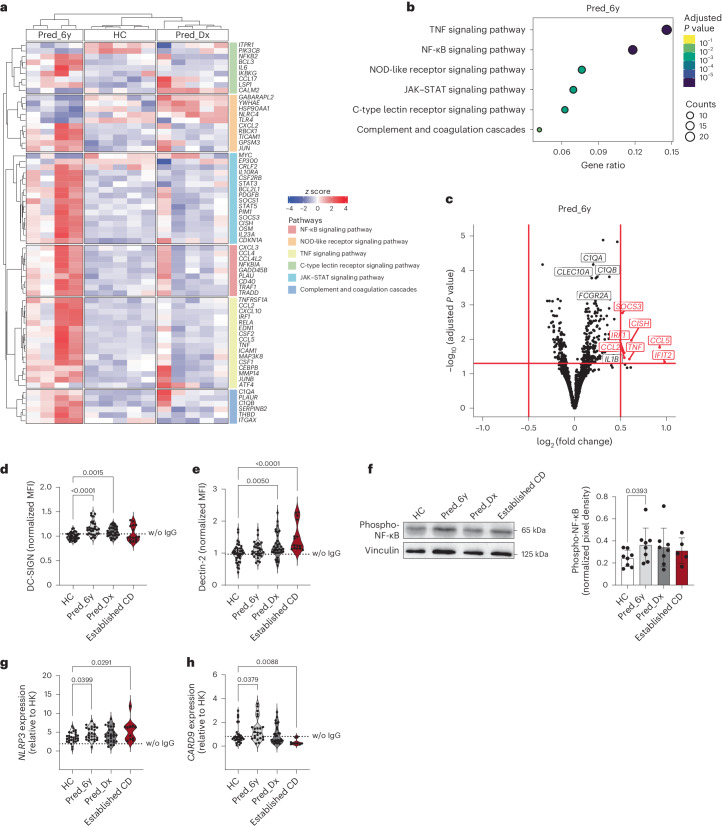
Inflammatory bowel disease (IBD) is characterized by chronic inflammation in the gut. There is growing evidence in Crohn's disease (CD) of the existence of a preclinical period characterized by immunological changes preceding symptom onset that starts years before diagnosis. Gaining insight into this preclinical phase will allow disease prediction and prevention. Analysis of preclinical serum samples, up to 6 years before IBD diagnosis (from the PREDICTS cohort), revealed the identification of a unique glycosylation signature on circulating antibodies (IgGs) characterized by lower galactosylation levels of the IgG fragment crystallizable (Fc) domain that remained stable until disease diagnosis. This specific IgG2 Fc glycan trait correlated with increased levels of antimicrobial antibodies, specifically anti-Saccharomyces cerevisiae (ASCA), pinpointing a glycome-ASCA hub detected in serum that predates by years the development of CD. Mechanistically, we demonstrated that this agalactosylated glycoform of ASCA IgG, detected in the preclinical phase, elicits a proinflammatory immune pathway through the activation and reprogramming of innate immune cells, such as dendritic cells and natural killer cells, via an FcγR-dependent mechanism, triggering NF-κB and CARD9 signaling and leading to inflammasome activation. This proinflammatory role of ASCA was demonstrated to be dependent on mannose glycan recognition and galactosylation levels in the IgG Fc domain. The pathogenic properties of (anti-mannose) ASCA IgG were validated in vivo. Adoptive transfer of antibodies to mannan (ASCA) to recipient wild-type mice resulted in increased susceptibility to intestinal inflammation that was recovered in recipient FcγR-deficient mice. Here we identify a glycosylation signature in circulating IgGs that precedes CD onset and pinpoint a specific glycome-ASCA pathway as a central player in the initiation of inflammation many years before CD diagnosis. This pathogenic glyco-hub may constitute a promising new serum biomarker for CD prediction and a potential target for disease prevention.
炎症性肠病(IBD)的特征是肠道慢性炎症。越来越多的证据表明,克罗恩病(CD)存在一个临床前阶段,其特征是在症状出现前就存在免疫变化,这种变化始于诊断前数年。深入了解这一临床前阶段将有助于疾病的预测和预防。对临床前血清样本(来自 PREDICTS 队列,在 IBD 诊断前长达 6 年)的分析显示,在循环抗体(IgG)上鉴定到一种独特的糖基化特征,其特征是 IgG 片段结晶(Fc)结构域的半乳糖化水平较低,并且在疾病诊断之前一直保持稳定。这种特定的 IgG2 Fc 聚糖特征与抗微生物抗体(尤其是抗酿酒酵母抗体,ASCA)水平的升高相关,指出在 CD 发生前数年,在血清中检测到糖组-ASCA 枢纽。从机制上讲,我们证明了在临床前阶段检测到的这种无半乳糖的 ASCA IgG 糖型,通过激活和重新编程树突状细胞和自然杀伤细胞等固有免疫细胞,通过 FcγR 依赖性机制引发 NF-κB 和 CARD9 信号传导,并导致炎症小体激活,引发炎症。ASCA 的这种促炎作用被证明依赖于 IgG Fc 结构域中的甘露糖糖基识别和半乳糖化水平。体内验证了(抗甘露糖)ASCA IgG 的致病性。将抗体转移给甘露聚糖(ASCA)给野生型受体小鼠,导致对肠道炎症的易感性增加,而在受体 FcγR 缺陷型小鼠中则恢复。在这里,我们在循环 IgGs 中鉴定到一个在 CD 发病前出现的糖基化特征,并确定一个特定的糖组-ASCA 途径作为 CD 诊断前多年炎症起始的核心参与者。这个致病的糖基枢纽可能成为 CD 预测的有前途的新血清生物标志物和疾病预防的潜在靶点。