Donnelly Paula Sinead, Sweeney Aoife, Wilson Emily, Passmore Anthony Peter, McCorry Noleen K, Boeri Marco, Kane Joseph P M
Centre for Public Health, School of Medicine, Dentistry and Biomedical Sciences, Queen's University Belfast, Belfast, United Kingdom.
Northern Ireland Lewy Body Dementia Research Advisory Group, Queen's University Belfast, Belfast, United Kingdom.
Front Dement. 2024 Jul 15;3:1421556. doi: 10.3389/frdem.2024.1421556. eCollection 2024.
The development of high-quality stated preference (SP) surveys requires a rigorous design process involving engagement with representatives from the target population. However, while transparency in the reporting of the development of SP surveys is encouraged, few studies report on this process and the outcomes. Recommended stages of instrument development includes both steps for stakeholder/end-user engagement and pretesting. Pretesting typically involves interviews, often across multiple waves, with improvements made at each wave; pretesting is therefore resource intensive. The aims of this paper are to report on the outcomes of collaboration with a Lewy body dementia research advisory group during the design phase of a SP survey. We also evaluate an alternative approach to instrument development, necessitated by a resource constrained context.
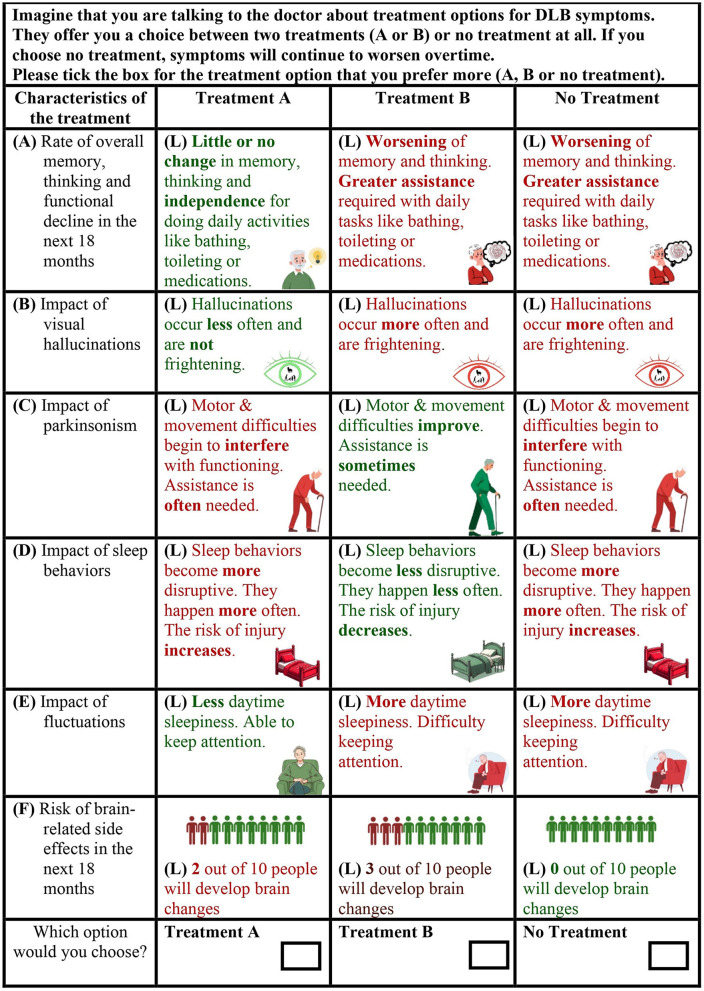
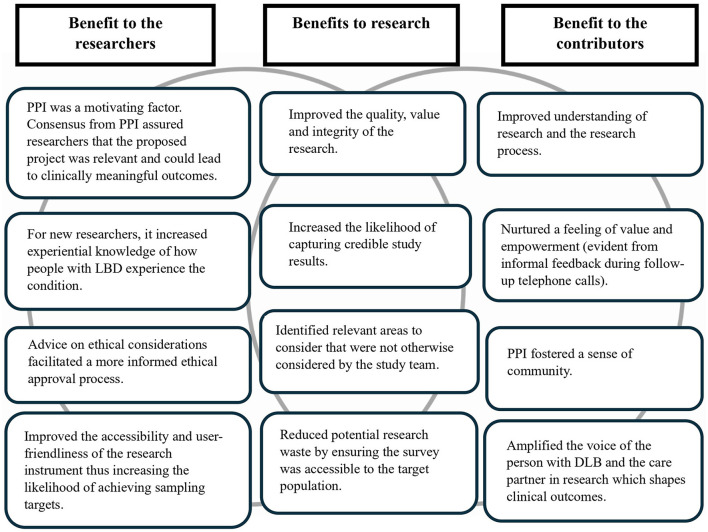
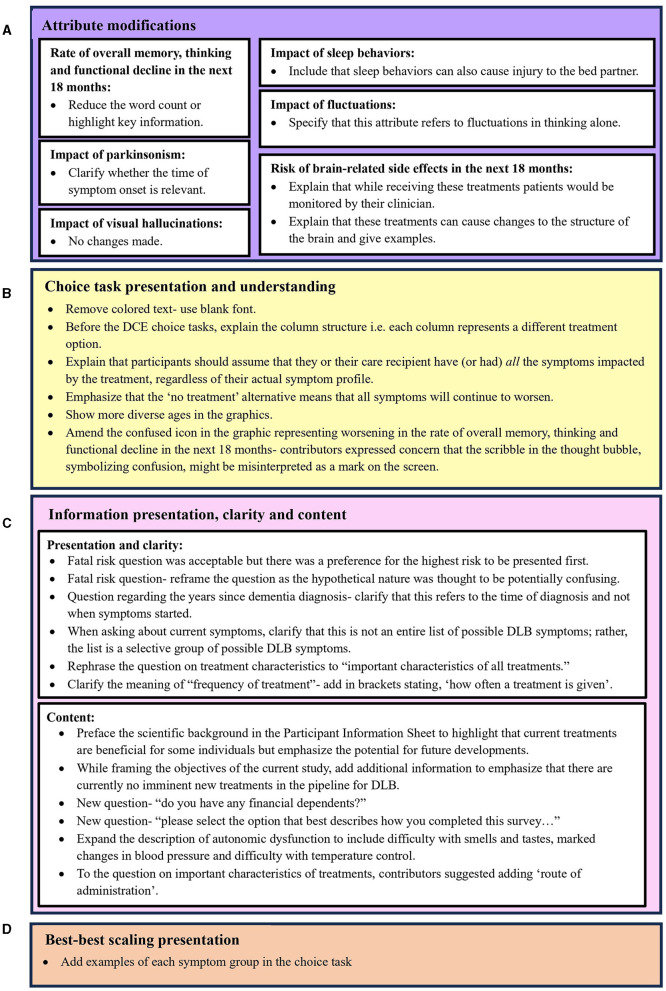
The approach involved conducting the stages of end-user engagement and pretesting together during a public involvement event. A hybrid approach involving a focus group with breakout interviews was employed. Feedback from contributors informed the evolution of the survey instrument.
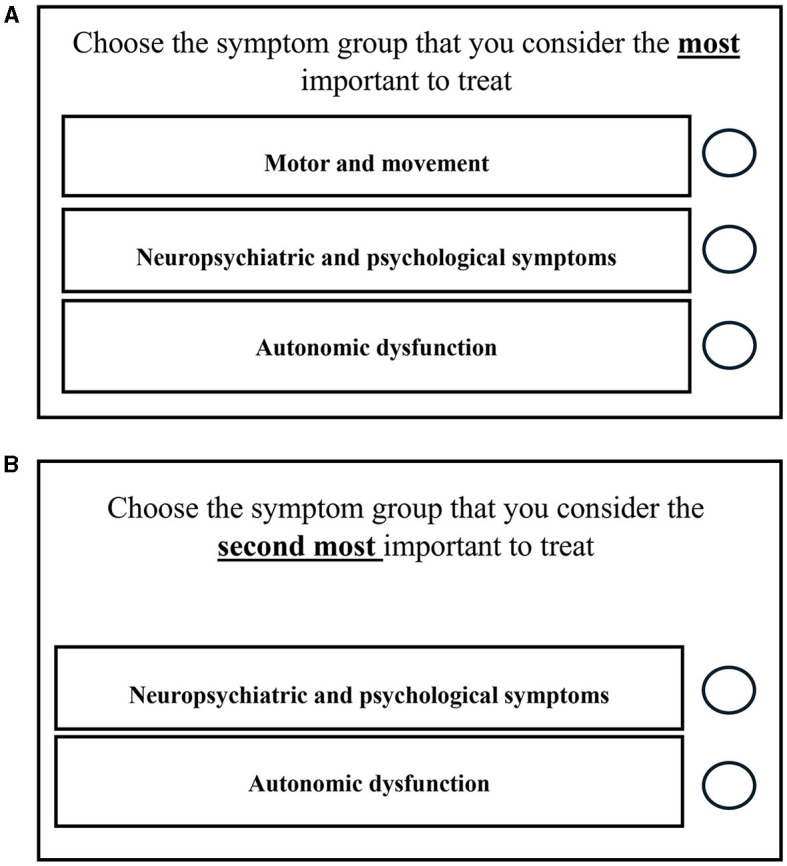
Changes to the survey instrument were organized into four categories: attribute modifications; choice task presentation and understanding; information presentation, clarity and content; and best-best scaling presentation. The hybrid approach facilitated group brainstorming while still allowing the researcher to assess the feasibility of choice tasks in an interview setting. However, greater individual exploration and the opportunity to trial iterative improvements across waves was not feasible with this approach.
Involvement of the research advisory group resulted in a more person-centered survey design. In a context constrained by time and budget, and with consideration of the capacity and vulnerability of the target population, the approach taken was a feasible and pragmatic mechanism for improving the design of a SP survey.
高质量陈述偏好(SP)调查的开展需要一个严谨的设计过程,其中涉及与目标人群的代表进行接触。然而,尽管鼓励在SP调查开展过程的报告中保持透明度,但很少有研究报告这一过程及结果。推荐的工具开发阶段包括利益相关者/最终用户参与步骤和预测试。预测试通常涉及多轮访谈,每一轮都进行改进;因此,预测试资源消耗大。本文旨在报告在一项SP调查设计阶段与路易体痴呆症研究咨询小组合作的成果。我们还评估了在资源受限情况下一种替代的工具开发方法。
该方法包括在一次公众参与活动中同时进行最终用户参与和预测试阶段。采用了一种混合方法,包括一个焦点小组和分组访谈。参与者的反馈为调查问卷的改进提供了依据。
调查问卷的修改分为四类:属性修改;选择任务的呈现与理解;信息呈现、清晰度和内容;以及最佳-最佳量表呈现。这种混合方法促进了小组头脑风暴,同时仍使研究人员能够在访谈环境中评估选择任务的可行性。然而,这种方法无法进行更深入的个体探索,也无法实现跨轮次进行迭代改进的试验。
研究咨询小组的参与使调查设计更以人为本。在时间和预算受限的情况下,考虑到目标人群的能力和脆弱性,所采用的方法是改进SP调查设计的一种可行且务实的机制。