Hansen Niels, Rentzsch Kristin, Hirschel Sina, Wiltfang Jens, Schott Björn Hendrik, Bartels Claudia, Lange Claudia, Bouter Caroline
Department of Psychiatry and Psychotherapy, University Medical Center Göttingen, Göttingen, Germany.
Clinical Immunological Laboratory Prof. Stöcker, Groß Grönau, Germany.
Front Dement. 2023 Aug 3;2:1227823. doi: 10.3389/frdem.2023.1227823. eCollection 2023.
Dementia with Lewy bodies (DLB) is the second most common type of neurodegenerative dementia. Here, we report a case of dementia associated with anti-Rho-GTPase-activating protein 26 (ARHGAP26) autoantibodies, which have never been previously linked to DLB.
We describe the case of a 78-year-old man who underwent cerebrospinal fluid (CSF) analysis, magnetic resonance imaging (MRI), F-fluorodesoxyglucose positron emission tomography (FDG-PET), and a detailed neuropsychological evaluation.
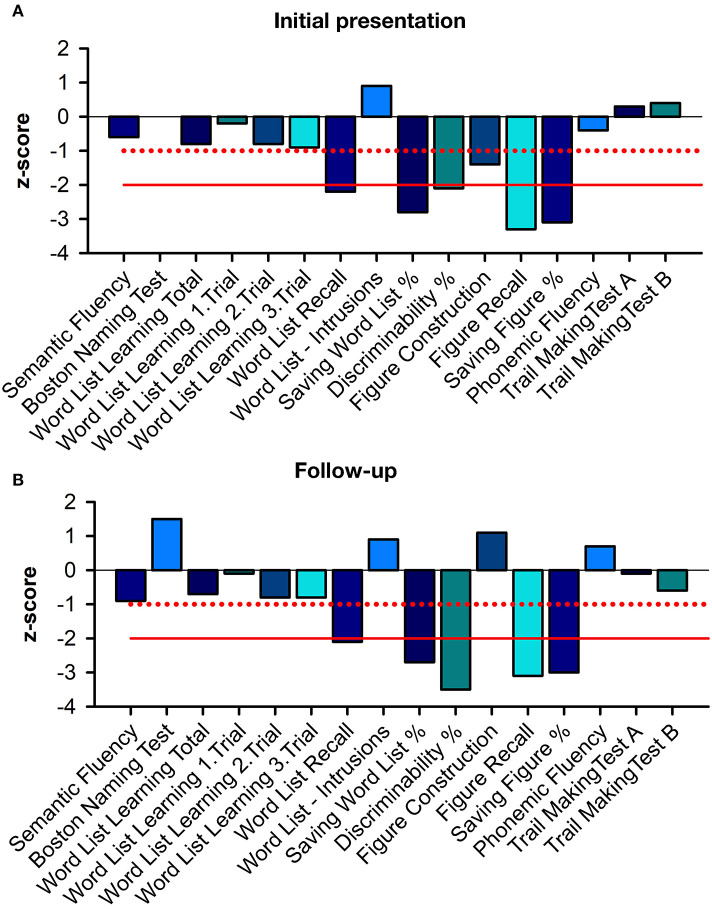
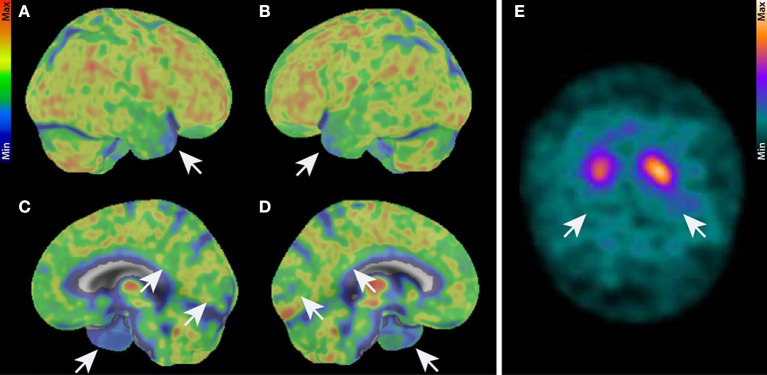
The patient presented with mild dementia syndrome associated with extrapyramidal symptoms. Neuropsychological testing revealed impaired cognitive flexibility, figural memory, and verbal memory. Fluctuating cognitive abilities with deficits in attention-executive dysfunction and visuoconstruction also developed over time. A brain MRI showed reduced biparietal and cerebellar brain volume with generalized accentuation of the outer CSF spaces. The patient's CSF revealed anti-ARHGAP26 autoantibodies, which were also detectable in serum. In the differential complementary imaging diagnosis at 2 years, an FDG-PET revealed decreased occupancy of the posterior cingulum and precuneus. Although the FDG-PET, MRI, and clinical findings were potentially consistent with Alzheimer's disease, negative amyloid biomarkers in the CSF made an AD diagnosis highly unlikely. Single photon emission computed tomography (SPECT) with [(123)I] N-omega-fluoropropyl-2beta-carbomethoxy-3beta-{4-iodophenyl}nortropane ([(123)I]FP-CIT) showed right-sided predominance, reduced dopamine transporter uptake in the putamen, consistent with a positive indicative biomarker finding typical of DLB. Considering the clinically probable DLB associated with the two core features of Parkinsonism and fluctuating cognition with deficits in attention, supported by an abundant tracer uptake in the right putamen and lower uptake in the left putamen on 123I-FP-CIT-SPECT as an indicative biomarker, we started an antidementia drug using a cholinesterase inhibitor.
Our report shows that atypical DLB may be associated with anti-ARHGAP26 autoantibodies, although their role and significance in the pathogenesis of DLB are unknown. However, it has to be mentioned that it is also possible that antibody-specific synthesis of anti-ARHGAP26 autoantibodies is a hallmark of a rare autoimmune disease that may cause the clinical and laboratory features involving altered dopamine transporter uptake on 123I-FP-CIT-SPECT, dementia, and mild Parkinson's symptoms rather than idiopathic DLB with only two core DLB features and inconsistent cognitive and imaging findings. Further research is needed to investigate the role of these autoantibodies in different dementias, particularly in DLB and mixed DLB-AD types.
路易体痴呆(DLB)是第二常见的神经退行性痴呆类型。在此,我们报告一例与抗Rho-GTP酶激活蛋白26(ARHGAP26)自身抗体相关的痴呆病例,此前该抗体从未与DLB相关联。
我们描述了一名78岁男性的病例,该患者接受了脑脊液(CSF)分析、磁共振成像(MRI)、F-氟脱氧葡萄糖正电子发射断层扫描(FDG-PET)以及详细的神经心理学评估。
该患者表现为伴有锥体外系症状的轻度痴呆综合征。神经心理学测试显示认知灵活性、图形记忆和言语记忆受损。随着时间推移,还出现了注意力执行功能障碍和视觉构建缺陷导致的认知能力波动。脑部MRI显示双侧顶叶和小脑脑容量减少,脑室外CSF间隙普遍增宽。患者的脑脊液中检测到抗ARHGAP26自身抗体,血清中也可检测到。在2年时的鉴别性补充成像诊断中,FDG-PET显示后扣带回和楔前叶摄取减少。尽管FDG-PET、MRI和临床发现可能与阿尔茨海默病一致,但脑脊液中淀粉样蛋白生物标志物阴性使得AD诊断极不可能。用[(123)I]N-ω-氟丙基-2β-甲氧基羰基-3β-{4-碘苯基}去甲托烷([(123)I]FP-CIT)进行的单光子发射计算机断层扫描(SPECT)显示右侧优势,壳核中多巴胺转运体摄取减少,这与DLB典型的阳性指示性生物标志物发现一致。考虑到临床上可能的DLB与帕金森病和注意力缺陷导致的认知波动这两个核心特征相关,123I-FP-CIT-SPECT显示右侧壳核大量摄取示踪剂而左侧壳核摄取较低作为指示性生物标志物,我们开始使用胆碱酯酶抑制剂进行抗痴呆治疗。
我们的报告表明,非典型DLB可能与抗ARHGAP26自身抗体相关,尽管它们在DLB发病机制中的作用和意义尚不清楚。然而,必须指出的是,抗ARHGAP26自身抗体的特异性合成也有可能是一种罕见自身免疫性疾病的标志,该疾病可能导致临床和实验室特征,包括123I-FP-CIT-SPECT上多巴胺转运体摄取改变、痴呆和轻度帕金森症状,而不是仅具有两个核心DLB特征且认知和影像学发现不一致的特发性DLB。需要进一步研究来调查这些自身抗体在不同痴呆中的作用,特别是在DLB和混合性DLB-AD类型中。