Department of Thoracic Oncology, Netherlands Cancer Institute, Amsterdam, The Netherlands.
Department of Pulmonology, Radboud University Medical Centre, Nijmegen, The Netherlands.
PLoS One. 2024 Jul 31;19(7):e0290939. doi: 10.1371/journal.pone.0290939. eCollection 2024.
Molecular profiling of NSCLC is essential for optimising treatment decisions, but often incomplete. We assessed the efficacy of protocolised molecular profiling in the current standard-of-care (SoC) in a prospective observational study in the Netherlands and measured the effect of providing standardised diagnostic procedures. We also explored the potential of plasma-based molecular profiling in the primary diagnostic setting.
This multi-centre prospective study was designed to explore the performance of current clinical practice during the run-in phase using local SoC tissue profiling procedures. The subsequent phase was designed to investigate the extent to which comprehensive molecular profiling (CMP) can be maximized by protocolising tumour profiling. Successful molecular profiling was defined as completion of at least EGFR and ALK testing. Additionally, PD-L1 tumour proportions scores were explored. Lastly, the additional value of centralised plasma-based testing for EGFR and KRAS mutations using droplet digital PCR was evaluated.
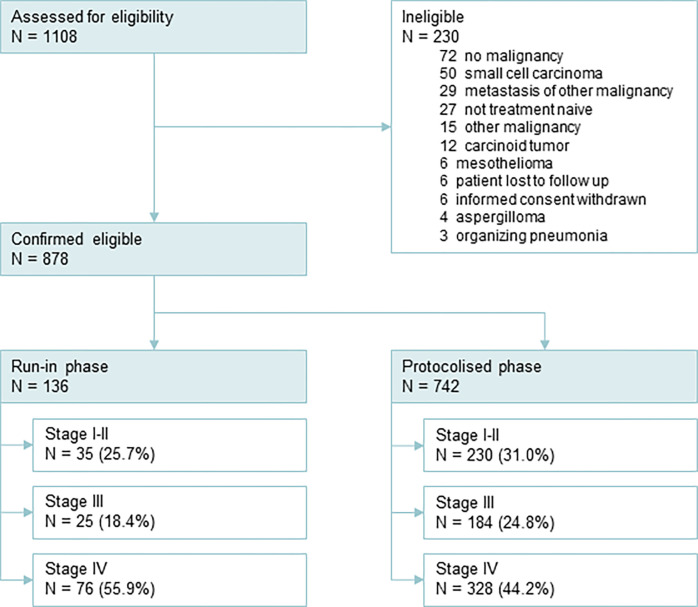
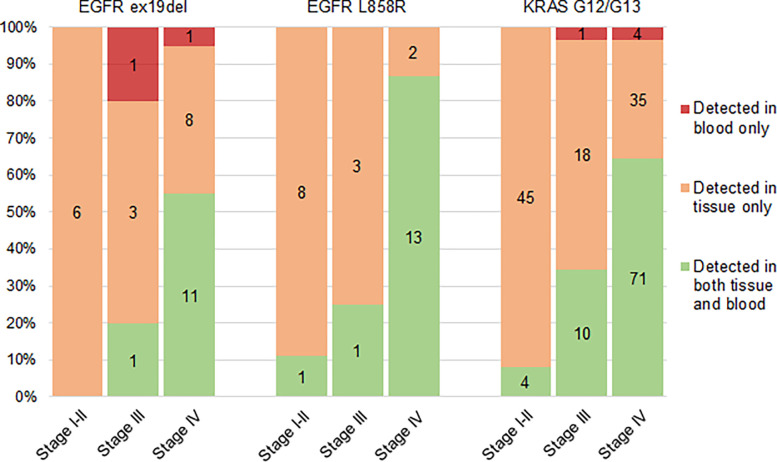
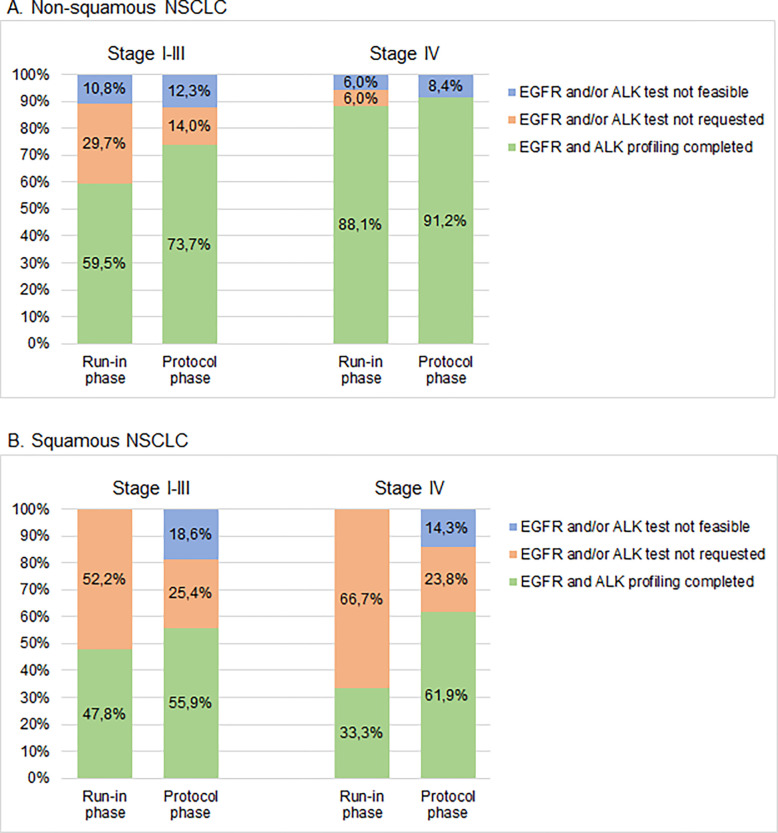
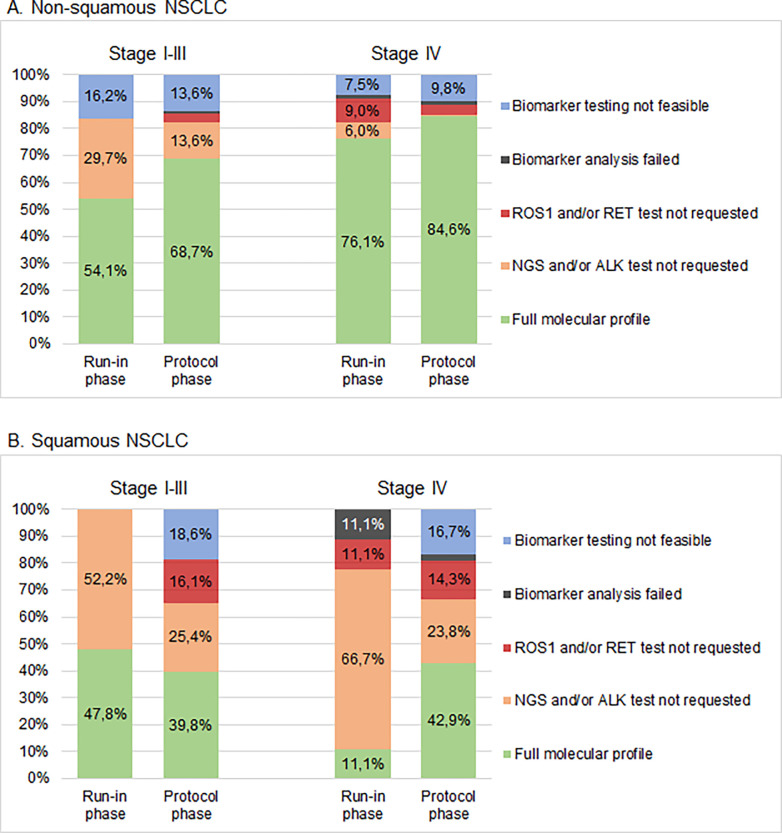
Total accrual was 878 patients, 22.0% had squamous cell carcinoma and 78.0% had non-squamous NSCLC. Stage I-III was seen in 54.0%, stage IV in 46.0%. Profiling of EGFR and ALK was performed in 69.9% of 136 patients included in the run-in phase, significantly more than real-world data estimates of 55% (p<0.001). Protocolised molecular profiling increased the rate to 77.0% (p = 0.049). EGFR and ALK profiling rates increased from 77.9% to 82.1% in non-squamous NSCLC and from 43.8% to 57.5% in squamous NSCLC. Plasma-based testing was feasible in 98.4% and identified oncogenic driver mutations in 7.1% of patients for whom tissue profiling was unfeasible.
This study shows a high success rate of tissue-based molecular profiling that was significantly improved by a protocolised approach. Tissue-based profiling remains unfeasible for a substantial proportion of patients. Combined analysis of tumour tissue and circulating tumour DNA is a promising approach to allow adequate molecular profiling of more patients.
非小细胞肺癌(NSCLC)的分子谱分析对于优化治疗决策至关重要,但通常并不完整。我们在荷兰的一项前瞻性观察研究中评估了当前标准治疗(SoC)中方案化分子谱分析的疗效,并测量了提供标准化诊断程序的效果。我们还探索了在原发性诊断环境中基于血浆的分子谱分析的潜力。
这项多中心前瞻性研究旨在使用当地 SoC 组织分析程序探索当前临床实践在预试验阶段的表现。随后的阶段旨在研究通过方案化肿瘤分析最大限度地提高综合分子谱分析(CMP)的程度。成功的分子谱分析定义为至少完成 EGFR 和 ALK 检测。此外,还探索了 PD-L1 肿瘤比例评分的价值。最后,评估了使用液滴数字 PCR 进行中央化血浆检测 EGFR 和 KRAS 突变的额外价值。
总入组人数为 878 例患者,22.0%为鳞状细胞癌,78.0%为非鳞状 NSCLC。Ⅰ-Ⅲ期占 54.0%,Ⅳ期占 46.0%。在预试验阶段纳入的 136 例患者中,进行了 EGFR 和 ALK 分析,明显高于实际数据估计的 55%(p<0.001)。方案化分子谱分析将比例提高到 77.0%(p = 0.049)。非鳞状 NSCLC 中 EGFR 和 ALK 分析比例从 77.9%增加到 82.1%,鳞状 NSCLC 中从 43.8%增加到 57.5%。血浆检测在 98.4%的患者中是可行的,对于组织分析不可行的患者,检测到 7.1%的致癌驱动突变。
本研究显示了基于组织的分子谱分析的高成功率,通过方案化方法显著提高。组织分析对于相当一部分患者仍然不可行。联合分析肿瘤组织和循环肿瘤 DNA 是一种很有前途的方法,可以使更多的患者得到充分的分子谱分析。