Yuan Tao, Wang Haojue, Wang Yi, Dong Shankun, Ge Jianxun, Li Ziqing, Sun Shui
Department of Joint Surgery, Shandong Provincial Hospital, Cheeloo College of Medicine, Shandong University, Jinan, 250012, Shandong, China.
Department of Joint Surgery, Shandong Provincial Hospital Affiliated to Shandong First Medical University, Jinan, 250021, Shandong, China.
Mol Med. 2024 Jul 31;30(1):111. doi: 10.1186/s10020-024-00880-1.
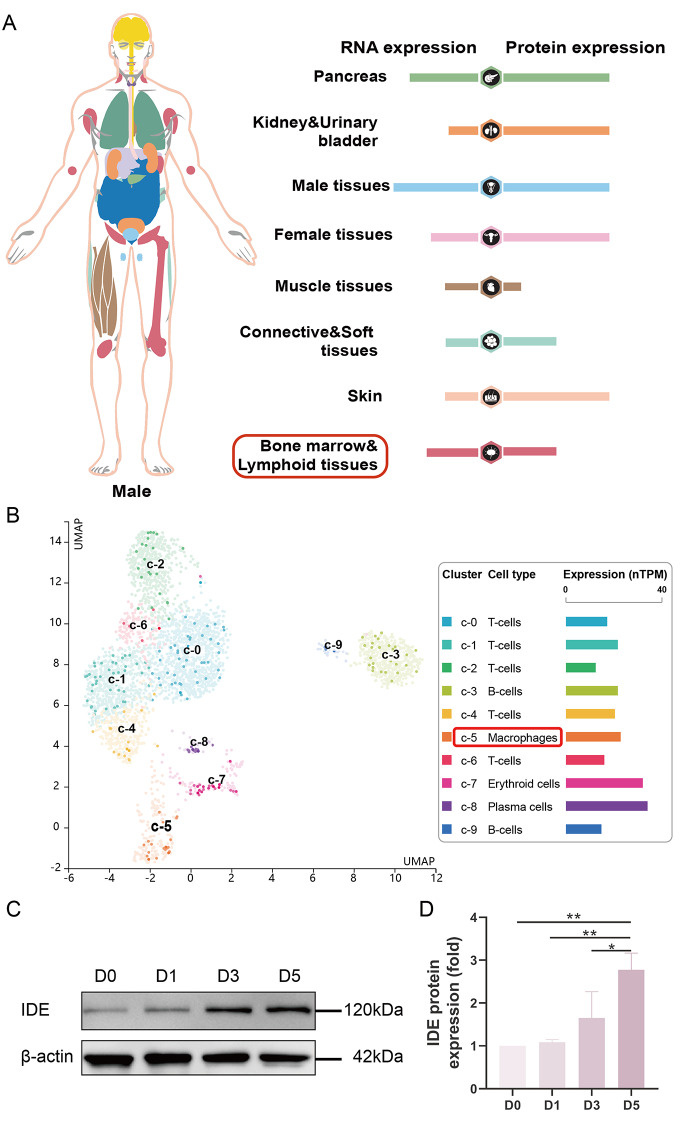
Osteoclast hyperactivation due to the pathological overproduction of reactive oxygen species (ROS) stimulated by glucocorticoids (GCs) is one of the key drivers behind glucocorticoid-induced osteonecrosis of the femoral head (GIONFH). The insulin degrading enzyme (IDE), a conserved Zn metallo-endopeptidase, facilitates the DNA binding of glucocorticoid receptor and plays a substantial role in steroid hormone-related signaling pathways. However, the potential role of IDE in the pathogenesis of GIONFH is yet undefined.
In this study, we employed network pharmacology and bioinformatics analysis to explore the impact of IDE inhibition on GIONFH with 6bK as an inhibitory agent. Further evidence was collected through in vitro osteoclastogenesis experiments and in vivo evaluations involving methylprednisolone (MPS)-induced GIONFH mouse model.
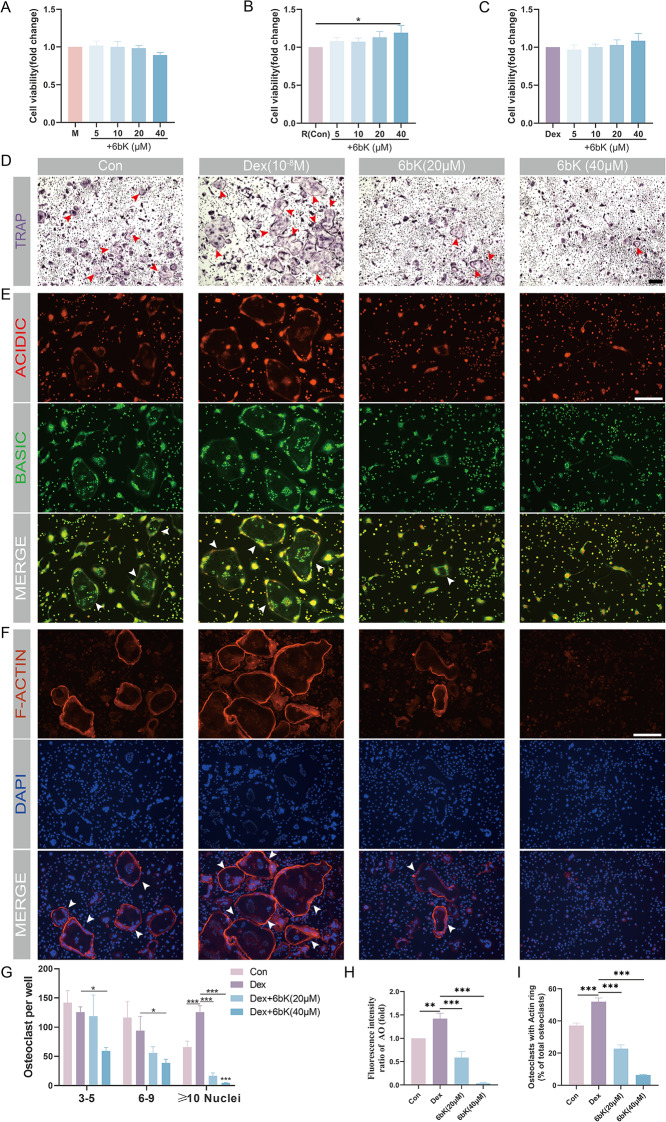
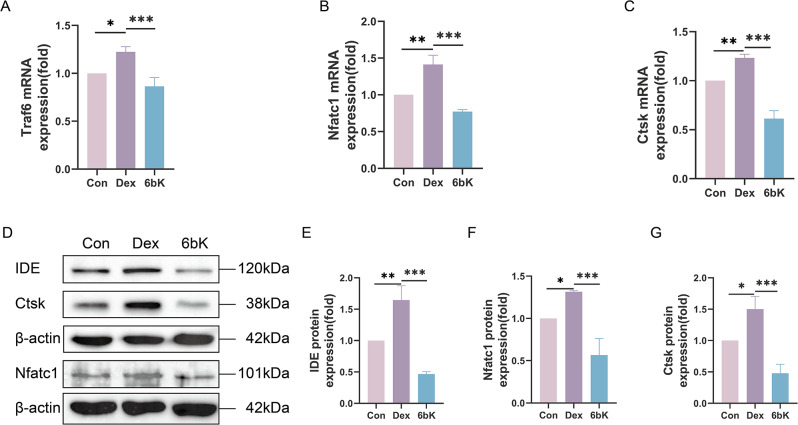
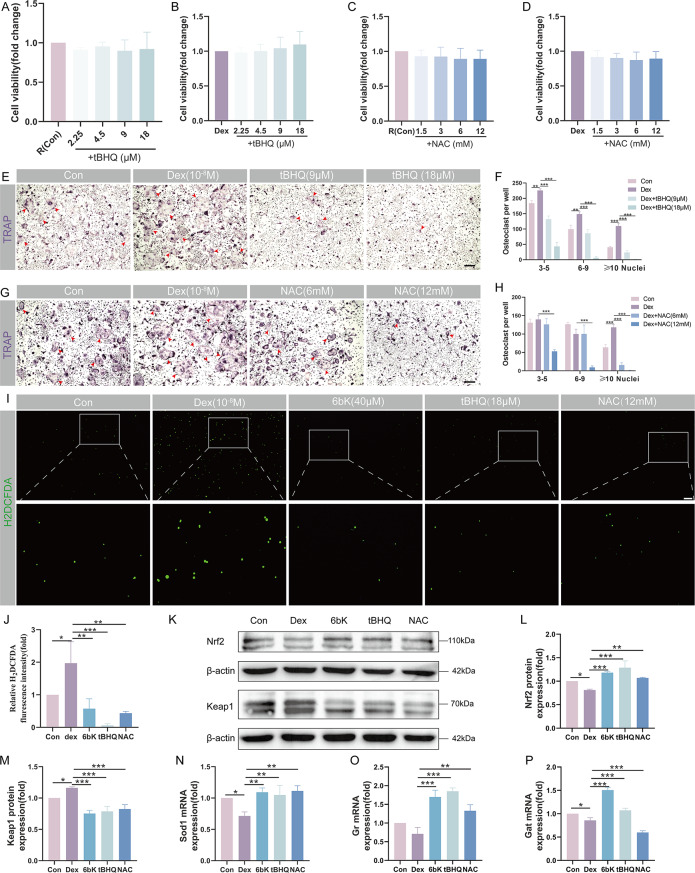
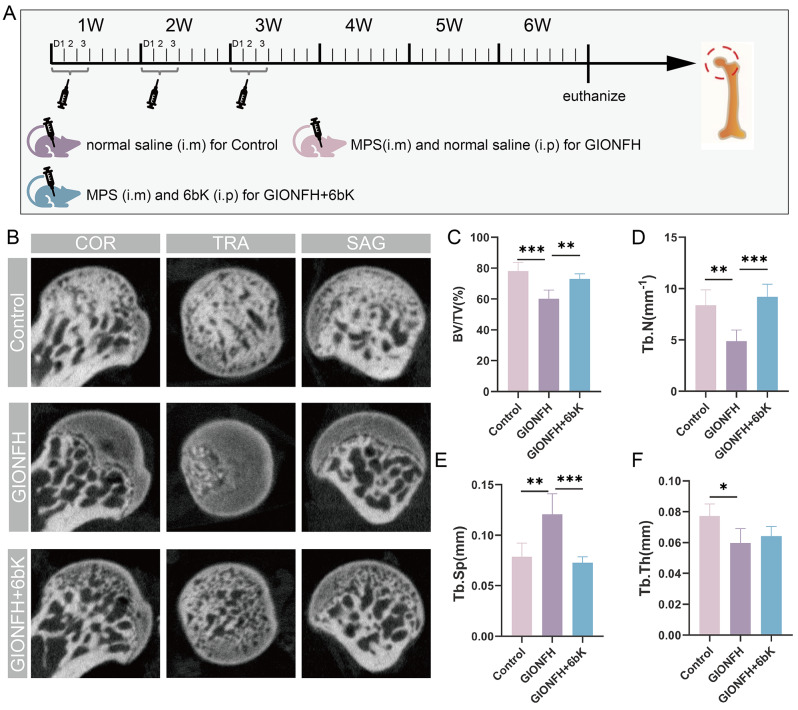
Enrichment analysis indicated a potential role of 6bK in redox regulation amid GIONFH development. In vitro findings revealed that 6bK could attenuate GCs-stimulated overactivation of osteoclast differentiation by interfering with the transcription and expression of key osteoclastic genes (Traf6, Nfatc1, and Ctsk). The use of an HDCFDA probe and subsequent WB assays introduced the inhibitory effects of 6bK on osteoclastogenesis, linked with the activation of the nuclear factor erythroid-derived 2-like 2 (Nrf2)-mediated antioxidant system. Furthermore, Micro-CT scans validated that 6bK could alleviate GIONFH in MPS-induced mouse models.
Our findings suggest that 6bK suppresses osteoclast hyperactivity in GCs-rich environment. This is achieved by reducing the accumulation of intracellular ROS via promoting the Nrf2-mediated antioxidant system, thus implying that IDE could be a promising therapeutic target for GIONFH.
糖皮质激素(GCs)刺激导致的活性氧(ROS)病理性过量产生引起破骨细胞过度活化,是糖皮质激素诱导的股骨头坏死(GIONFH)的关键驱动因素之一。胰岛素降解酶(IDE)是一种保守的锌金属内肽酶,可促进糖皮质激素受体的DNA结合,并在类固醇激素相关信号通路中发挥重要作用。然而,IDE在GIONFH发病机制中的潜在作用尚不清楚。
在本研究中,我们采用网络药理学和生物信息学分析,以6bK作为抑制剂,探讨IDE抑制对GIONFH的影响。通过体外破骨细胞生成实验和涉及甲基泼尼松龙(MPS)诱导的GIONFH小鼠模型的体内评估收集进一步证据。
富集分析表明6bK在GIONFH发展过程中的氧化还原调节中具有潜在作用。体外研究结果显示,6bK可通过干扰关键破骨细胞基因(Traf6、Nfatc1和Ctsk)的转录和表达,减弱GCs刺激的破骨细胞分化过度活化。使用HDCFDA探针及随后的蛋白质印迹分析表明6bK对破骨细胞生成具有抑制作用,这与核因子红细胞2相关因子2(Nrf2)介导的抗氧化系统的激活有关。此外,显微CT扫描证实6bK可减轻MPS诱导的小鼠模型中的GIONFH。
我们的研究结果表明,6bK在富含GCs的环境中抑制破骨细胞的过度活性。这是通过促进Nrf2介导的抗氧化系统减少细胞内ROS的积累来实现的,这意味着IDE可能是GIONFH的一个有前景的治疗靶点。