
低强度聚焦超声治疗岛叶后部可减少疼痛的时间总和。
Low-intensity focused ultrasound to the posterior insula reduces temporal summation of pain.
机构信息
Virginia Tech Carilion School of Medicine, Roanoke, VA, 24016, USA.
Fralin Biomedical Research Institute at Virginia Tech Carilion, Roanoke, VA, 24016, USA; Virginia Tech Carilion School of Medicine, Roanoke, VA, 24016, USA; Graduate Program in Translational Biology, Medicine, and Health, Virginia Polytechnic Institute and State University, Roanoke, VA, 24016, USA.
出版信息
Brain Stimul. 2024 Jul-Aug;17(4):911-924. doi: 10.1016/j.brs.2024.07.020. Epub 2024 Jul 30.
BACKGROUND
The insula and dorsal anterior cingulate cortex (dACC) are core brain regions involved in pain processing and central sensitization, a shared mechanism across various chronic pain conditions. Methods to modulate these regions may serve to reduce central sensitization, though it is unclear which target may be most efficacious for different measures of central sensitization.
OBJECTIVE/HYPOTHESIS: Investigate the effect of low-intensity focused ultrasound (LIFU) to the anterior insula (AI), posterior insula (PI), or dACC on conditioned pain modulation (CPM) and temporal summation of pain (TSP).
METHODS
N = 16 volunteers underwent TSP and CPM pain tasks pre/post a 10 min LIFU intervention to either the AI, PI, dACC or Sham stimulation. Pain ratings were collected pre/post LIFU.
RESULTS
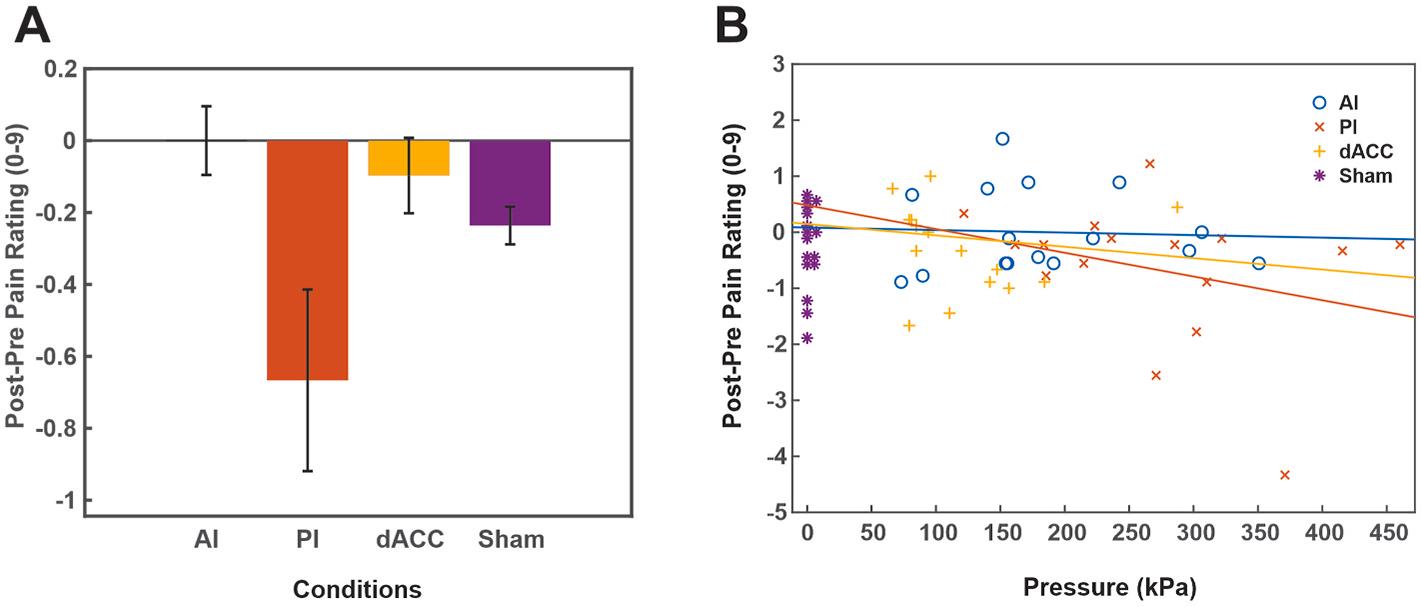
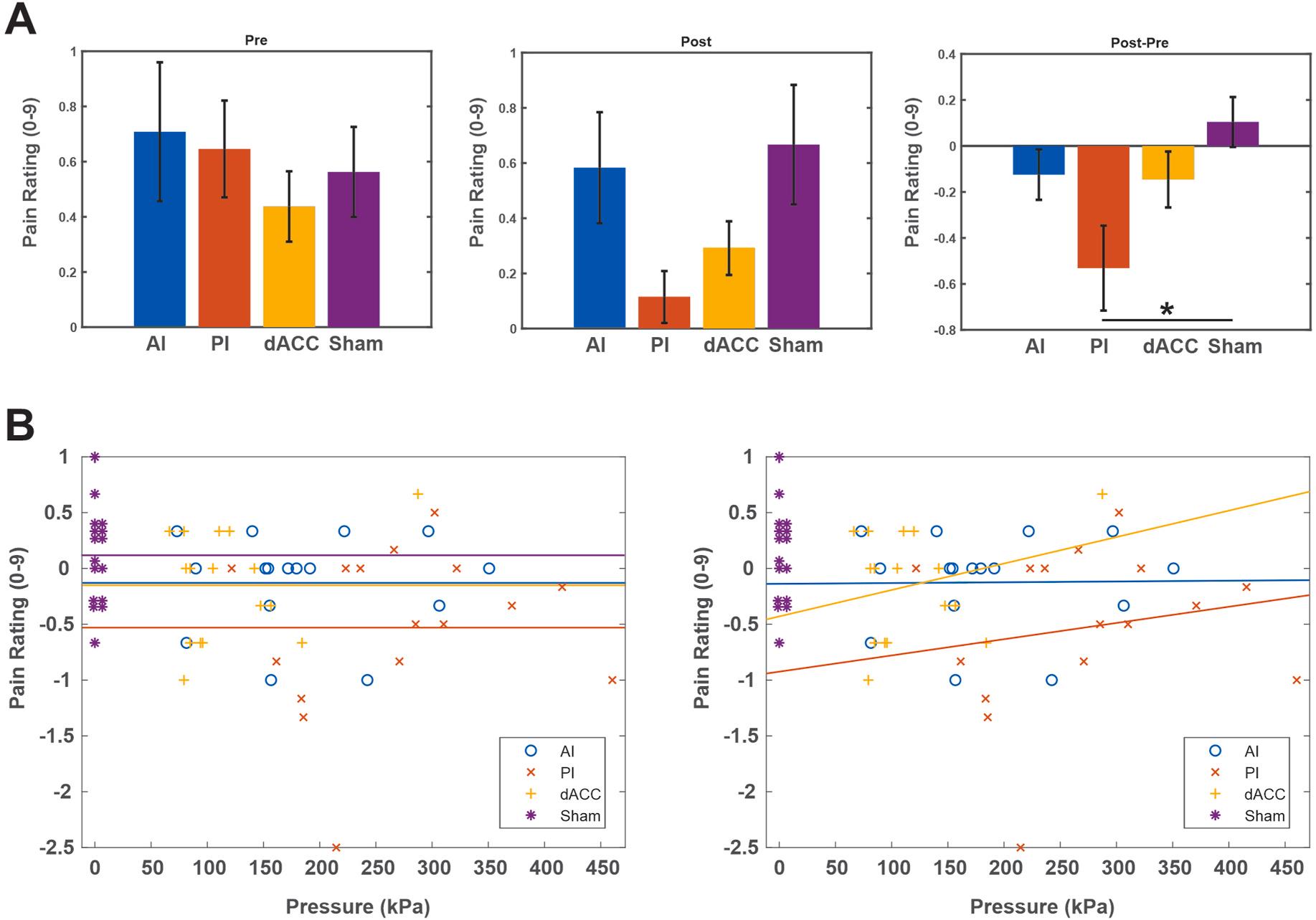
Only LIFU to the PI significantly attenuated pain ratings during the TSP protocol. No effects were found for the CPM task for any of the LIFU targets. LIFU pressure modulated group means but did not affect overall group differences.
CONCLUSIONS
LIFU to the PI reduced temporal summation of pain. This may, in part, be due to dosing (pressure) of LIFU. Inhibition of the PI with LIFU may be a future potential therapy in chronic pain populations demonstrating central sensitization. The minimal effective dose of LIFU for efficacious neuromodulation will help to translate LIFU for therapeutic options.
背景
脑岛和背侧前扣带皮层(dACC)是参与疼痛处理和中枢敏化的核心脑区,这是各种慢性疼痛病症的共同机制。调节这些区域的方法可能有助于减少中枢敏化,但尚不清楚对于不同的中枢敏化测量指标,哪个靶点最有效。
目的/假设:研究低强度聚焦超声(LIFU)对前脑岛(AI)、后脑岛(PI)或 dACC 对条件性疼痛调制(CPM)和疼痛时间总和(TSP)的影响。
方法
16 名志愿者接受 TSP 和 CPM 疼痛任务,在接受 10 分钟 LIFU 干预之前和之后,AI、PI、dACC 或假刺激。在 LIFU 前后收集疼痛评分。
结果
只有 LIFU 至 PI 显著减轻 TSP 方案中的疼痛评分。对于任何 LIFU 靶点,CPM 任务均未发现效果。LIFU 压力调节组均值,但不影响总体组间差异。
结论
LIFU 至 PI 减少了疼痛的时间总和。这可能部分归因于 LIFU 的剂量(压力)。LIFU 对 PI 的抑制可能是具有中枢敏化的慢性疼痛人群的未来潜在治疗方法。LIFU 进行有效神经调节的最小有效剂量将有助于将 LIFU 转化为治疗选择。
 Zotero 插件