An Xiaoqin, Yu Wenfeng, Liu Jinbao, Tang Daolin, Yang Li, Chen Xin
Department of Physiology, School of Basic Medical Sciences, Guizhou Medical University, Guiyang, Guizhou, PR China.
Provincial Key Laboratory of Medical Molecular Biology, Guizhou Medical University, Guiyang, Guizhou, PR China.
Cell Death Dis. 2024 Aug 1;15(8):556. doi: 10.1038/s41419-024-06939-5.
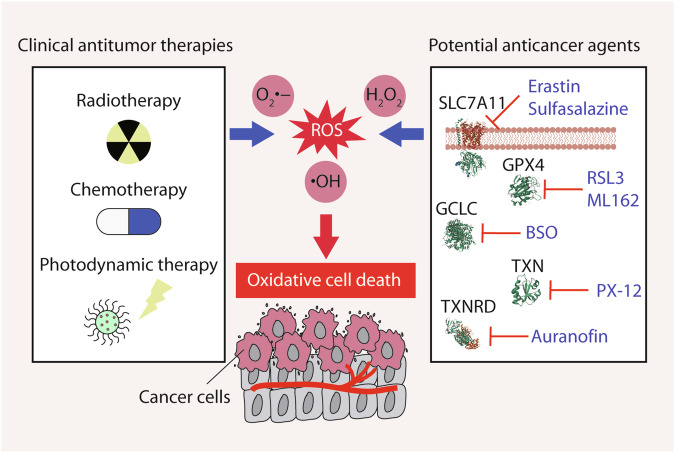
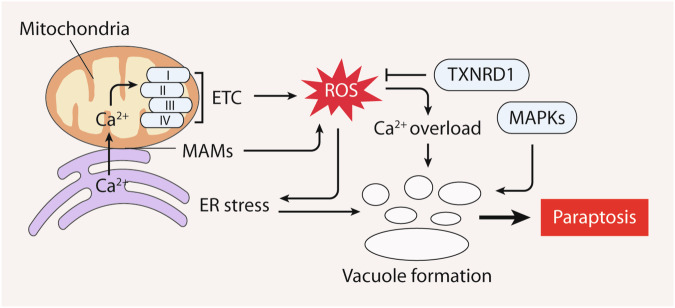
Reactive oxygen species (ROS) are highly reactive oxygen-containing molecules generated as natural byproducts during cellular processes, including metabolism. Under normal conditions, ROS play crucial roles in diverse cellular functions, including cell signaling and immune responses. However, a disturbance in the balance between ROS production and cellular antioxidant defenses can lead to an excessive ROS buildup, causing oxidative stress. This stress damages essential cellular components, including lipids, proteins, and DNA, potentially culminating in oxidative cell death. This form of cell death can take various forms, such as ferroptosis, apoptosis, necroptosis, pyroptosis, paraptosis, parthanatos, and oxeiptosis, each displaying distinct genetic, biochemical, and signaling characteristics. The investigation of oxidative cell death holds promise for the development of pharmacological agents that are used to prevent tumorigenesis or treat established cancer. Specifically, targeting key antioxidant proteins, such as SLC7A11, GCLC, GPX4, TXN, and TXNRD, represents an emerging approach for inducing oxidative cell death in cancer cells. This review provides a comprehensive summary of recent progress, opportunities, and challenges in targeting oxidative cell death for cancer therapy.
活性氧(ROS)是细胞过程(包括新陈代谢)中作为天然副产物产生的高反应性含氧分子。在正常情况下,ROS在多种细胞功能中发挥关键作用,包括细胞信号传导和免疫反应。然而,ROS产生与细胞抗氧化防御之间的平衡受到干扰会导致ROS过度积累,从而引起氧化应激。这种应激会损害包括脂质、蛋白质和DNA在内的重要细胞成分,最终可能导致氧化性细胞死亡。这种形式的细胞死亡可以有多种形式,如铁死亡、凋亡、坏死性凋亡、焦亡、副凋亡、PARP-1依赖性坏死和氧死亡,每种形式都表现出独特的遗传、生化和信号特征。对氧化性细胞死亡的研究有望开发出用于预防肿瘤发生或治疗已确诊癌症的药物。具体而言,靶向关键抗氧化蛋白,如溶质载体家族7成员11(SLC7A11)、谷氨酸半胱氨酸连接酶催化亚基(GCLC)、谷胱甘肽过氧化物酶4(GPX4)、硫氧还蛋白(TXN)和硫氧还蛋白还原酶(TXNRD),是诱导癌细胞氧化性细胞死亡的一种新兴方法。本综述全面总结了针对氧化性细胞死亡进行癌症治疗的最新进展、机遇和挑战。