Cardani-Boulton Amber, Lin Feng, Bergmann Cornelia C
Department of Neurosciences, Lerner Research Institute, Cleveland Clinic, Cleveland, OH, USA.
Case Western Reserve University, Cleveland Clinic, Lerner College of Medicine, Cleveland, OH.
bioRxiv. 2024 Jul 26:2024.07.26.605237. doi: 10.1101/2024.07.26.605237.
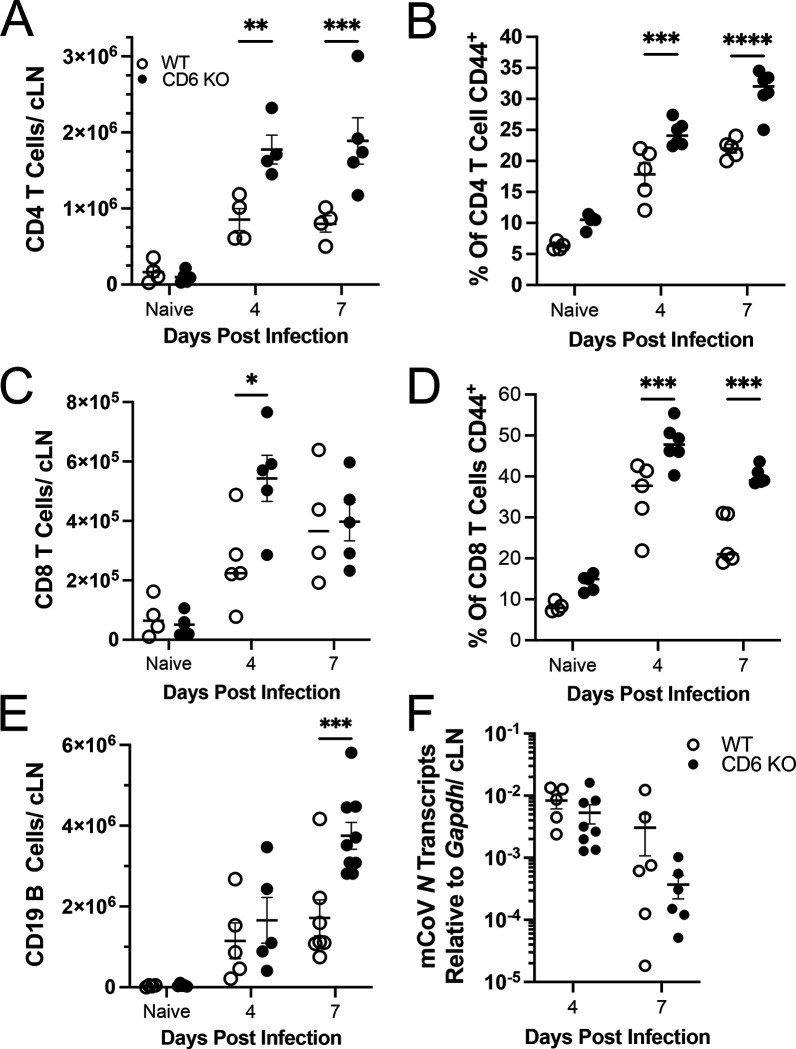
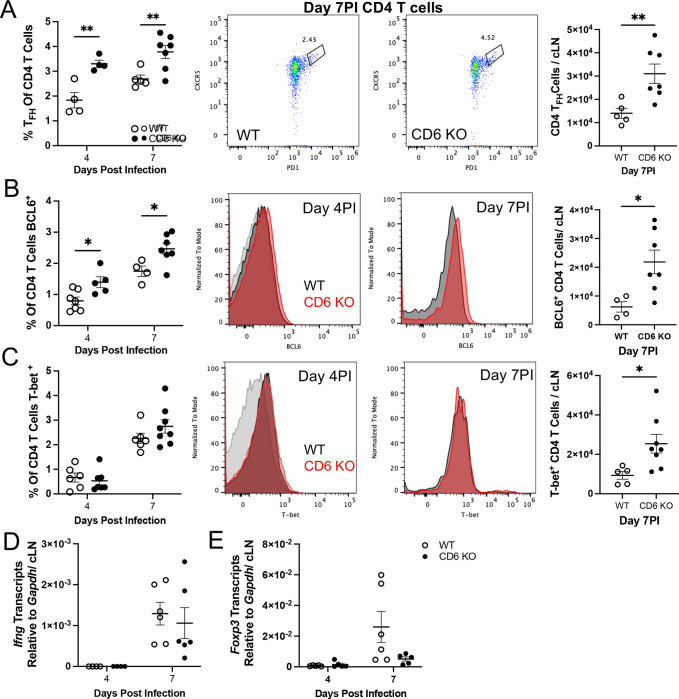
During activation the T cell transmembrane receptor CD6 becomes incorporated into the T cell immunological synapse where it can exert both co-stimulatory and co-inhibitory functions. Given the ability of CD6 to carry out opposing functions, this study sought to determine how CD6 regulates early T cell activation in response to viral infection. Infection of CD6 deficient mice with a neurotropic murine coronavirus resulted in greater activation and expansion of CD4 T cells in the draining lymph nodes. Further analysis demonstrated that there was also preferential differentiation of CD4 T cells into T follicular helper cells, resulting in accelerated germinal center responses and emergence of high affinity virus specific antibodies. Given that CD6 conversely supports CD4 T cell activation in many autoimmune models, we probed potential mechanisms of CD6 mediated suppression of CD4 T cell activation during viral infection. Analysis of CD6 binding proteins revealed that infection induced upregulation of a negative regulator of T cell receptor signaling, was hindered in CD6 deficient lymph nodes. Consistent with greater T cell activation and reduced UBASH3a activity, the T cell receptor signal strength was intensified in CD6 deficient CD4 T cells. These results reveal a novel immunoregulatory role for CD6 in limiting CD4 T cell activation and deterring CD4 T follicular helper cell differentiation, thereby attenuating antiviral humoral immunity.
在激活过程中,T细胞跨膜受体CD6会整合到T细胞免疫突触中,在那里它可以发挥共刺激和共抑制功能。鉴于CD6具有执行相反功能的能力,本研究旨在确定CD6如何调节T细胞对病毒感染的早期激活。用嗜神经性鼠冠状病毒感染CD6缺陷小鼠,导致引流淋巴结中CD4 T细胞的激活和扩增增强。进一步分析表明,CD4 T细胞也优先分化为滤泡辅助性T细胞,从而加速生发中心反应并产生高亲和力病毒特异性抗体。鉴于在许多自身免疫模型中CD6相反地支持CD4 T细胞激活,我们探究了病毒感染期间CD6介导的CD4 T细胞激活抑制的潜在机制。对CD6结合蛋白的分析表明,感染诱导的T细胞受体信号负调节因子上调在CD6缺陷淋巴结中受到阻碍。与更大的T细胞激活和降低的UBASH3a活性一致,CD6缺陷的CD4 T细胞中T细胞受体信号强度增强。这些结果揭示了CD6在限制CD4 T细胞激活和阻止CD4滤泡辅助性T细胞分化从而减弱抗病毒体液免疫方面的新免疫调节作用。