
虚拟现实对老年人平衡能力的影响:一项系统评价与荟萃分析
Effects of virtual reality on the balance performance of older adults: a systematic review and meta-analysis.
作者信息
Huang Wan-Yun, Chang Shin-Tsu, Lee Chao-Hsien, Liou I-Hsiu, Cherng Rong-Ju
机构信息
Institute of Allied Health Sciences, College of Medicine, National Cheng Kung University: No. 16, Ln. 243, Rongzong Rd., Zuoying Dist., Kaohsiung City 813022, Taiwan (R.O.C.).
Department of Physical Medicine and Rehabilitation, Kaohsiung Veterans General Hospital, Taiwan (R.O.C.).
出版信息
J Phys Ther Sci. 2024 Aug;36(8):457-470. doi: 10.1589/jpts.36.457. Epub 2024 Aug 1.
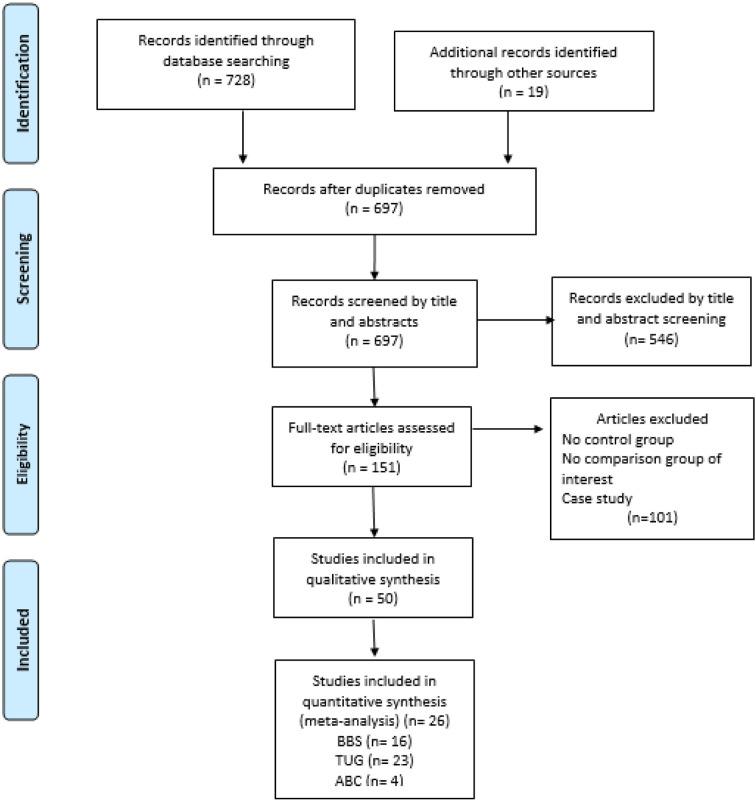
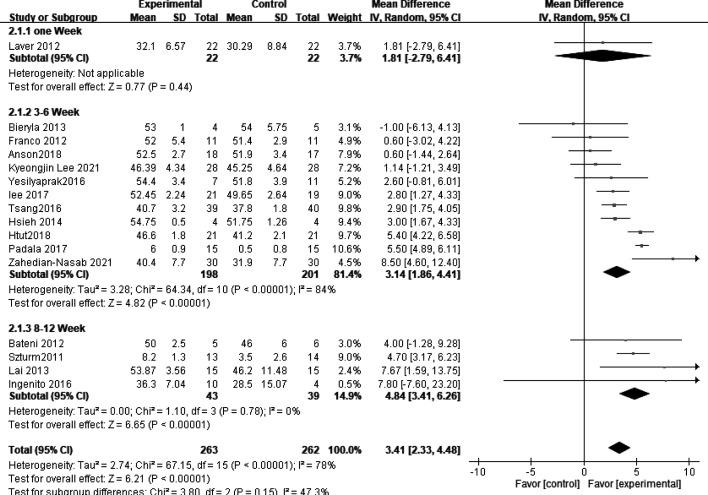
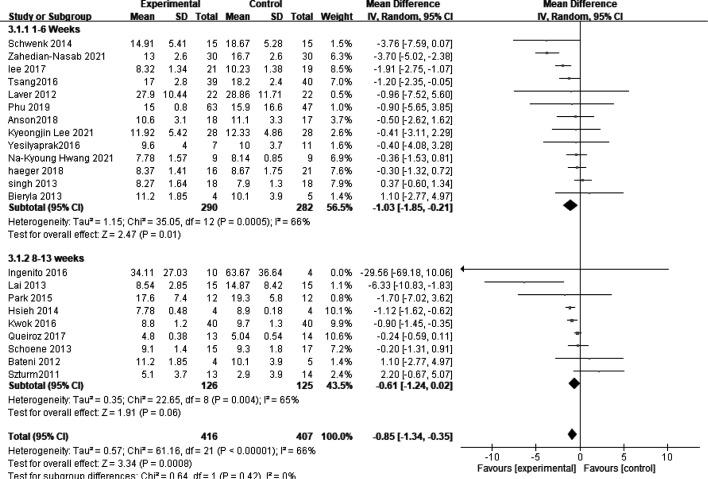
[Purpose] Virtual reality has been increasingly used to improve the balance performance of older adults; however, the effect remains inconclusive. This study aimed to examine the effects of virtual reality on the balance performance of older adults through a systematic review and meta-analysis. [Methods] The PubMed, MEDLINE, CINAHL, Cochrane Library, and PEDro electronic databases were searched. Only randomized clinical trials published in English from January 1st, 1980, to September 30, 2022, were included and reviewed. Outcome measures included the Berg Balance Scale, Timed Up and Go Test and Activity-specific Balance Confidence scale. [Results] The results showed that virtual reality training for older adults led to significant improvements in Berg Balance Scale scores and Timed Up and Go Test times compared with non-virtual reality training. However, such an outcome was not observed with regard to the Activity-specific Balance Confidence scale. [Conclusion] Virtual reality training is effective in improving both static and dynamic balance among older adults. However, its effect on their self-confidence regarding balance is not significant.
[目的] 虚拟现实技术已越来越多地用于改善老年人的平衡能力;然而,其效果仍不明确。本研究旨在通过系统评价和荟萃分析,探讨虚拟现实对老年人平衡能力的影响。[方法] 检索了PubMed、MEDLINE、CINAHL、Cochrane图书馆和PEDro电子数据库。纳入并综述了1980年1月1日至2022年9月30日期间发表的英文随机临床试验。结局指标包括伯格平衡量表、计时起立行走测试和特定活动平衡信心量表。[结果] 结果表明,与非虚拟现实训练相比,老年人的虚拟现实训练使伯格平衡量表得分和计时起立行走测试时间有显著改善。然而,特定活动平衡信心量表未观察到此类结果。[结论] 虚拟现实训练在改善老年人静态和动态平衡方面是有效的。然而,其对老年人平衡自信心的影响并不显著。


 Zotero 插件