Division of Bioorganic Chemistry and Molecular Pharmacology, Department of Medicine, Washington University School of Medicine, Saint Louis, MO, USA.
Department of Medicine, Washington University School of Medicine, Saint Louis, MO, USA; Department of Chemistry, Washington University, Saint Louis, MO, USA; Siteman Cancer Center, Washington University in St. Louis, Saint Louis, MO, USA; Center for Metabolomics and Isotope Tracing, Washington University in St. Louis, Saint Louis, MO, USA.
J Lipid Res. 2024 Sep;65(9):100611. doi: 10.1016/j.jlr.2024.100611. Epub 2024 Jul 31.
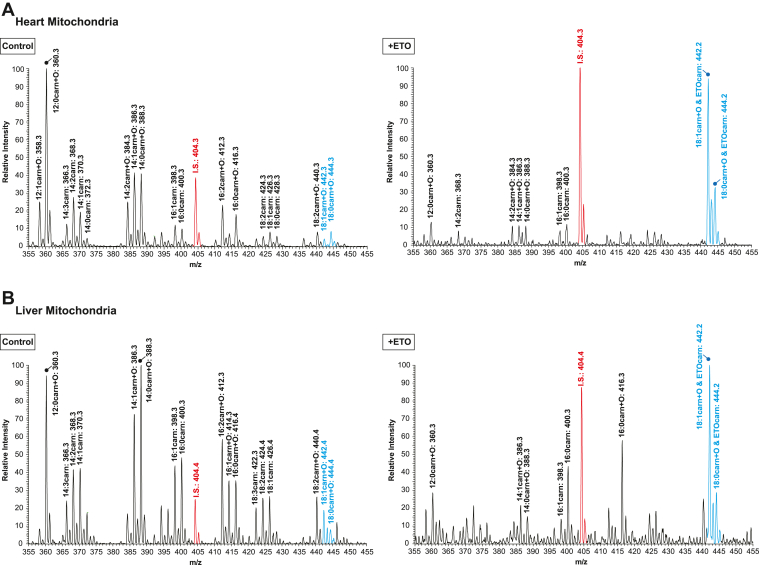
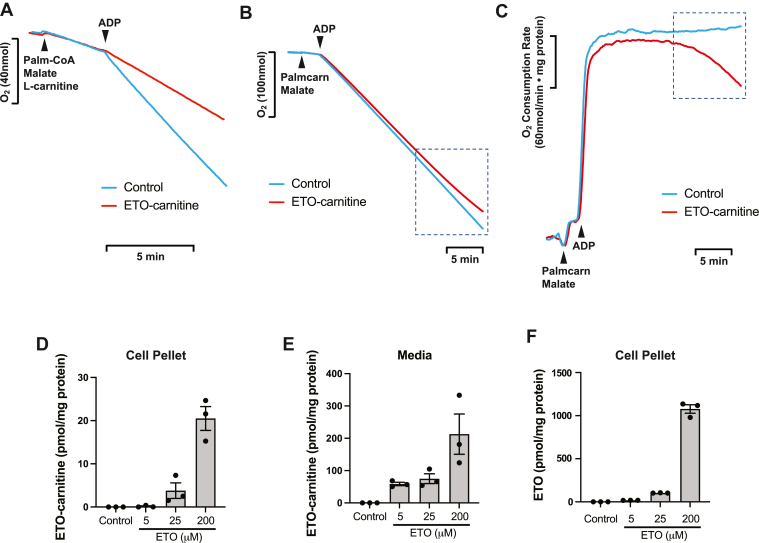
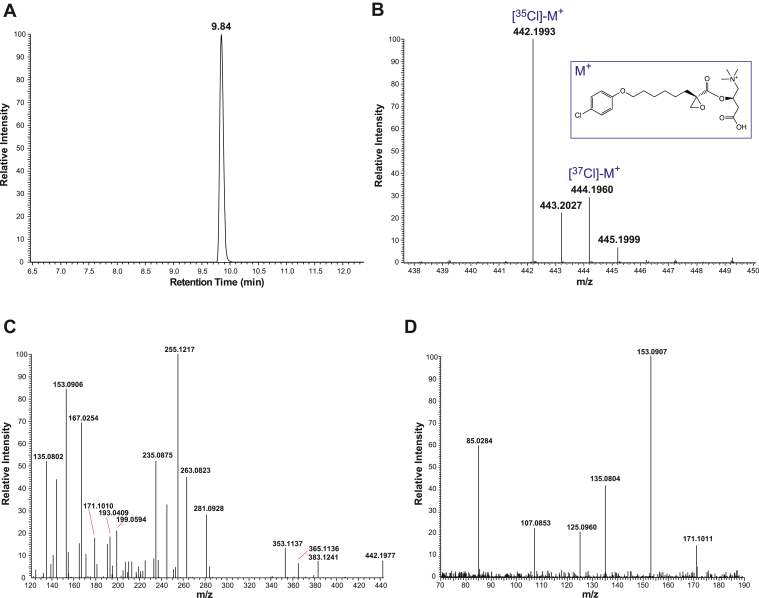
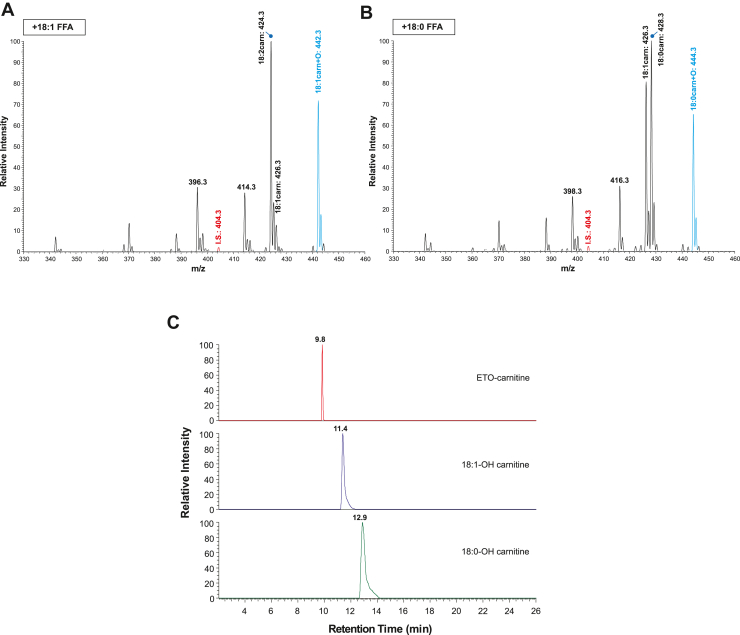
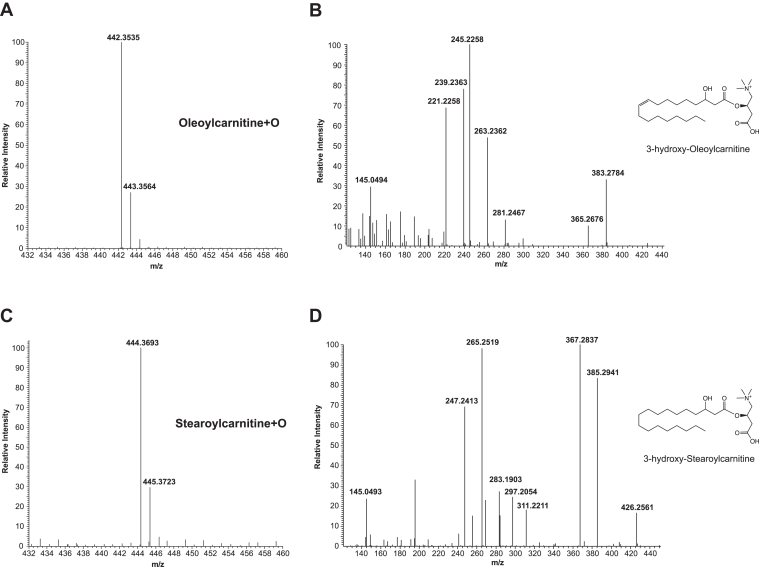
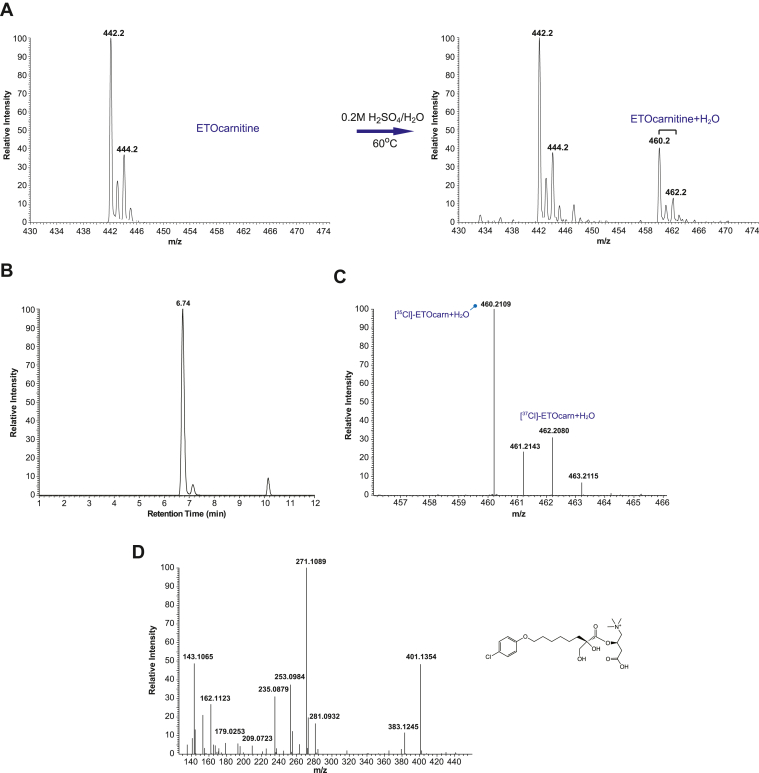
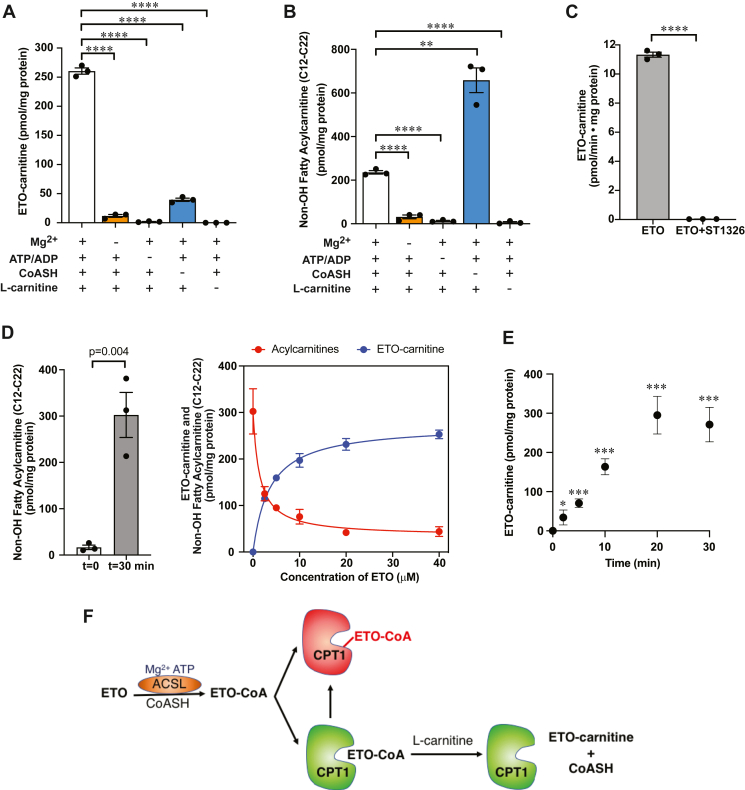
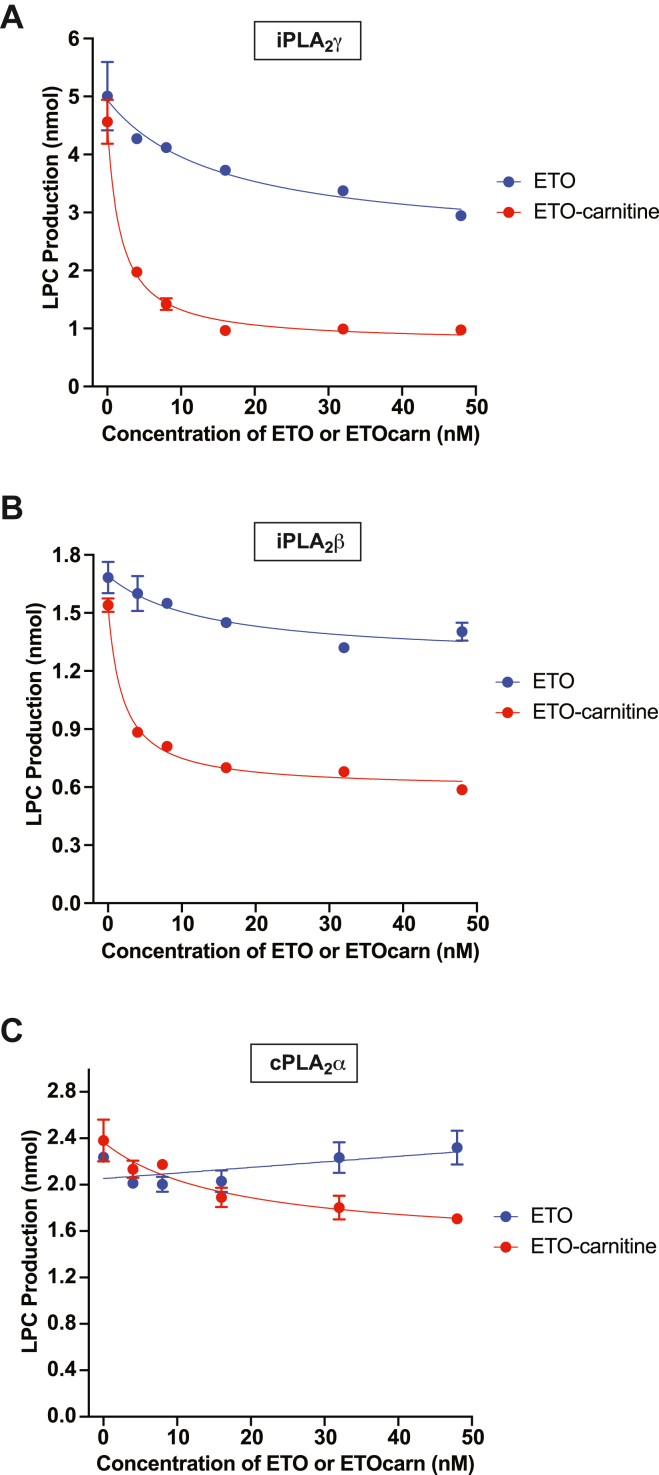
Mitochondrial fatty acid oxidation serves as an essential process for cellular survival, differentiation, proliferation, and energy metabolism. Numerous studies have utilized etomoxir (ETO) for the irreversible inhibition of carnitine palmitoylcarnitine transferase 1 (CPT1), which catalyzes the rate-limiting step for mitochondrial long-chain fatty acid β-oxidation to examine the bioenergetic roles of mitochondrial fatty acid metabolism in many tissues in multiple diverse disease states. Herein, we demonstrate that intact mitochondria robustly metabolize ETO to etomoxir-carnitine (ETO-carnitine) prior to nearly complete ETO-mediated inhibition of CPT1. The novel pharmaco-metabolite, ETO-carnitine, was conclusively identified by accurate mass, fragmentation patterns, and isotopic fine structure. On the basis of these data, ETO-carnitine was successfully differentiated from isobaric structures (e.g., 3-hydroxy-C18:0 carnitine and 3-hydroxy-C18:1 carnitine). Mechanistically, generation of ETO-carnitine from mitochondria required exogenous Mg, ATP or ADP, CoASH, and L-carnitine, indicating that thioesterification by long-chain acyl-CoA synthetase to form ETO-CoA precedes its conversion to ETO-carnitine by CPT1. CPT1-dependent generation of ETO-carnitine was substantiated by an orthogonal approach using ST1326 (a CPT1 inhibitor), which effectively inhibits mitochondrial ETO-carnitine production. Surprisingly, purified ETO-carnitine potently inhibited calcium-independent PLAγ and PLAβ as well as mitochondrial respiration independent of CPT1. Robust production and release of ETO-carnitine from HepG2 cells incubated in the presence of ETO was also demonstrated. Collectively, this study identifies the chemical mechanism for the biosynthesis of a novel pharmaco-metabolite of ETO, ETO-carnitine, that is generated by CPT1 in mitochondria and likely impacts multiple downstream (non-CPT1 related) enzymes and processes in multiple subcellular compartments.
线粒体脂肪酸氧化是细胞存活、分化、增殖和能量代谢的必要过程。许多研究利用 etomoxir (ETO) 不可逆地抑制肉碱棕榈酰转移酶 1 (CPT1),CPT1 催化线粒体长链脂肪酸β-氧化的限速步骤,以研究线粒体脂肪酸代谢在多种组织中的生物能学作用在多种不同的疾病状态下。在此,我们证明完整的线粒体在 CPT1 介导的 ETO 抑制之前,会强烈地将 ETO 代谢为 etomoxir-carnitine (ETO-carnitine)。新型药物代谢物 ETO-carnitine 通过精确质量、碎片模式和同位素精细结构得到明确鉴定。基于这些数据,ETO-carnitine 成功地与等质量物质(例如 3-羟基-C18:0 肉碱和 3-羟基-C18:1 肉碱)区分开来。从机制上讲,线粒体生成 ETO-carnitine 需要外源性的 Mg、ATP 或 ADP、CoASH 和 L-肉碱,表明长链酰基辅酶 A 合成酶将其硫酯化形成 ETO-CoA 是其转化为 CPT1 的 ETO-carnitine 的前提。CPT1 依赖性 ETO-carnitine 的生成通过使用 ST1326(CPT1 抑制剂)的正交方法得到证实,该方法可有效抑制线粒体 ETO-carnitine 的生成。令人惊讶的是,纯化的 ETO-carnitine 可强烈抑制钙非依赖性 PLAγ 和 PLAβ 以及独立于 CPT1 的线粒体呼吸。还证明了在 ETO 存在下孵育的 HepG2 细胞中 ETO-carnitine 的大量产生和释放。总之,这项研究确定了 ETO 的新型药物代谢物 ETO-carnitine 的生物合成化学机制,该物质由线粒体中的 CPT1 生成,可能会影响多个亚细胞隔室中的多个下游(非 CPT1 相关)酶和过程。