Alam Mufid, Lou Guangming, Abbas Waseem, Osti Rajani, Ahmad Aqeel, Bista Sunita, Ahiakpa John K, He Yuqing
National Key Laboratory of Crop Genetic Improvement and National Center of Crop Molecular Breeding, Hubei Hongshan Laboratory, Huazhong Agricultural University, Wuhan, 430070, Hubei, China.
College of Humanities and Social Sciences, Huazhong Agricultural University, Wuhan, 430070, Hubei, China.
Rice (N Y). 2024 Aug 5;17(1):47. doi: 10.1186/s12284-024-00725-9.
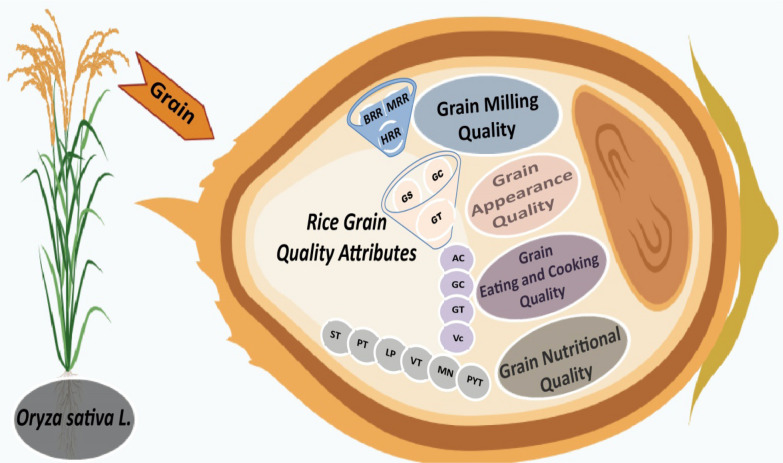
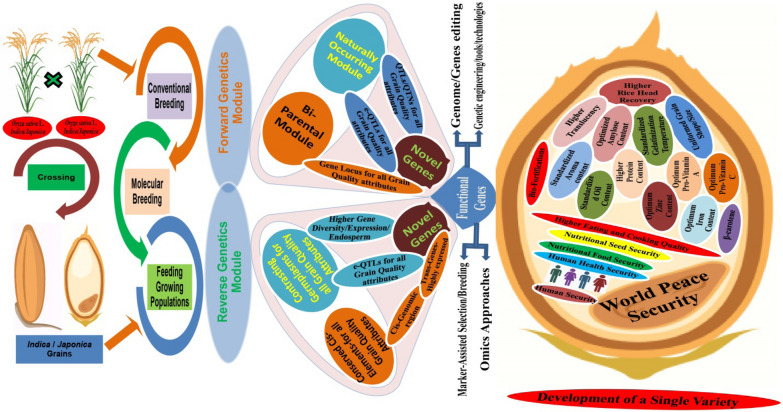
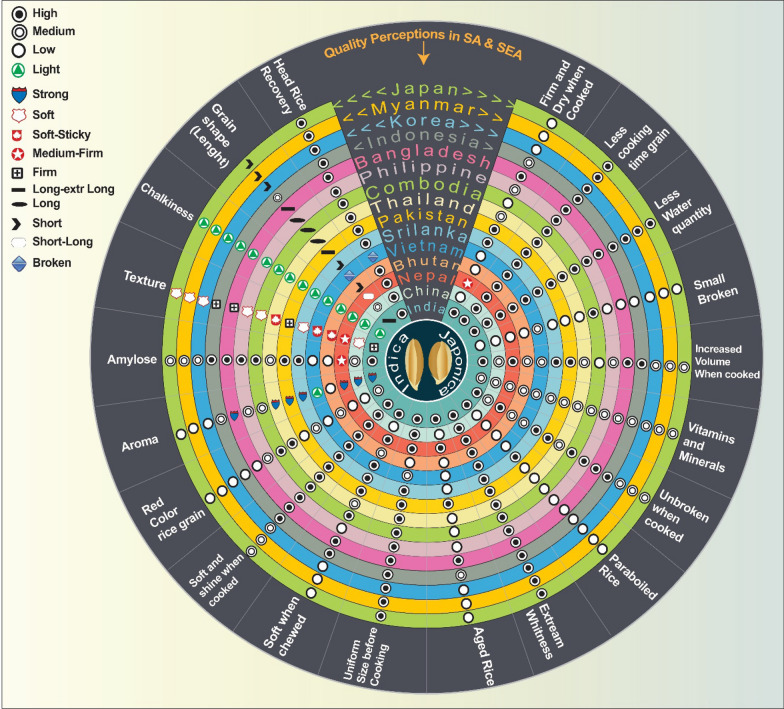
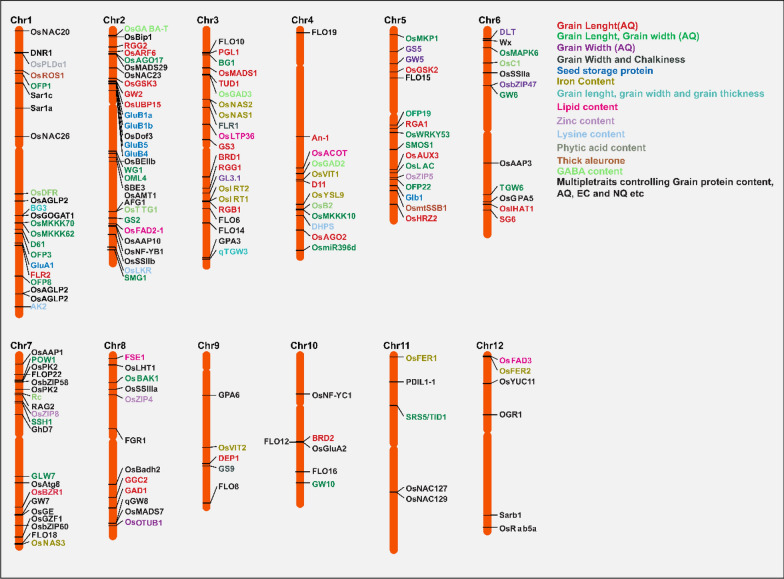
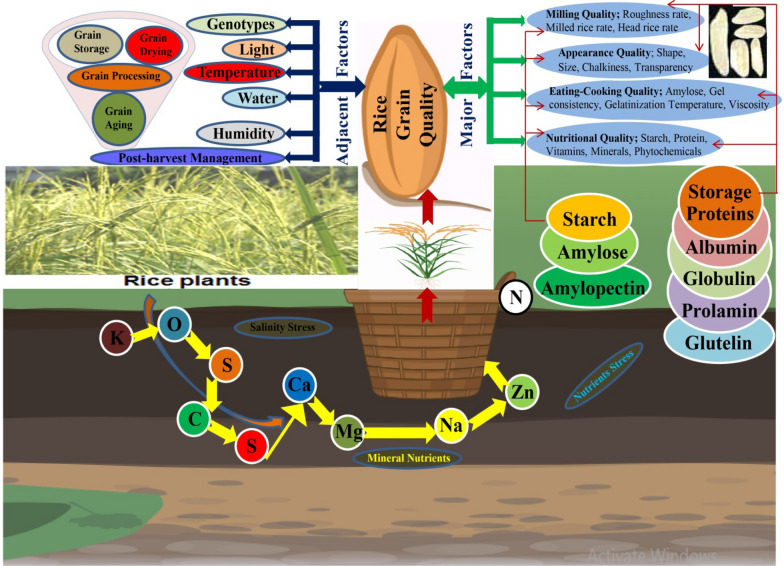
Rice grain is widely consumed as a staple food, providing essential nutrition for households, particularly marginalized families. It plays a crucial role in ensuring food security, promoting human nutrition, supporting good health, and contributing to global food and nutritional security. Addressing the diverse quality demands of emerging diverse and climate-risked population dietary needs requires the development of a single variety of rice grain that can meet the various dietary and nutritional requirements. However, there is a lack of concrete definition for rice grain quality, making it challenging to cater to the different demands. The lack of sufficient genetic study and development in improving rice grain quality has resulted in widespread malnutrition, hidden hunger, and micronutrient deficiencies affecting a significant portion of the global population. Therefore, it is crucial to identify genetically evolved varieties with marked qualities that can help address these issues. Various factors account for the declining quality of rice grain and requires further study to improve their quality for healthier diets. We characterized rice grain quality using Lancastrians descriptor and a multitude of intrinsic and extrinsic quality traits. Next, we examined various components of rice grain quality favored in the Asia-Pacific region. This includes preferences by different communities, rice industry stakeholders, and value chain actors. We also explored the biological aspects of rice grain quality in the region, as well as specific genetic improvements that have been made in these traits. Additionally, we evaluated the factors that can influence rice grain quality and discussed the future directions for ensuring food and nutritional security and meeting consumer demands for grain quality. We explored the diverse consumer bases and their varied preferences in Asian-Pacific countries including India, China, Nepal, Bhutan, Vietnam, Sri Lanka, Pakistan, Thailand, Cambodia, Philippines, Bangladesh, Indonesia, Korea, Myanmar and Japan. The quality preferences encompassed a range of factors, including rice head recovery, grain shape, uniform size before cooking, gelatinization, chalkiness, texture, amylose content, aroma, red-coloration of grain, soft and shine when cooked, unbroken when cooked, gelatinization, less water required for cooking, gelatinization temperature (less cooking time), aged rice, firm and dry when cooked (gel consistency), extreme white, soft when chewed, easy-to-cook rice (parboiled rice), vitamins, and minerals. These preferences were evaluated across high, low, and medium categories. A comprehensive analysis is provided on the enhancement of grain quality traits, including brown rice recovery, recovery rate of milled rice, head rice recovery, as well as morphological traits such as grain length, grain width, grain length-width ratio, and grain chalkiness. We also explored the characteristics of amylose, gel consistency, gelatinization temperature, viscosity, as well as the nutritional qualities of rice grains such as starch, protein, lipids, vitamins, minerals, phytochemicals, and bio-fortification potential. The various factors that impact the quality of rice grains, including pre-harvest, post-harvest, and genotype considerations were explored. Additionally, we discussed the future direction and genetic strategies to effectively tackle these challenges. These qualitative characteristics represent the fundamental focus of regional and national breeding strategies employed by different countries to meet consumer preference. Given the significance of rice as a staple food in Asia-Pacific countries, it is primarily consumed domestically, with only a small portion being exported internationally. All the important attributes must be clearly defined within specific parameters. It is crucial for geneticists and breeders to develop a rice variety that can meet the diverse demands of consumers worldwide by incorporating multiple desirable traits. Thus, the goal of addressing global food and nutritional security, and human healthy can be achieved.
稻谷作为主食被广泛食用,为家庭,特别是边缘化家庭提供基本营养。它在确保粮食安全、促进人类营养、支持健康以及为全球粮食和营养安全做出贡献方面发挥着关键作用。满足新兴的多样化和面临气候风险的人群的不同饮食需求,需要培育出能满足各种饮食和营养需求的单一稻谷品种。然而,对于稻谷品质缺乏具体定义,这使得满足不同需求具有挑战性。在改善稻谷品质方面缺乏足够的基因研究和开发,导致全球很大一部分人口普遍营养不良、隐性饥饿和微量营养素缺乏。因此,识别具有显著品质的基因进化品种以帮助解决这些问题至关重要。多种因素导致稻谷品质下降,需要进一步研究以提高其品质,实现更健康的饮食。我们使用兰开斯特描述符以及众多内在和外在品质特征来描述稻谷品质。接下来,我们研究了亚太地区所青睐的稻谷品质的各个组成部分。这包括不同社区、稻米行业利益相关者和价值链参与者的偏好。我们还探讨了该地区稻谷品质的生物学方面,以及在这些性状上所做的具体基因改良。此外,我们评估了可能影响稻谷品质的因素,并讨论了确保粮食和营养安全以及满足消费者对谷物品质需求的未来方向。我们探讨了亚太国家(包括印度、中国、尼泊尔、不丹、越南、斯里兰卡、巴基斯坦、泰国、柬埔寨、菲律宾、孟加拉国、印度尼西亚、韩国、缅甸和日本)不同的消费群体及其多样的偏好。品质偏好涵盖一系列因素,包括整精米率、粒形、蒸煮前大小均匀、糊化、垩白、质地、直链淀粉含量、香气、米粒红色、蒸煮时柔软有光泽、蒸煮时不破碎、糊化、蒸煮用水量少、糊化温度(蒸煮时间短)、陈米、蒸煮时 firm 且干燥(胶稠度)、极白、咀嚼时柔软、易蒸煮大米(蒸谷米)、维生素和矿物质。这些偏好分为高、低和中等类别进行评估。对提高谷物品质性状进行了全面分析,包括糙米率、精米回收率、整精米率以及形态性状,如粒长、粒宽、粒长宽比和粒垩白。我们还探讨了直链淀粉、胶稠度、糊化温度、粘度的特性,以及稻谷的营养品质,如淀粉、蛋白质、脂质、维生素、矿物质、植物化学物质和生物强化潜力。探讨了影响稻谷品质的各种因素,包括收获前、收获后和基因型方面的考虑。此外,我们讨论了有效应对这些挑战的未来方向和基因策略。这些定性特征代表了不同国家为满足消费者偏好而采用的区域和国家育种策略的基本重点。鉴于稻谷在亚太国家作为主食的重要性,其主要在国内消费,只有一小部分用于国际出口。所有重要属性必须在特定参数内明确界定。遗传学家和育种者通过整合多种理想性状来培育能满足全球消费者多样化需求的水稻品种至关重要。这样,就能实现解决全球粮食和营养安全以及人类健康的目标。