Planken Simon, Faict Sylvia, Trullemans Fabienne, Linskens Eleni, Vandepoele Karl, De Becker Ann
Department of Hematology, Universitair Ziekenhuis Brussel, Jette, BEL.
Department of Clinical Biology, Universitair Ziekenhuis Brussel, Jette, BEL.
Cureus. 2024 Aug 6;16(8):e66291. doi: 10.7759/cureus.66291. eCollection 2024 Aug.
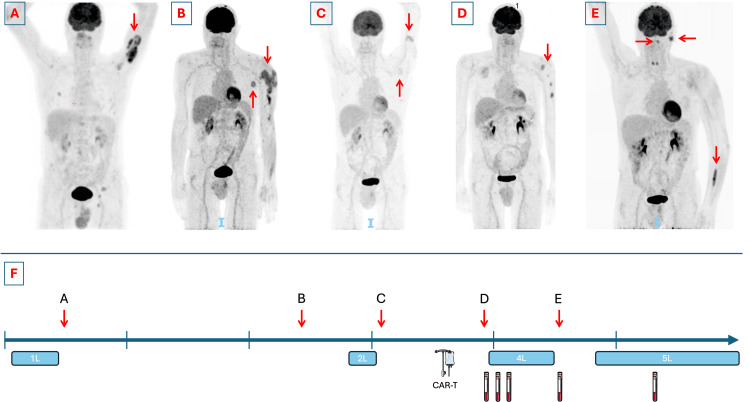
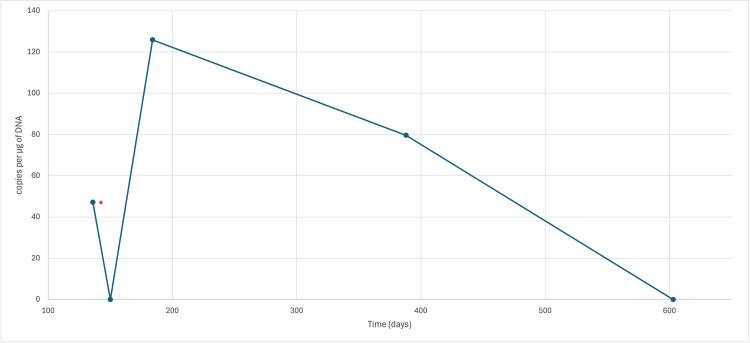
The introduction of chimeric antigen receptor T-cell (CAR-T cell) therapy has changed the treatment landscape of diffuse large B-cell lymphoma (DLBCL). However, the optimal treatment strategy after relapse after this therapy still needs to be elucidated. In this report, we describe the case of a 67-year-old male who relapsed after treatment with tisagenlecleucel as a third-line therapy. We present our approach to treatment after relapse, in which we tried to sustain the circulating chimeric antigen receptor T-cells. This is reflected by the kinetics of the chimeric antigen receptor T-cells during these treatments.
嵌合抗原受体T细胞(CAR-T细胞)疗法的引入改变了弥漫性大B细胞淋巴瘤(DLBCL)的治疗格局。然而,这种疗法复发后的最佳治疗策略仍有待阐明。在本报告中,我们描述了一例67岁男性患者,他在接受替沙格韦单抗作为三线治疗后复发。我们介绍了复发后的治疗方法,即试图维持循环中的嵌合抗原受体T细胞。这在这些治疗过程中嵌合抗原受体T细胞的动力学中得到了体现。