Okada Hikari, Sakamoto Takeharu, Nio Kouki, Li Yingyi, Kuroki Kazuyuki, Sugimoto Saiho, Shimakami Tetsuro, Doi Nobuhide, Honda Masao, Seiki Motoharu, Kaneko Shuichi, Yamashita Taro
Information-Based Medicine Development, Graduate School of Medical Sciences, Kanazawa University, Ishikawa, Japan.
Department of Cancer Biology, Institute of Biomedical Science, Kansai Medical University, Osaka, Japan.
Mol Ther Methods Clin Dev. 2024 Jun 24;32(3):101289. doi: 10.1016/j.omtm.2024.101289. eCollection 2024 Sep 12.
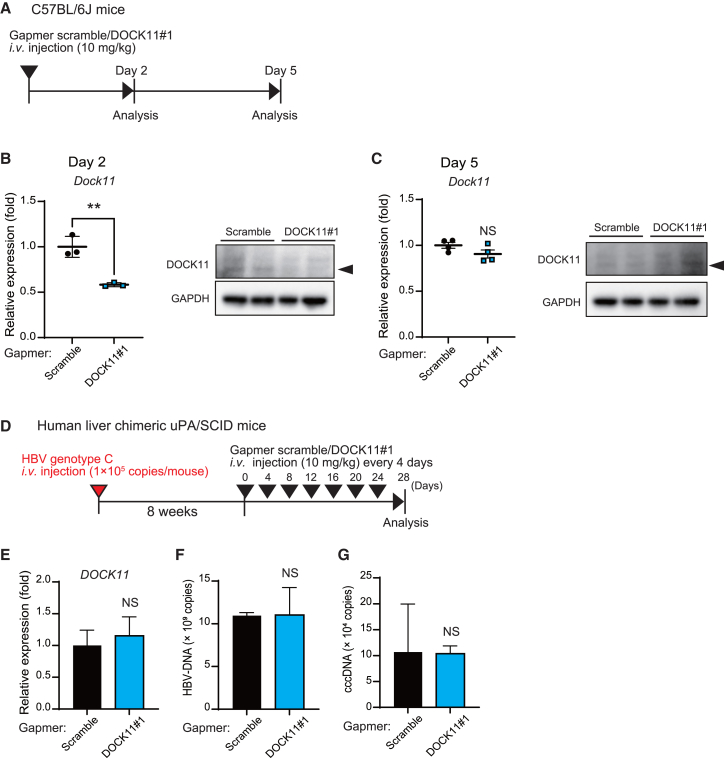
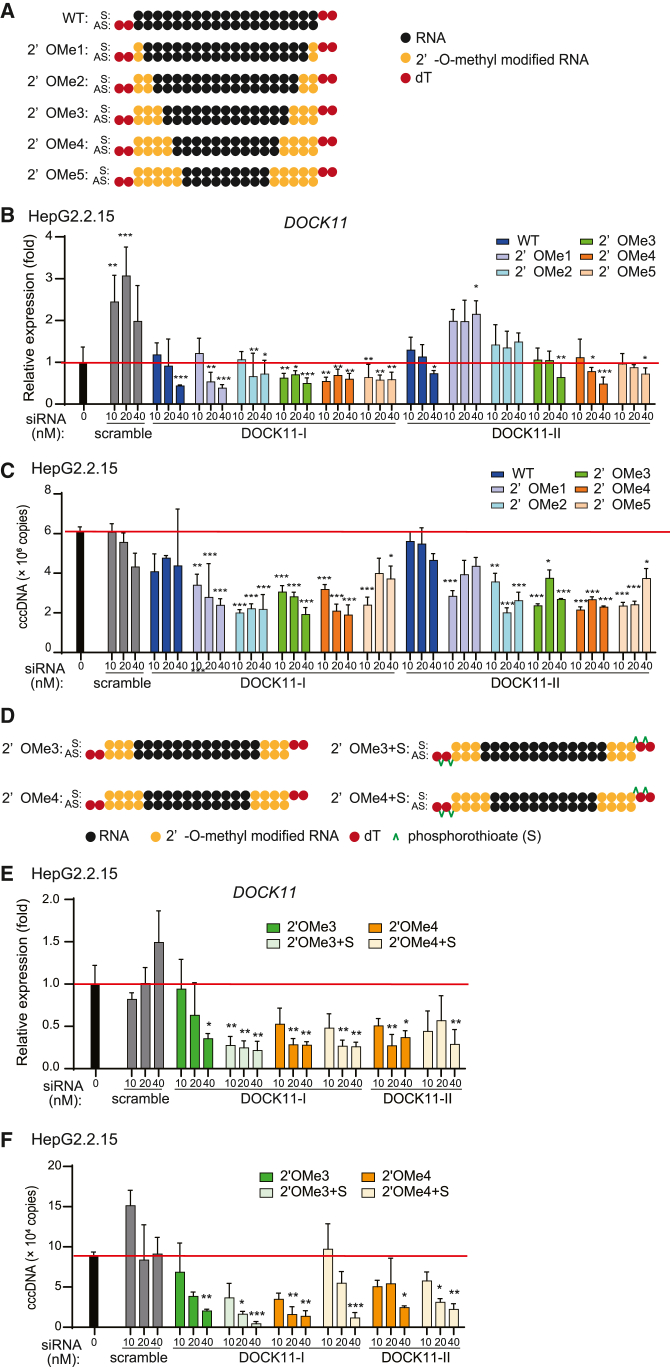
The hepatitis B virus (HBV) infects many people worldwide. As HBV infection frequently leads to liver fibrosis and carcinogenesis, developing anti-HBV therapeutic drugs is urgent. Therapeutic drugs for preventing covalently closed circular DNA (cccDNA) production, which can eliminate HBV infection, are unavailable. The host factor dedicator of cytokinesis 11 (DOCK11) is involved in the synthesis and maintenance of HBV cccDNA . However, the effectiveness of DOCK11 as a target for the elimination of HBV cccDNA remains unclear. In this study, we assess whether DOCK11 inhibitors suppress HBV cccDNA production in mouse models of HBV infection. The tocopherol-conjugate hetero- gapmer, a DNA/RNA duplex of gapmer/complementary RNA targeting the DOCK11 sequence, partially reduces the expression of , but not that of HBV cccDNA, in the livers of HBV-infected human hepatocyte chimeric mice, along with weight loss and decreased serum human albumin levels. Lipid nanoparticle-encapsulated chemically modified siRNAs specific for suppress expression and decrease HBV cccDNA levels without adverse effects in the mice. Therefore, nucleic acid-based drugs targeting DOCK11 in hepatocytes are potentially effective anti-HBV therapeutics that can reduce HBV cccDNA levels .
乙型肝炎病毒(HBV)在全球感染了许多人。由于HBV感染常导致肝纤维化和癌变,开发抗HBV治疗药物迫在眉睫。目前尚无能够消除HBV感染、阻止共价闭合环状DNA(cccDNA)产生的治疗药物。宿主因子胞质分裂 dedicator 11(DOCK11)参与HBV cccDNA的合成与维持。然而,DOCK11作为消除HBV cccDNA靶点的有效性仍不清楚。在本研究中,我们评估DOCK11抑制剂在HBV感染小鼠模型中是否能抑制HBV cccDNA的产生。生育酚缀合杂合缺口mer,一种靶向DOCK11序列的缺口mer/互补RNA的DNA/RNA双链体,可部分降低HBV感染的人肝细胞嵌合小鼠肝脏中[此处原文缺失相关基因或蛋白名称]的表达,但不能降低HBV cccDNA的表达,同时伴有体重减轻和血清人白蛋白水平下降。脂质纳米颗粒包裹的针对[此处原文缺失相关基因或蛋白名称]的化学修饰小干扰RNA(siRNA)可抑制[此处原文缺失相关基因或蛋白名称]的表达并降低HBV cccDNA水平,且对小鼠无不良影响。因此,靶向肝细胞中DOCK11的核酸类药物可能是有效的抗HBV治疗药物,可降低HBV cccDNA水平。