Centre for Genomic Regulation (CRG), The Barcelona Institute of Science and Technology, Dr. Aiguader 88, Barcelona 08003, Spain.
Josep Carreras Leukemia Research Institute (IJC), Badalona 08916, Spain.
Sci Adv. 2024 Aug 9;10(32):eadj8862. doi: 10.1126/sciadv.adj8862. Epub 2024 Aug 7.
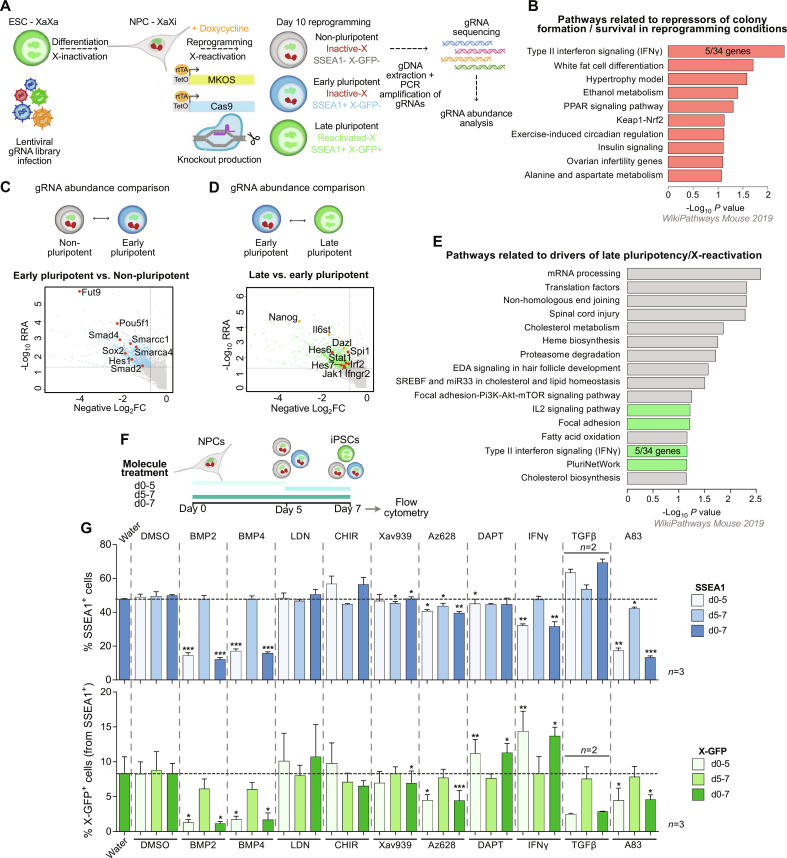
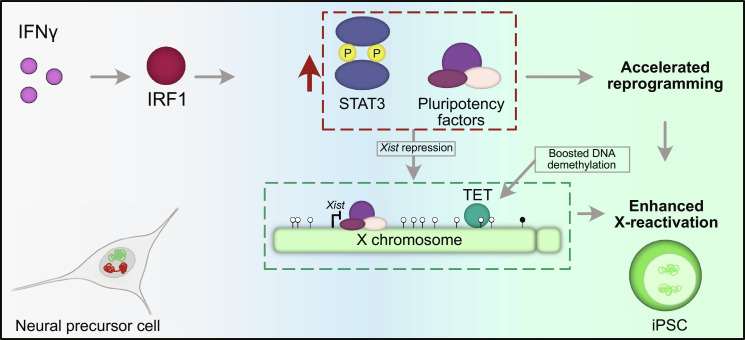
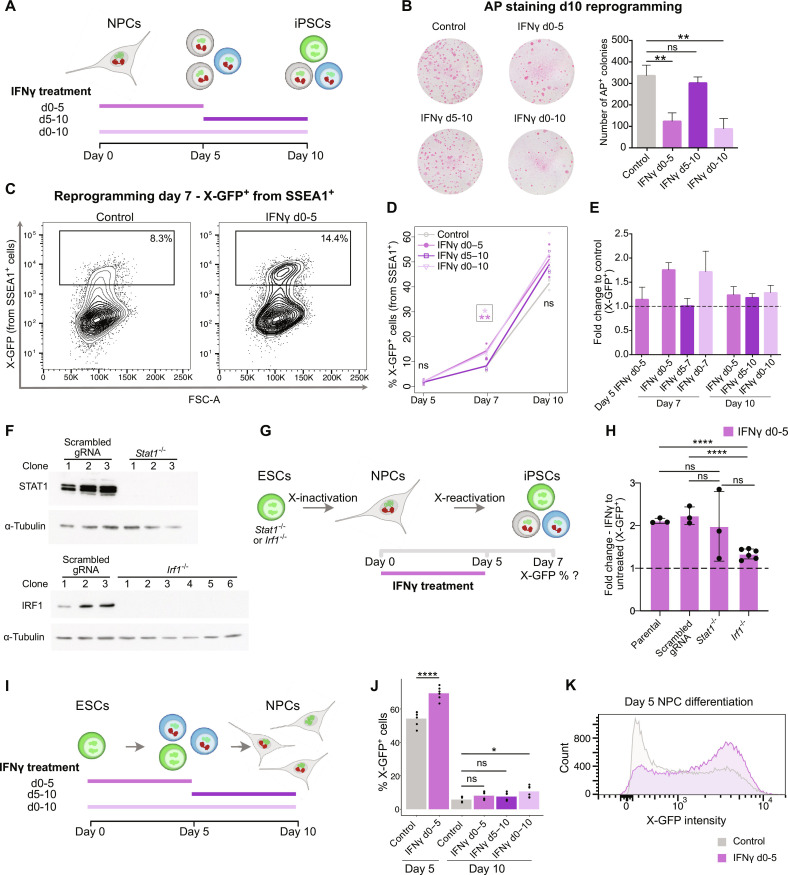
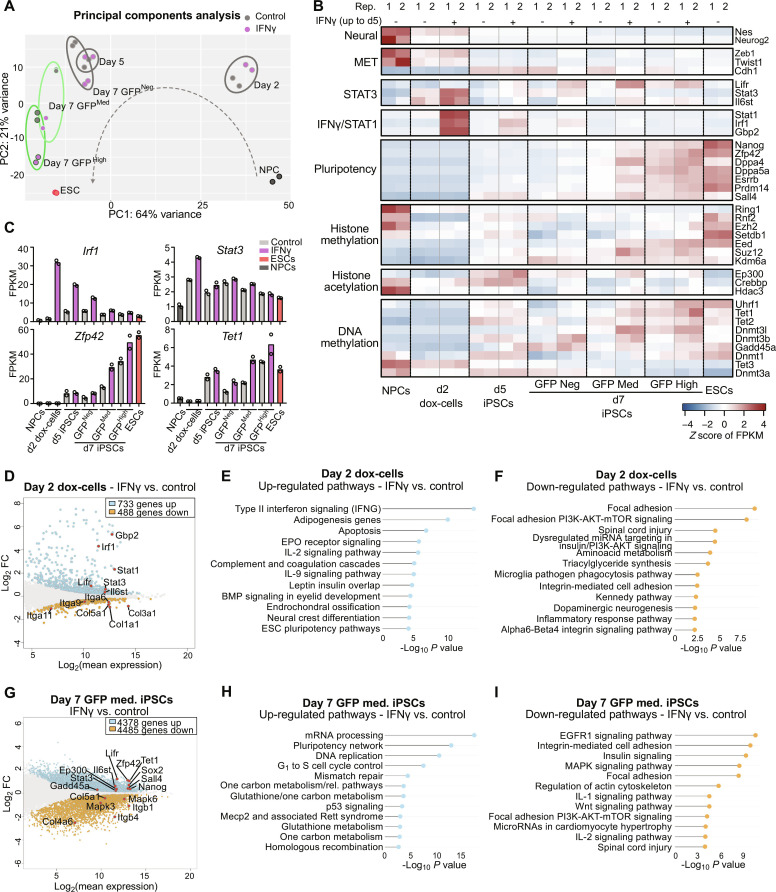
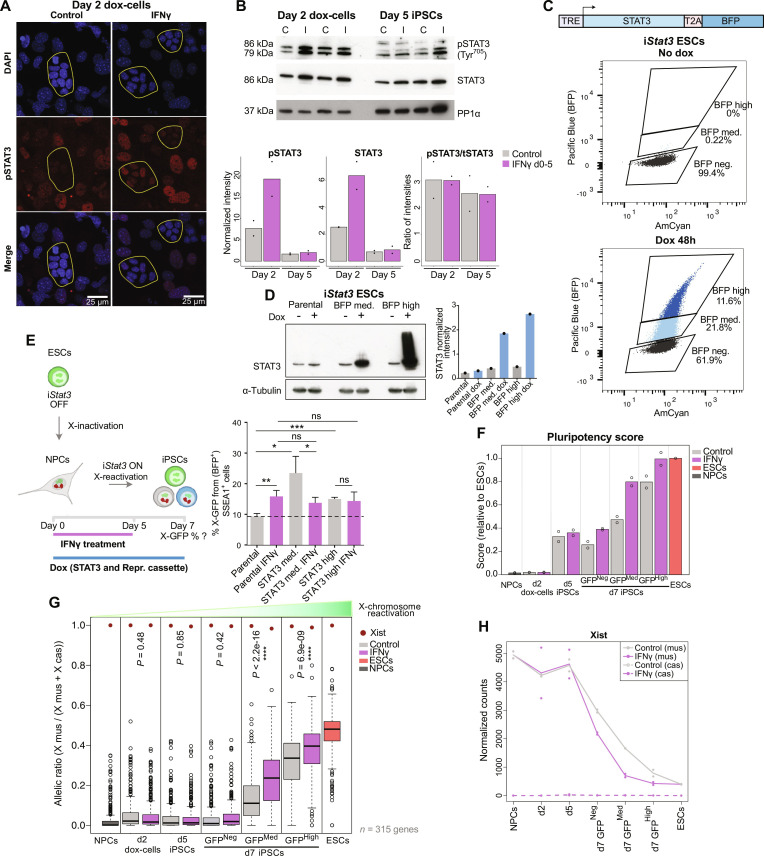
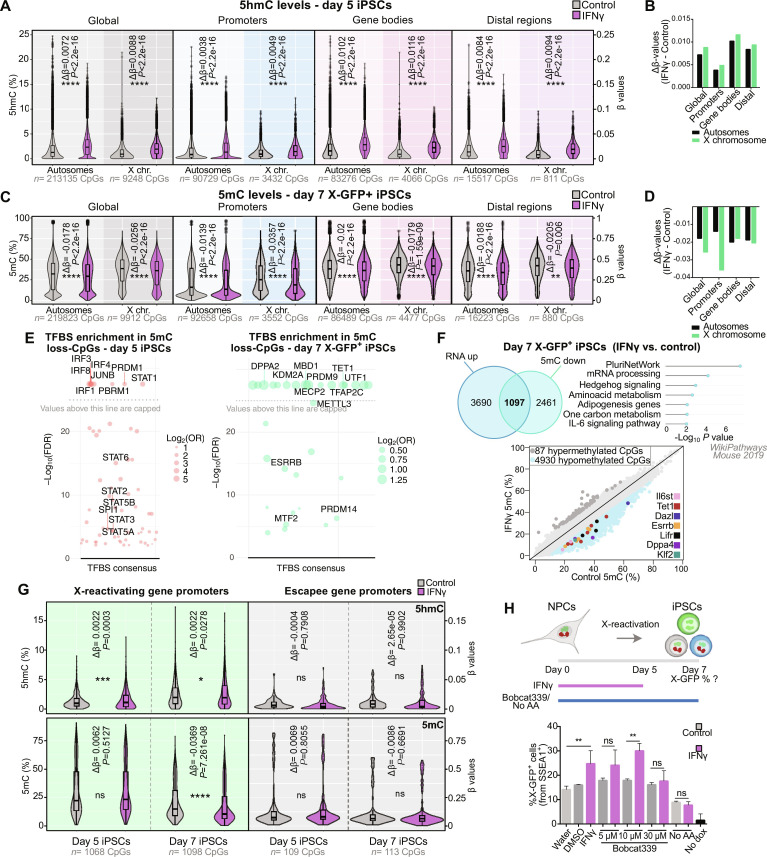
Reprogramming somatic cells into induced pluripotent stem cells (iPSCs) requires activation of the pluripotency network and resetting of the epigenome by erasing the epigenetic memory of the somatic state. In female mouse cells, a critical epigenetic reprogramming step is the reactivation of the inactive X chromosome. Despite its importance, a systematic understanding of the regulatory networks linking pluripotency and X-reactivation is missing. Here, we reveal important pathways for pluripotency acquisition and X-reactivation using a genome-wide CRISPR screen during neural precursor to iPSC reprogramming. In particular, we discover that activation of the interferon γ (IFNγ) pathway early during reprogramming accelerates pluripotency acquisition and X-reactivation. IFNγ stimulates STAT3 signaling and the pluripotency network and leads to enhanced TET-mediated DNA demethylation, which consequently boosts X-reactivation. We therefore gain a mechanistic understanding of the role of IFNγ in reprogramming and X-reactivation and provide a comprehensive resource of the molecular networks involved in these processes.
将体细胞重编程为诱导多能干细胞(iPS 细胞)需要激活多能性网络,并通过消除体细胞状态的表观遗传记忆来重置表观基因组。在雌性小鼠细胞中,一个关键的表观遗传重编程步骤是重新激活失活的 X 染色体。尽管它很重要,但调控多能性和 X 染色体激活之间的网络的系统理解还缺失。在这里,我们使用全基因组 CRISPR 筛选在神经前体细胞重编程为 iPS 细胞的过程中,揭示了获得多能性和 X 染色体激活的重要途径。特别是,我们发现干扰素 γ(IFNγ)途径在重编程早期的激活加速了多能性的获得和 X 染色体的激活。IFNγ 刺激 STAT3 信号和多能性网络,并导致增强的 TET 介导的 DNA 去甲基化,从而增强 X 染色体的激活。因此,我们对 IFNγ 在重编程和 X 染色体激活中的作用有了更深入的了解,并提供了一个涉及这些过程的分子网络的综合资源。