Epigenetics Programme, Babraham Institute, Cambridge, UK.
Department of Biological Chemistry, David Geffen School of Medicine, UCLA, Los Angeles, CA, USA.
Sci Adv. 2022 Mar 25;8(12):eabk0013. doi: 10.1126/sciadv.abk0013.
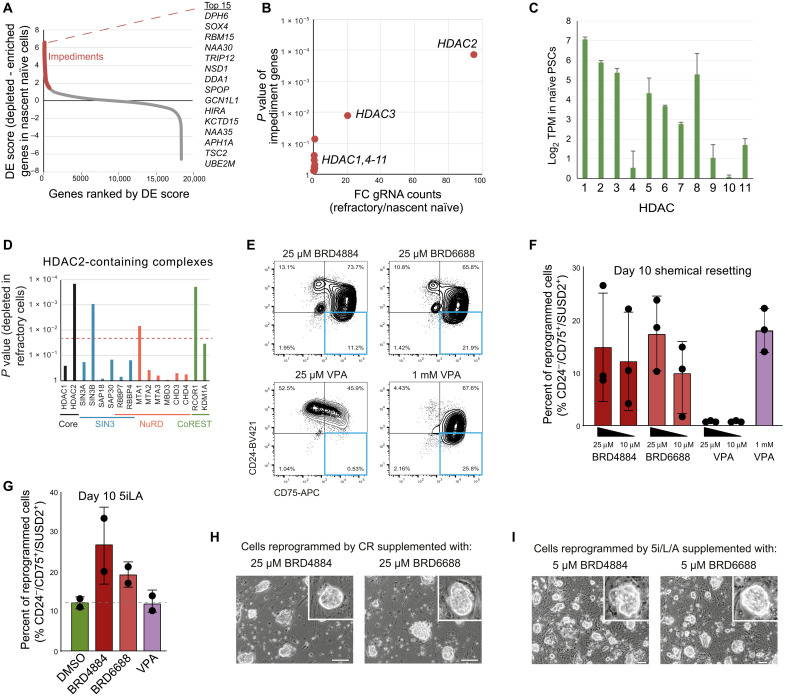
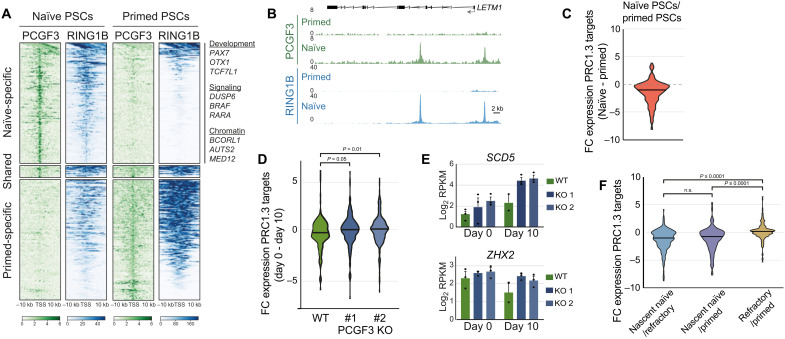
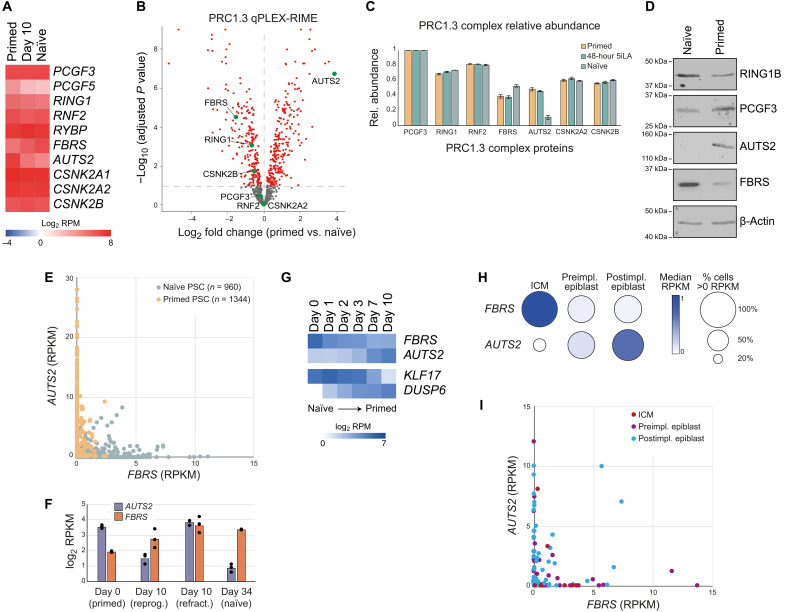
Uncovering the mechanisms that establish naïve pluripotency in humans is crucial for the future applications of pluripotent stem cells including the production of human blastoids. However, the regulatory pathways that control the establishment of naïve pluripotency by reprogramming are largely unknown. Here, we use genome-wide screening to identify essential regulators as well as major impediments of human primed to naïve pluripotent stem cell reprogramming. We discover that factors essential for cell state change do not typically undergo changes at the level of gene expression but rather are repurposed with new functions. Mechanistically, we establish that the variant Polycomb complex PRC1.3 and PRDM14 jointly repress developmental and gene regulatory factors to ensure naïve cell reprogramming. In addition, small-molecule inhibitors of reprogramming impediments improve naïve cell reprogramming beyond current methods. Collectively, this work defines the principles controlling the establishment of human naïve pluripotency and also provides new insights into mechanisms that destabilize and reconfigure cell identity during cell state transitions.
揭示人类原始多能性建立的机制对于多能干细胞的未来应用至关重要,包括人类类胚体的产生。然而,控制通过重编程建立原始多能性的调控途径在很大程度上是未知的。在这里,我们使用全基因组筛选来鉴定那些对人类原始多能性重编程有必要的调节因子,以及主要的障碍。我们发现,细胞状态变化所必需的因子通常不会在基因表达水平上发生变化,而是被重新用于新的功能。从机制上讲,我们确定变体多梳复合物 PRC1.3 和 PRDM14 共同抑制发育和基因调控因子,以确保原始细胞的重编程。此外,重编程障碍的小分子抑制剂可改善原始细胞的重编程,超越当前的方法。总的来说,这项工作定义了控制人类原始多能性建立的原则,也为细胞状态转变过程中破坏和重新配置细胞身份的机制提供了新的见解。