Sheng Chang, Lu Xin-Wu, Shi Hong-Tao, Zhang Lei, Wan Sheng-Yun, Li Hong-Pu, Li Ke, Shi Sen, Liu Zhen-Jie, Luo Yu-Xian, Chen Guo-Dong, Liu Mao-Rong, Kang You-Gen, Ye Bo, Yao Kai, Yang Pu, Wang Wei
Department of Vascular Surgery, Xiangya Hospital, Central South University, Changsha, Hunan, China.
Department of Vascular Surgery, Shanghai Ninth People's Hospital, Shanghai JiaoTong University, Shanghai, China.
BMC Med. 2024 Aug 7;22(1):324. doi: 10.1186/s12916-024-03545-2.
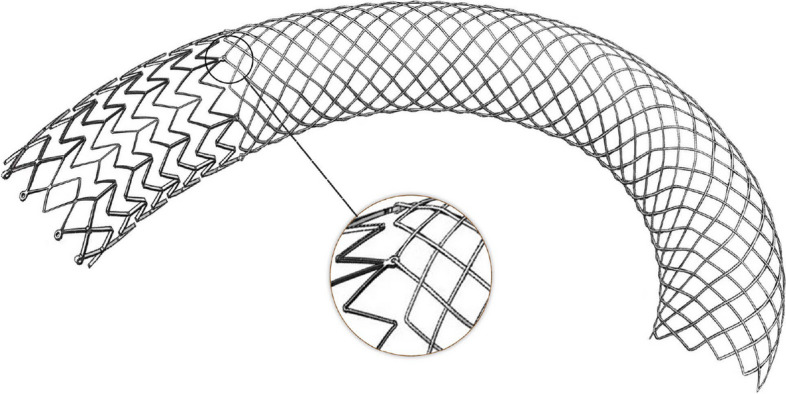
A stent with characteristics of a hybrid design may have advantages in improving the patency of symptomatic iliofemoral vein obstruction. This study assessed the safety and effectiveness of the V-Mixtent Venous Stent in treating symptomatic iliofemoral outflow obstruction.
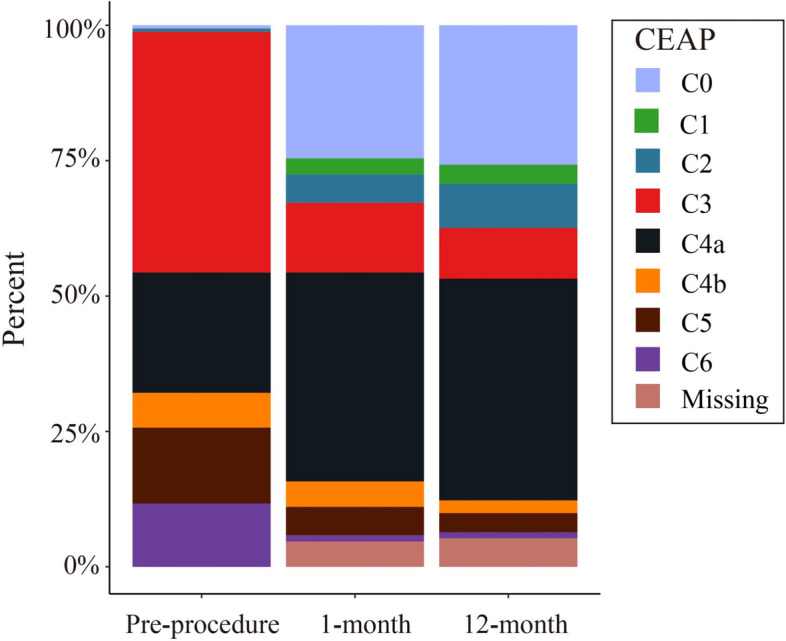
Eligible patients had a Clinical-Etiologic-Anatomic-Physiologic (CEAP) C classification of ≥ 3 or a Venous Clinical Severity Score (VCSS) pain score of ≥ 2. The primary safety endpoint was the rate of major adverse events within 30 days. The primary effectiveness endpoint was the 12-month primary patency rate. Secondary endpoints included changes in VCSS from baseline to 6 and 12 months, alterations in CEAP C classification, Chronic Venous Disease Quality of Life Questionnaire (CIVIQ-14) scores at 12 months, and stent durability measures.
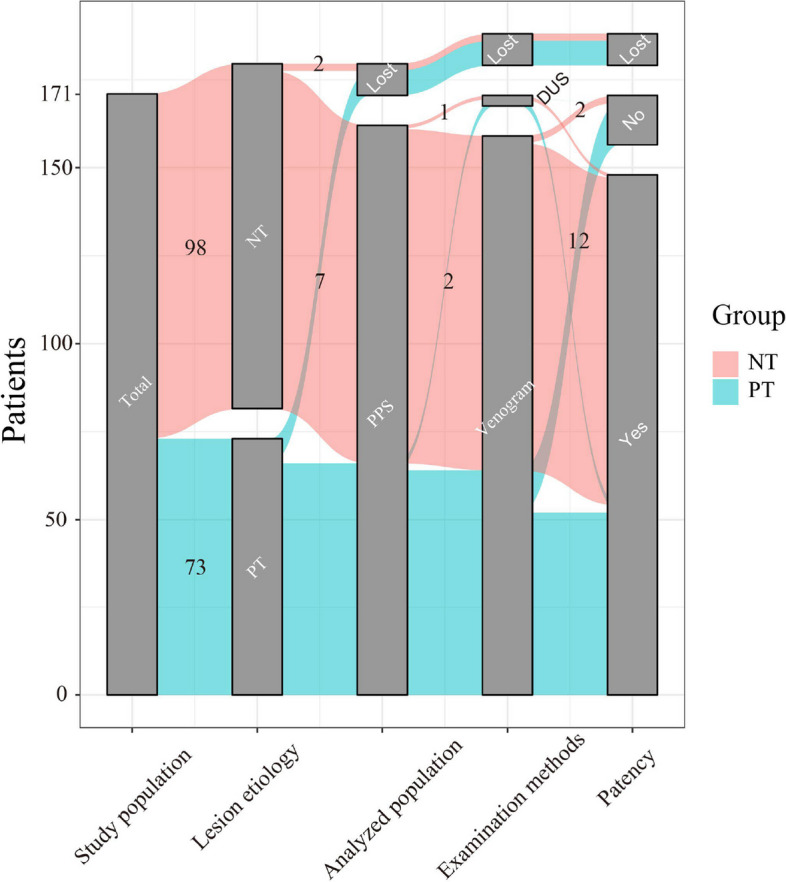
Between December 2020 and November 2021, 171 patients were enrolled across 15 institutions. A total of 185 endovenous stents were placed, with 91.81% of subjects receiving one stent and 8.19% receiving 2 stents. Within 30 days, only two major adverse events occurred (1.17%; 95% confidence interval [CI], 0.14-4.16%), below the literature-defined performance goal of 11% (P < .001). The 12-month primary patency rate (91.36%; 95% CI, 85.93-95.19%; P < .001) exceeded the literature-defined performance goal. VCSS changes from baseline demonstrated clinical improvement at 6 months (- 4.30 ± 3.66) and 12 months (- 4.98 ± 3.67) (P < .001). Significant reduction in symptoms, as measured by CEAP C classification and CIVIQ-14, was observed from pre-procedure to 12 months (P < .001).
The 12-month outcomes confirm the safety and effectiveness of the V-Mixtent Venous Stent in managing symptomatic iliofemoral venous outflow obstruction, including clinical symptom improvement compared to before treatment.
具有混合设计特点的支架在改善有症状的髂股静脉阻塞的通畅性方面可能具有优势。本研究评估了V-Mixtent静脉支架治疗有症状的髂股静脉流出道阻塞的安全性和有效性。
符合条件的患者临床病因解剖生理(CEAP)C分级≥3或静脉临床严重程度评分(VCSS)疼痛评分≥2。主要安全终点是30天内的主要不良事件发生率。主要有效性终点是12个月的原发性通畅率。次要终点包括从基线到6个月和12个月时VCSS的变化、CEAP C分级的改变、12个月时慢性静脉疾病生活质量问卷(CIVIQ-14)评分以及支架耐久性指标。
在2020年12月至2021年11月期间,15个机构共纳入171例患者。共置入185枚静脉内支架,91.81%的受试者接受1枚支架,8.19%接受2枚支架。在30天内,仅发生2例主要不良事件(1.17%;95%置信区间[CI],0.14 - 4.16%),低于文献定义的11%的性能目标(P < 0.001)。12个月的原发性通畅率(91.36%;95% CI,85.93 - 95.19%;P < 0.001)超过了文献定义的性能目标。从基线开始的VCSS变化显示在6个月(-4.30±3.66)和12个月(-4.98±3.67)时临床有改善(P < 0.001)。从术前到12个月,通过CEAP C分级和CIVIQ-14测量,症状有显著减轻(P < 0.001)。
12个月的结果证实了V-Mixtent静脉支架治疗有症状的髂股静脉流出道阻塞的安全性和有效性,包括与治疗前相比临床症状的改善。