Myers Caroline S, Williams Eli, Cornejo Carlos Barrionuevo, Pongas Georgios, Toomey Ngoc L, Sanches Jose A, Battistella Maxime, Mo Samuel, Pulitzer Melissa, Moskaluk Cristopher A, Bhagat Govind, Ofori Kenneth, Davick Jonathan J, Servitje Octavio, Miyashiro Denis, Climent Fina, Ringbloom Kimberley, Duenas Daniela, Law Calvin, Zambrano Sandro Casavilca, Malpica Luis, Beltran Brady E, Castro Denisse, Barreto Luciana, Brites Carlos, Chapman Jennifer R, Choi Jaehyuk, Gru Alejandro A, Ramos Juan C
Department of Dermatology, Northwestern University Feinberg School of Medicine, Chicago, Illinois.
University of Virginia School of Medicine, Charlottesville, Virginia.
Haematologica. 2024 Dec 1;109(12):4021-4039. doi: 10.3324/haematol.2024.285233.
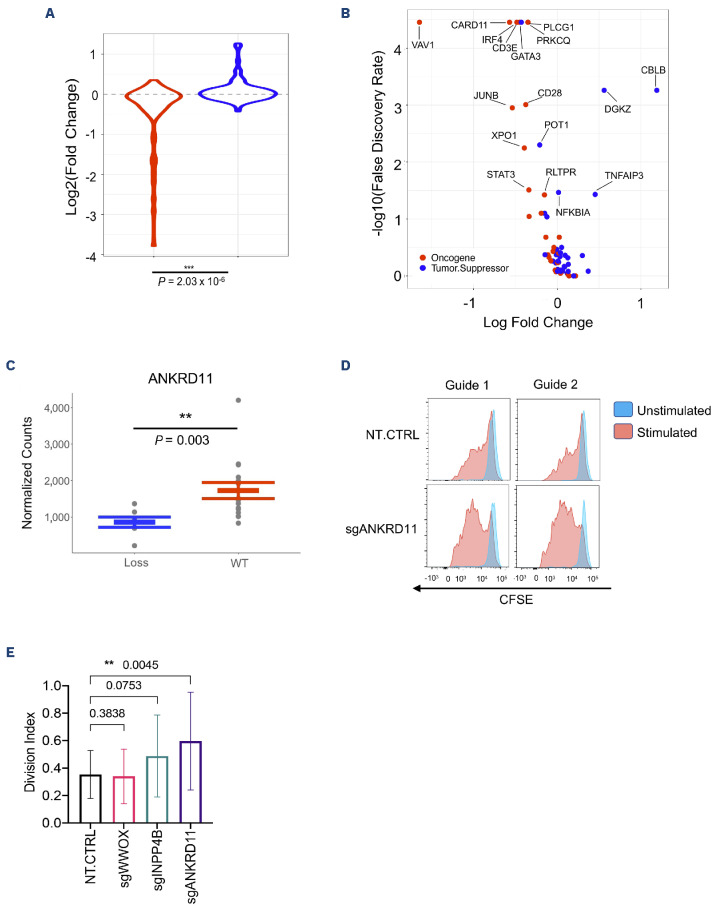
Adult T-cell leukemia-lymphoma (ATLL) is an aggressive malignancy driven by human T-cell leukemia virus type 1 (HTLV-1). Although patients from the Western hemisphere (Afro-Caribbean and South American) face worse prognoses, our understanding of ATLL molecular drivers derives mostly from Japanese studies. We performed multi-omic analyses to elucidate the genomic landscape of ATLL in Western cohorts. Recurrent deletions and/or damaging mutations involving FOXO3, ANKRD11, DGKZ, and PTPN6 implicate these genes as potential tumor suppressors. RNA-sequencing, published functional data and in vitro assays support the roles of ANKRD11 and FOXO3 as regulators of T-cell proliferation and apoptosis in ATLL, respectively. Survival data suggest that ANKRD11 mutation may confer a worse prognosis. Japanese and Western cohorts, in addition to acute and lymphomatous subtypes, demonstrated distinct molecular patterns. GATA3 deletion was associated with chronic cases with unfavorable outcomes. IRF4 and CARD11 mutations frequently emerged in relapses after interferon therapy. Our findings reveal novel putative ATLL driver genes and clinically relevant differences between Japanese and Western ATLL patients.
成人T细胞白血病-淋巴瘤(ATLL)是一种由1型人类T细胞白血病病毒(HTLV-1)驱动的侵袭性恶性肿瘤。尽管来自西半球(非洲加勒比地区和南美洲)的患者预后较差,但我们对ATLL分子驱动因素的了解大多来自日本的研究。我们进行了多组学分析,以阐明西方队列中ATLL的基因组格局。涉及FOXO3、ANKRD11、DGKZ和PTPN6的复发性缺失和/或有害突变表明这些基因是潜在的肿瘤抑制因子。RNA测序、已发表的功能数据和体外试验分别支持ANKRD11和FOXO3作为ATLL中T细胞增殖和凋亡调节因子的作用。生存数据表明,ANKRD11突变可能导致预后较差。除急性和淋巴瘤亚型外,日本和西方队列表现出不同的分子模式。GATA3缺失与预后不良的慢性病例相关。IRF4和CARD11突变在干扰素治疗后的复发中频繁出现。我们的研究结果揭示了新的假定的ATLL驱动基因以及日本和西方ATLL患者之间临床相关的差异。