Xiong Xiao-Yi, Pan Xin-Ru, Luo Xia-Xia, Wang Yu-Fei, Zhang Xin-Xiao, Yang Su-Hao, Zhong Zhan-Qiong, Liu Chang, Chen Qiong, Wang Peng-Fei, Chen Xiao-Wei, Yu Shu-Guang, Yang Qing-Wu
Acupuncture and Tuina School, Chengdu University of Traditional Chinese Medicine; 1166 Liutai Road, 611137, Chengdu, China.
Sichuan Provincial Key Laboratory for Acupuncture & Chronobiology, Chengdu, China.
Theranostics. 2024 Jul 8;14(11):4297-4317. doi: 10.7150/thno.96375. eCollection 2024.
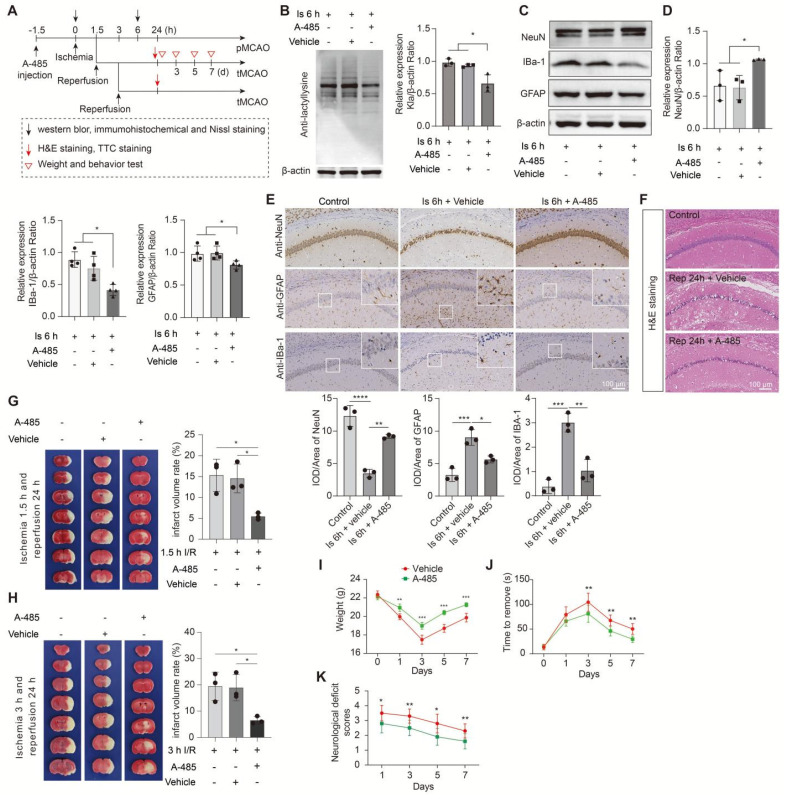
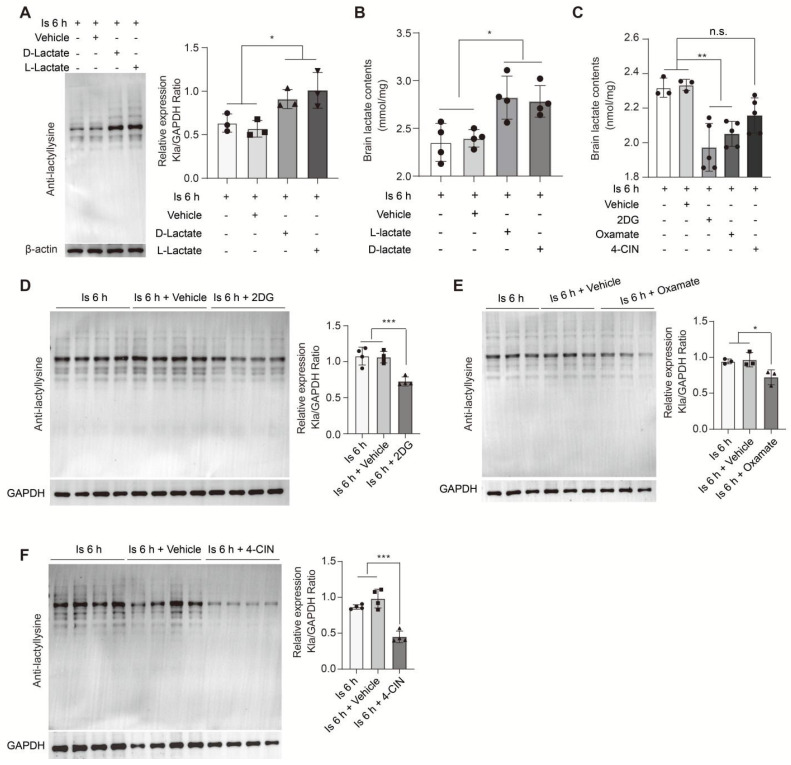
Although lactate supplementation at the reperfusion stage of ischemic stroke has been shown to offer neuroprotection, whether the role of accumulated lactate at the ischemia phase is neuroprotection or not remains largely unknown. Thus, in this study, we aimed to investigate the roles and mechanisms of accumulated brain lactate at the ischemia stage in regulating brain injury of ischemic stroke. Pharmacological inhibition of lactate production by either inhibiting LDHA or glycolysis markedly attenuated the mouse brain injury of ischemic stroke. In contrast, additional lactate supplement further aggravates brain injury, which may be closely related to the induction of neuronal death and A1 astrocytes. The contributing roles of increased lactate at the ischemic stage may be related to the promotive formation of protein lysine lactylation (Kla), while the post-treatment of lactate at the reperfusion stage did not influence the brain protein Kla levels with neuroprotection. Increased protein Kla levels were found mainly in neurons by the HPLC-MS/MS analysis and immunofluorescent staining. Then, pharmacological inhibition of lactate production or blocking the lactate shuttle to neurons showed markedly decreased protein Kla levels in the ischemic brains. Additionally, specific knockout in astrocytes ( ; mice, cKO) mice with MCAO were constructed and the results showed that the protein Kla level was decreased accompanied by a decrease in the volume of cerebral infarction in cKO mice compared to the control groups. Furthermore, blocking the protein Kla formation by inhibiting the writer p300 with its antagonist A-485 significantly alleviates neuronal death and glial activation of cerebral ischemia with a reduction in the protein Kla level, resulting in extending reperfusion window and improving functional recovery for ischemic stroke. Collectively, increased brain lactate derived from astrocytes aggravates ischemic brain injury by promoting the protein Kla formation, suggesting that inhibiting lactate production or the formation of protein Kla at the ischemia stage presents new therapeutic targets for the treatment of ischemic stroke.
尽管在缺血性中风再灌注阶段补充乳酸已被证明具有神经保护作用,但在缺血阶段积累的乳酸是否具有神经保护作用在很大程度上仍不清楚。因此,在本研究中,我们旨在探讨缺血阶段脑内积累的乳酸在调节缺血性中风脑损伤中的作用及机制。通过抑制LDHA或糖酵解对乳酸生成进行药理学抑制,可显著减轻缺血性中风小鼠的脑损伤。相反,额外补充乳酸会进一步加重脑损伤,这可能与诱导神经元死亡和A1星形胶质细胞密切相关。缺血阶段乳酸增加的作用可能与蛋白质赖氨酸乳酰化(Kla)的促进形成有关,而在再灌注阶段对乳酸进行后处理并不会影响具有神经保护作用的脑蛋白Kla水平。通过HPLC-MS/MS分析和免疫荧光染色发现,增加的蛋白Kla水平主要存在于神经元中。然后,对乳酸生成进行药理学抑制或阻断向神经元的乳酸穿梭,结果显示缺血脑中的蛋白Kla水平显著降低。此外,构建了MCAO术后星形胶质细胞特异性敲除(; 小鼠,cKO)小鼠,结果显示与对照组相比,cKO小鼠的蛋白Kla水平降低,同时脑梗死体积减小。此外,用其拮抗剂A-485抑制写入因子p300来阻断蛋白Kla的形成,可显著减轻脑缺血的神经元死亡和神经胶质激活,同时降低蛋白Kla水平,从而延长再灌注窗口并改善缺血性中风的功能恢复。总的来说,星形胶质细胞来源的脑乳酸增加通过促进蛋白Kla的形成加重缺血性脑损伤,这表明在缺血阶段抑制乳酸生成或蛋白Kla的形成可为缺血性中风的治疗提供新的治疗靶点。