Division of Neurology, University of Toronto, ON, M5S 3H2, Canada.
Lampe & Company, Berlin, 10117, Germany.
J Comp Eff Res. 2024 Sep;13(9):e230171. doi: 10.57264/cer-2023-0171. Epub 2024 Aug 8.
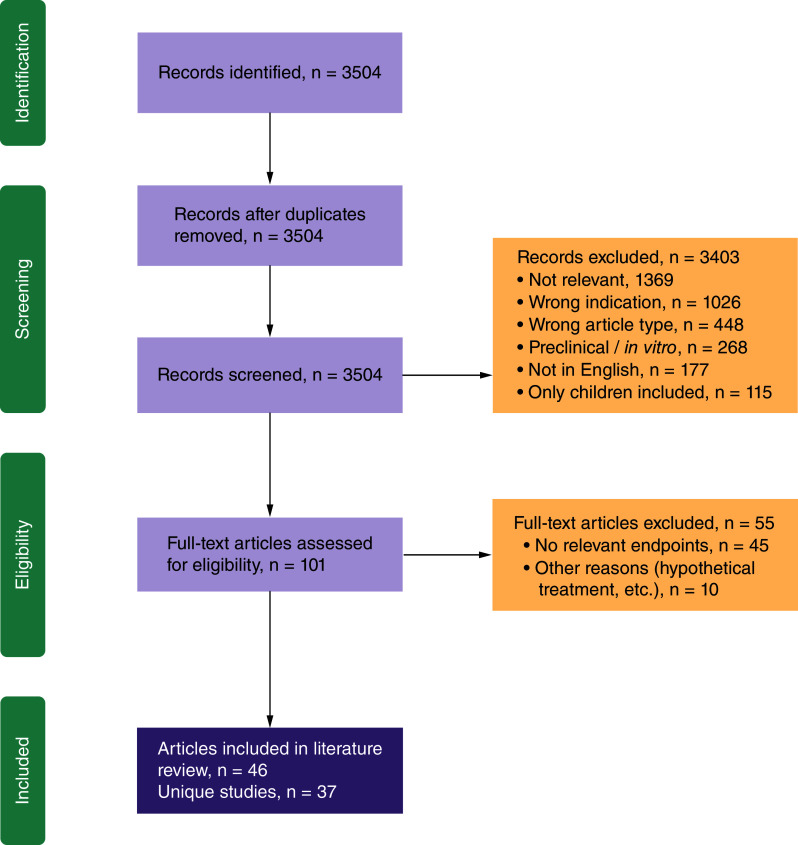
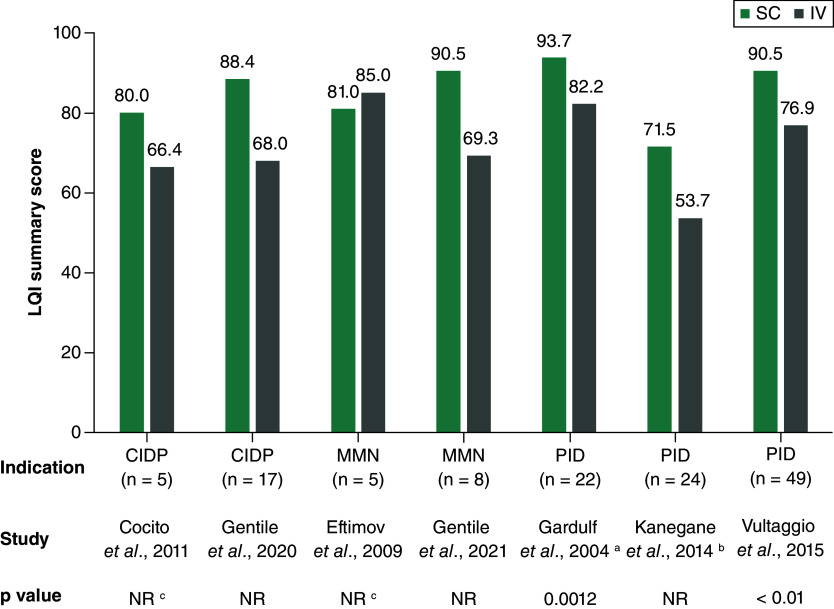
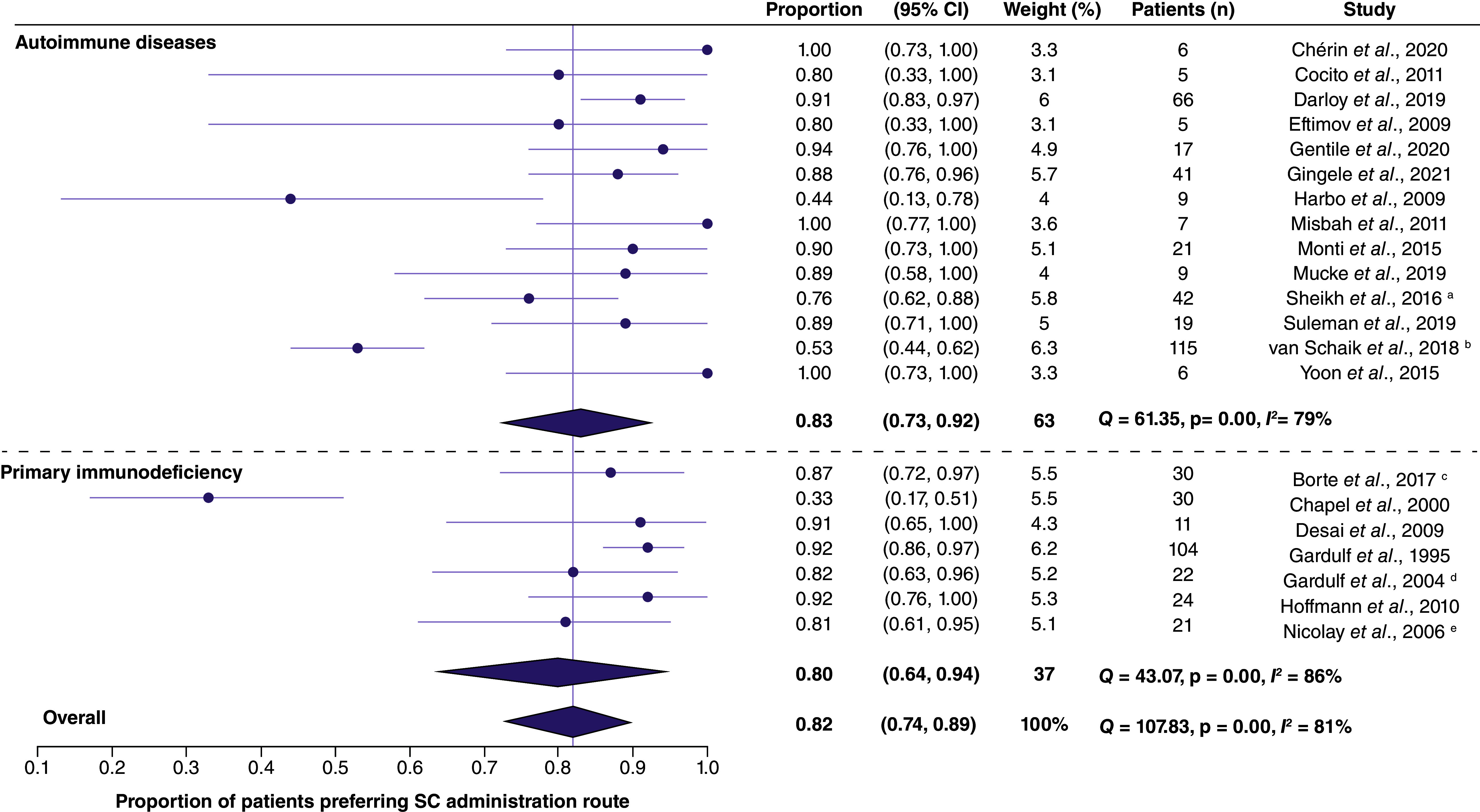
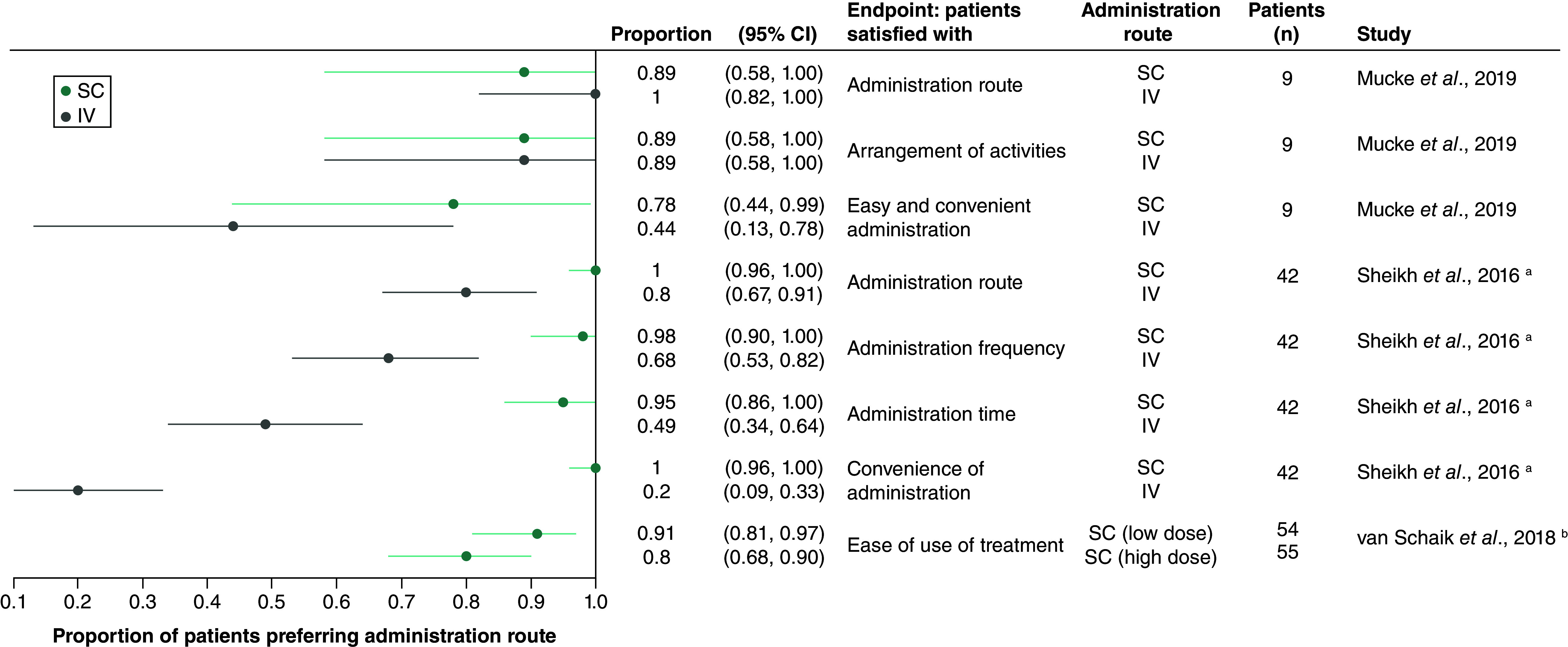
Several studies have found subcutaneous (SC) and intravenous (IV) administration of similar drugs for long-lasting immunological and autoimmune diseases to have similar clinical effectiveness, meaning that what patients report they prefer is, or should be, a major factor in treatment choices. Therefore, it is important to systematically compile evidence regarding patient preferences, treatment satisfaction and health-related quality of life (HRQL) using SC or IV administration of the same drug. PubMed database searches were run on 15 October 2021. Studies involving patients with experience of both home-based SC and hospital-based IV administration of immunoglobulins or biological therapies for the treatment of any autoimmune disease or primary immunodeficiencies (PIDs) were included. The outcomes assessed were patient preferences, treatment satisfaction and HRQL. Preference data were meta-analyzed using a random-effects model. In total, 3504 citations were screened, and 46 publications describing 37 studies were included in the review. There was a strong overall preference for SC over IV administration, with similar results seen for PIDs and autoimmune diseases: PID, 80% (95% confidence interval [CI], 64-94%) preferred SC; autoimmune diseases, 83% (95% CI: 73-92%); overall, 82% (95% CI: 75-89%). The meta-analysis also found that 84% (95% CI: 75-92%) of patients preferred administration at home to treatment in hospital. Analysis of treatment satisfaction using the life quality index found consistently better treatment interference and treatment setting scores with SC administration than with IV administration. Compared with IV infusions in hospital, patients tend to prefer, to be more satisfied with and to report better HRQL with SC administration of the same drug at home, primarily due to the greater convenience. This study contributes to evidence-based care of patients with autoimmune diseases or PIDs.
几项研究发现,对于持久的免疫和自身免疫性疾病,皮下(SC)和静脉内(IV)给予类似药物具有相似的临床效果,这意味着患者报告他们更喜欢的治疗方法应该是治疗选择的主要因素。因此,使用 SC 或 IV 给予相同药物,系统地收集关于患者偏好、治疗满意度和健康相关生活质量(HRQL)的证据非常重要。于 2021 年 10 月 15 日在 PubMed 数据库中进行了检索。纳入了涉及在家中接受 SC 治疗和在医院接受 IV 治疗免疫球蛋白或生物疗法治疗任何自身免疫性疾病或原发性免疫缺陷病(PID)的患者的经验的研究。评估的结果是患者的偏好、治疗满意度和 HRQL。使用随机效应模型对偏好数据进行了荟萃分析。总共筛选了 3504 篇引用文献,纳入了 37 项研究的 46 篇出版物。与 IV 给药相比,患者强烈倾向于 SC 给药,PID 和自身免疫性疾病也有类似的结果:PID,80%(95%置信区间[CI],64-94%)更喜欢 SC;自身免疫性疾病,83%(95% CI:73-92%);总体而言,82%(95% CI:75-89%)。荟萃分析还发现,84%(95% CI:75-92%)的患者更喜欢在家中给药而不是在医院治疗。使用生活质量指数分析治疗满意度发现,与 IV 给药相比,SC 给药的治疗干扰和治疗环境评分始终更好。与在医院进行 IV 输注相比,患者在家中接受相同药物的 SC 给药时往往更倾向于、更满意且报告的 HRQL 更好,主要是因为更方便。这项研究有助于为自身免疫性疾病或 PID 患者提供循证护理。