Avanthay Robin, Garcia-Nicolas Obdulio, Ruggli Nicolas, Grau-Roma Llorenç, Párraga-Ros Ester, Summerfield Artur, Zimmer Gert
Institute of Virology and Immunology IVI, Mittelhäusern, Switzerland.
Department of Infectious Diseases and Pathobiology, Vetsuisse Faculty, University of Bern, Bern, Switzerland.
PLoS Pathog. 2024 Aug 8;20(8):e1012393. doi: 10.1371/journal.ppat.1012393. eCollection 2024 Aug.
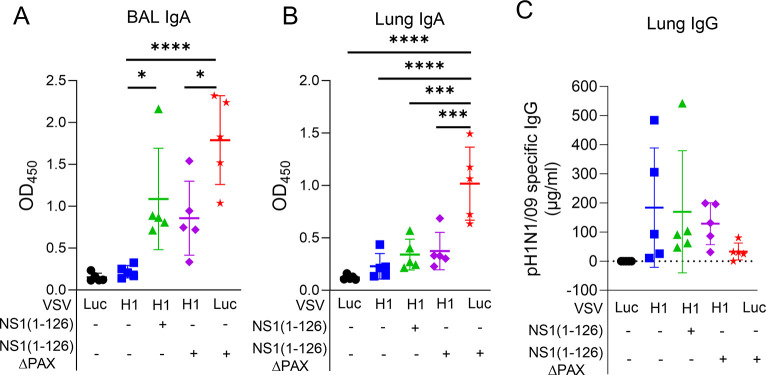
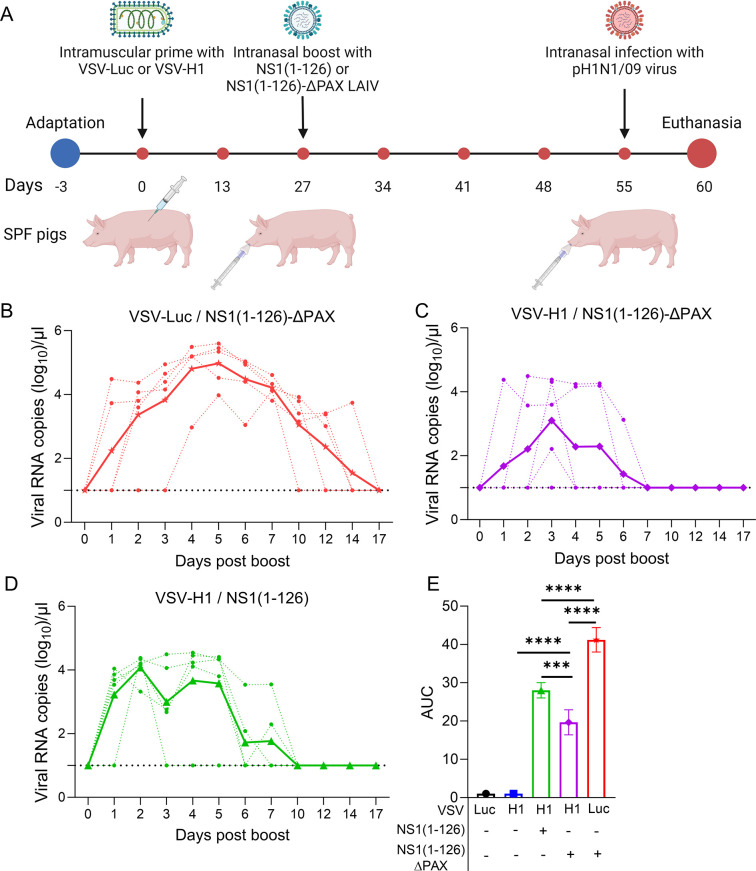
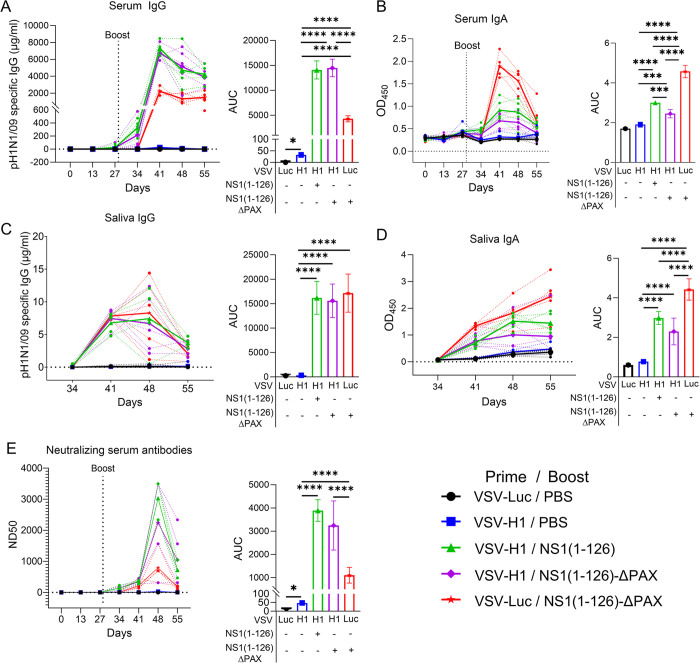
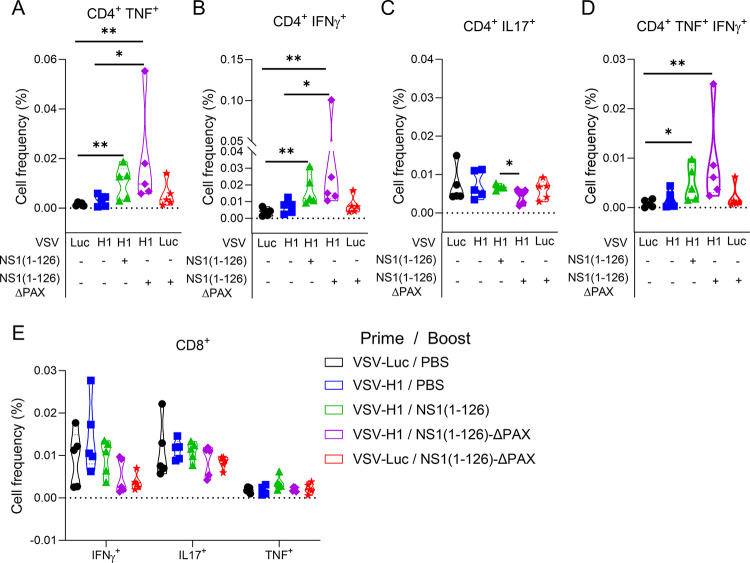
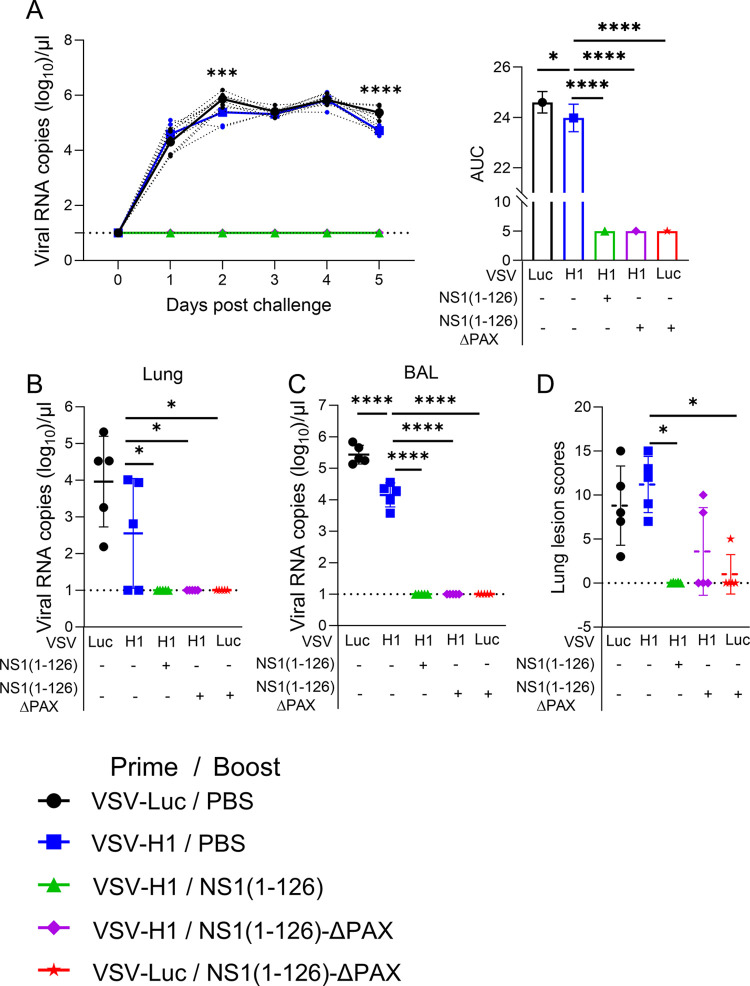
Live-attenuated influenza vaccines (LAIV) offer advantages over the commonly used inactivated split influenza vaccines. However, finding the optimal balance between sufficient attenuation and immunogenicity has remained a challenge. We recently developed an alternative LAIV based on the 2009 pandemic H1N1 virus with a truncated NS1 protein and lacking PA-X protein expression (NS1(1-126)-ΔPAX). This virus showed a blunted replication and elicited a strong innate immune response. In the present study, we evaluated the efficacy of this vaccine candidate in the porcine animal model as a pertinent in vivo system. Immunization of pigs via the nasal route with the novel NS1(1-126)-ΔPAX LAIV did not cause disease and elicited a strong mucosal immune response that completely blocked replication of the homologous challenge virus in the respiratory tract. However, we observed prolonged shedding of our vaccine candidate from the upper respiratory tract. To improve LAIV safety, we developed a novel prime/boost vaccination strategy combining primary intramuscular immunization with a haemagglutinin-encoding propagation-defective vesicular stomatitis virus (VSV) replicon, followed by a secondary immunization with the NS1(1-126)-ΔPAX LAIV via the nasal route. This two-step immunization procedure significantly reduced LAIV shedding, increased the production of specific serum IgG, neutralizing antibodies, and Th1 memory cells, and resulted in sterilizing immunity against homologous virus challenge. In conclusion, our novel intramuscular prime/intranasal boost regimen interferes with virus shedding and transmission, a feature that will help combat influenza epidemics and pandemics.
减毒活流感疫苗(LAIV)比常用的灭活裂解流感疫苗具有优势。然而,在足够的减毒和免疫原性之间找到最佳平衡仍然是一个挑战。我们最近基于2009年大流行的H1N1病毒开发了一种替代的LAIV,其NS1蛋白被截短且缺乏PA-X蛋白表达(NS1(1-126)-ΔPAX)。这种病毒显示出复制减弱并引发强烈的先天免疫反应。在本研究中,我们在猪动物模型这一相关的体内系统中评估了这种候选疫苗的效力。用新型NS1(1-126)-ΔPAX LAIV经鼻途径免疫猪不会引起疾病,并引发强烈的黏膜免疫反应,该反应完全阻断了同源攻击病毒在呼吸道中的复制。然而,我们观察到候选疫苗在上呼吸道的排毒时间延长。为了提高LAIV的安全性,我们开发了一种新型的初免/加强免疫策略,即先用编码血凝素的增殖缺陷型水疱性口炎病毒(VSV)复制子进行初次肌肉免疫,然后通过鼻途径用NS1(1-126)-ΔPAX LAIV进行二次免疫。这种两步免疫程序显著减少了LAIV的排毒,增加了特异性血清IgG、中和抗体和Th1记忆细胞的产生,并导致对同源病毒攻击产生无菌免疫。总之,我们新型的肌肉初免/鼻内加强免疫方案可干扰病毒的排毒和传播,这一特性将有助于抗击流感流行和大流行。