MRC Weatherall Institute of Molecular Medicine, Oxford OX39DS, UK; Nuffield Division of Clinical Laboratory Sciences, Radcliffe Department of Medicine, University of Oxford, Oxford OX39DS, UK; NIHR Oxford Biomedical Research Centre, Oxford OX39DU, UK.
Molecular Genetics and Functional Genomics, Bambino Gesù Children's Hospital, IRCCS, 00146 Rome, Italy.
Am J Hum Genet. 2024 Sep 5;111(9):1953-1969. doi: 10.1016/j.ajhg.2024.07.006. Epub 2024 Aug 7.
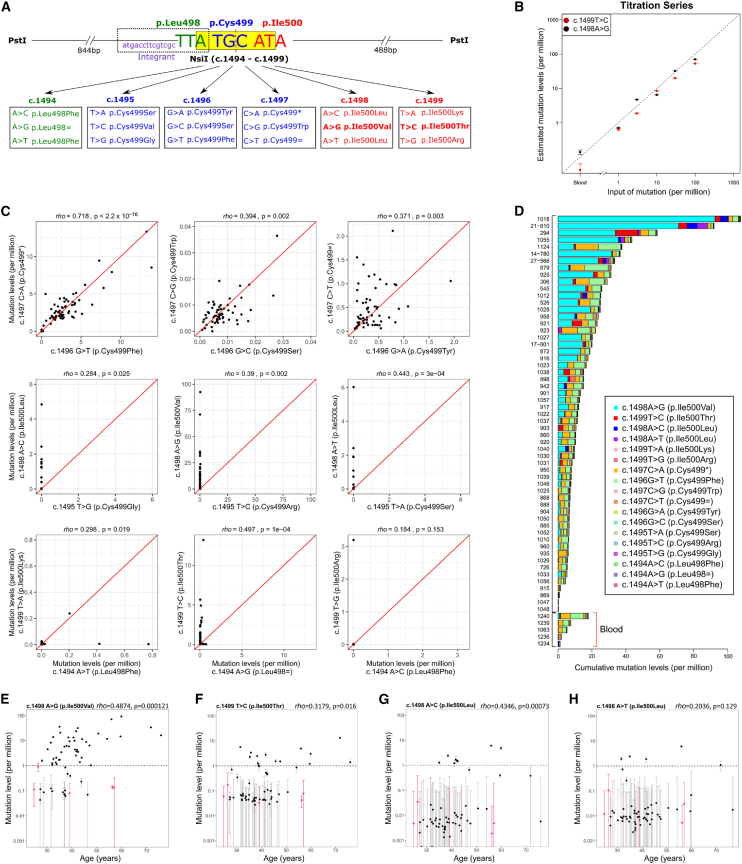
While it is widely thought that de novo mutations (DNMs) occur randomly, we previously showed that some DNMs are enriched because they are positively selected in the testes of aging men. These "selfish" mutations cause disorders with a shared presentation of features, including exclusive paternal origin, significant increase of the father's age, and high apparent germline mutation rate. To date, all known selfish mutations cluster within the components of the RTK-RAS-MAPK signaling pathway, a critical modulator of testicular homeostasis. Here, we demonstrate the selfish nature of the SMAD4 DNMs causing Myhre syndrome (MYHRS). By analyzing 16 informative trios, we show that MYHRS-causing DNMs originated on the paternally derived allele in all cases. We document a statistically significant epidemiological paternal age effect of 6.3 years excess for fathers of MYHRS probands. We developed an ultra-sensitive assay to quantify spontaneous MYHRS-causing SMAD4 variants in sperm and show that pathogenic variants at codon 500 are found at elevated level in sperm of most men and exhibit a strong positive correlation with donor's age, indicative of a high apparent germline mutation rate. Finally, we performed in vitro assays to validate the peculiar functional behavior of the clonally selected DNMs and explored the basis of the pathophysiology of the different SMAD4 sperm-enriched variants. Taken together, these data provide compelling evidence that SMAD4, a gene operating outside the canonical RAS-MAPK signaling pathway, is associated with selfish spermatogonial selection and raises the possibility that other genes/pathways are under positive selection in the aging human testis.
虽然人们普遍认为新突变(DNMs)是随机发生的,但我们之前曾表明,某些 DNMs 是富集的,因为它们在衰老男性的睾丸中受到正选择。这些“自私”的突变导致具有共同表现特征的疾病,包括排他性的父系起源、父亲年龄的显著增加以及高明显的种系突变率。迄今为止,所有已知的自私突变都聚集在 RTK-RAS-MAPK 信号通路的组成部分内,这是睾丸内稳态的关键调节剂。在这里,我们证明了导致 Myhre 综合征(MYHRS)的 SMAD4 DNMs 的自私性质。通过分析 16 个信息丰富的三核苷酸重复序列,我们表明,在所有情况下,导致 MYHRS 的 DNMs 均源自父系来源的等位基因。我们记录了一个具有统计学意义的父系年龄效应,即 MYHRS 先证者的父亲年龄增加了 6.3 年。我们开发了一种超灵敏的测定法来定量精子中的自发 MYHRS 引起的 SMAD4 变体,并表明在大多数男性的精子中发现了密码子 500 处的致病性变体,并且与供体年龄呈强正相关,表明高明显的种系突变率。最后,我们进行了体外测定以验证克隆选择的 DNMs 的特殊功能行为,并探讨了不同 SMAD4 精子富集变体的病理生理学基础。综上所述,这些数据提供了令人信服的证据,表明在经典 RAS-MAPK 信号通路之外起作用的基因 SMAD4 与自私的精原细胞选择有关,并提出了其他基因/途径在衰老人类睾丸中受到正选择的可能性。