Martínez-Campelo L, Blanco-Verea A, López-Fernández T, Martínez-Monzonís A, Buño A, Mazón P, Zamora P, Norton N, Reddy J S, Velasco-Ruiz A, González-Neira A, Vulsteke C, Alonso-Gordoa T, Cruz R, Diz-de Almeida S, Carracedo A, González-Juanatey J R, López-Sendón J, Brion M
Instituto de Investigación Sanitaria de Santiago, Xenética Cardiovascular, Santiago De Compostela, Spain.
Hospital Universitario La Paz, Servicio de Cardiología, Madrid, Spain.
Sci Rep. 2024 Aug 8;14(1):18413. doi: 10.1038/s41598-024-69064-5.
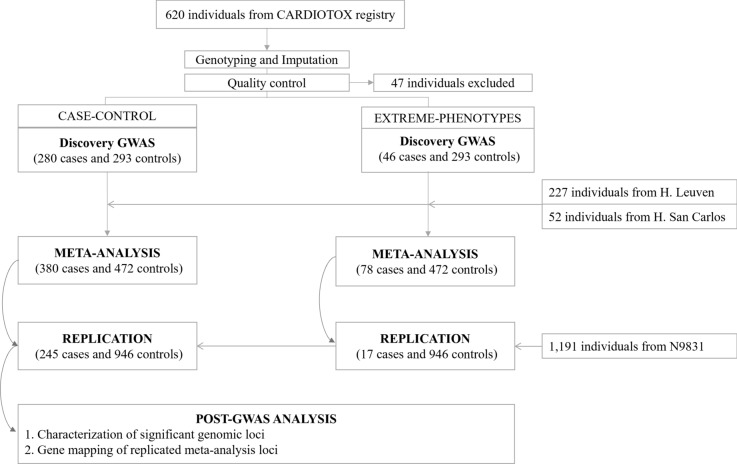
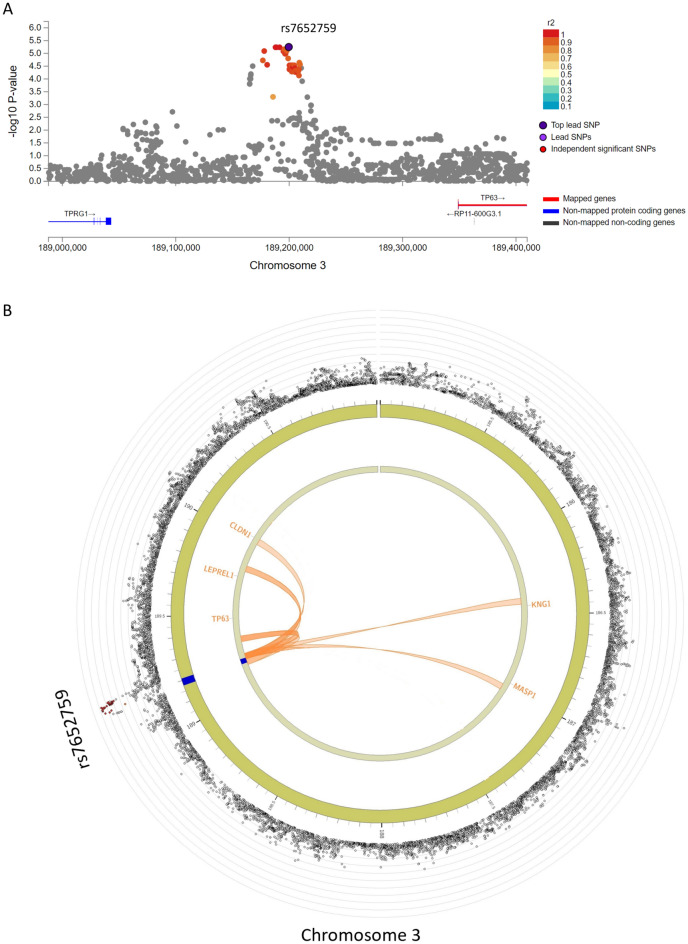
Cancer therapy-related cardiac dysfunction (CTRCD), which commonly includes left ventricular dysfunction and heart failure, is the main adverse effect of anticancer therapy. In recent years several candidate genes studies and genome-wide association studies have identified common genetic variants associated with CTRCD, but evidence remains limited and few genetic variants are robust. A genome-wide meta-analysis of CTRCD was performed with 852 oncology patients receiving cancer therapy. DNA samples were genotyped and imputed to perform a GWAS meta-analysis for case-control (N = 852 (380 cases and 472 controls) and extreme phenotypes (N = 618 (78 cases and 472 controls) looking for genetic variants that predispose to CTRCD. The results were validated in a replicate cohort of 1,191 oncology patients (245 cases and 946 controls). Functional mapping of the replicated loci was then performed. The meta-analysis showed 9 and 17 loci suggestively associated (P-value < 1 × 10) with CTRCD in case-control and extreme phenotypes analyses, respectively. The 3q28 locus (rs rs7652759, P = 5.64 × 10) in the case-control analysis was the strongest signal, with up to 64 SNPs above the suggestive significance threshold. The rs7652759, an intergenic variant between TPRG1 and TP63 genes, was the only variant validated in the replication cohort (P-value = 0.01). Functional mapping of this significant locus revealed up to 5 new genes potentially involved in the CTRCD. We identified the intergenic region near TP63 as a novel CTRCD susceptibility locus. In the future, the genotyping of these markers could be considered in new CTRCD risk scores to improve preventive strategies in cardio-oncology.
癌症治疗相关的心脏功能障碍(CTRCD)通常包括左心室功能障碍和心力衰竭,是抗癌治疗的主要不良反应。近年来,多项候选基因研究和全基因组关联研究已鉴定出与CTRCD相关的常见基因变异,但证据仍然有限,且很少有基因变异具有足够的说服力。对852名接受癌症治疗的肿瘤患者进行了CTRCD的全基因组荟萃分析。对DNA样本进行基因分型和推算,以进行病例对照(N = 852(380例病例和472例对照))和极端表型(N = 618(78例病例和472例对照))的全基因组关联研究荟萃分析,寻找易患CTRCD的基因变异。结果在1191名肿瘤患者(245例病例和946例对照)的重复队列中得到验证。然后对复制位点进行功能定位。荟萃分析显示,在病例对照和极端表型分析中,分别有9个和17个位点与CTRCD存在提示性关联(P值<1×10)。病例对照分析中的3q28位点(rs rs7652759,P = 5.64×10)是最强信号,有多达64个单核苷酸多态性超过提示性显著阈值。rs7652759是TPRG1和TP63基因之间的基因间变异,是在重复队列中唯一得到验证的变异(P值 = 0.01)。对这一显著位点的功能定位揭示了多达5个可能参与CTRCD的新基因。我们将TP63附近的基因间区域确定为一个新的CTRCD易感位点。未来,在新的CTRCD风险评分中可考虑对这些标志物进行基因分型,以改善心脏肿瘤学的预防策略。