Department of Gynecology, The First Affiliated Hospital of Zhengzhou University, No.1 East Jianshe Road, Zhengzhou, Henan, 450052, China.
Department of Obstetrics and Gynecology, The First Affiliated Hospital of Xi'an Jiaotong University, Xi'an, Shaanxi, 710004, China.
BMC Cancer. 2024 Aug 8;24(1):977. doi: 10.1186/s12885-024-12758-w.
Patients with choriocarcinoma (CC) accompanying chemoresistance conventionally present a poor prognosis. Whether ras protein activator like-1 (RASAL1) functions as a tumor promoter or suppressor depends on tumor types. However, the role of RASAL1 in process of chemoresistance of CC and underlying molecular mechanism remain elusive.
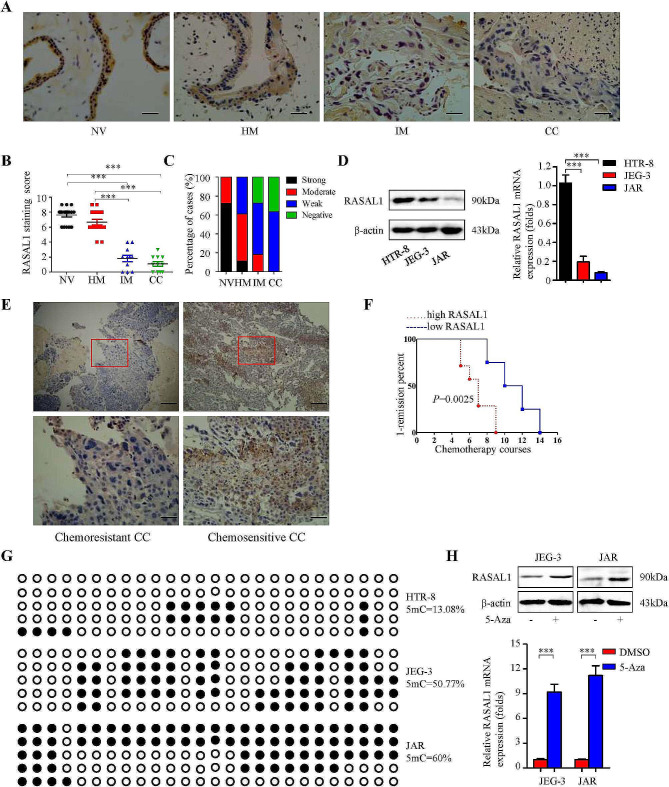
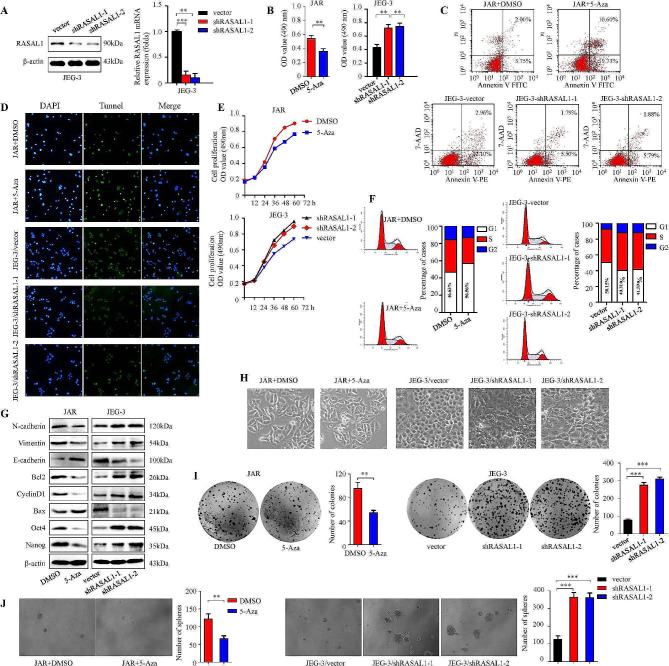
The expression pattern of RASAL1 in CC cells and tissues was measured using Western blotting, immunohistochemistry and qRT-PCR. Cell viability and proliferative ability were assessed by MTT assay, Tunnel assay and flow cytometric analysis. Additionally, the stemness was evaluated by the colony formation and tumor sphere formation. Methotrexate (MTX) was applied to exam the chemosensitivity of CC cells.
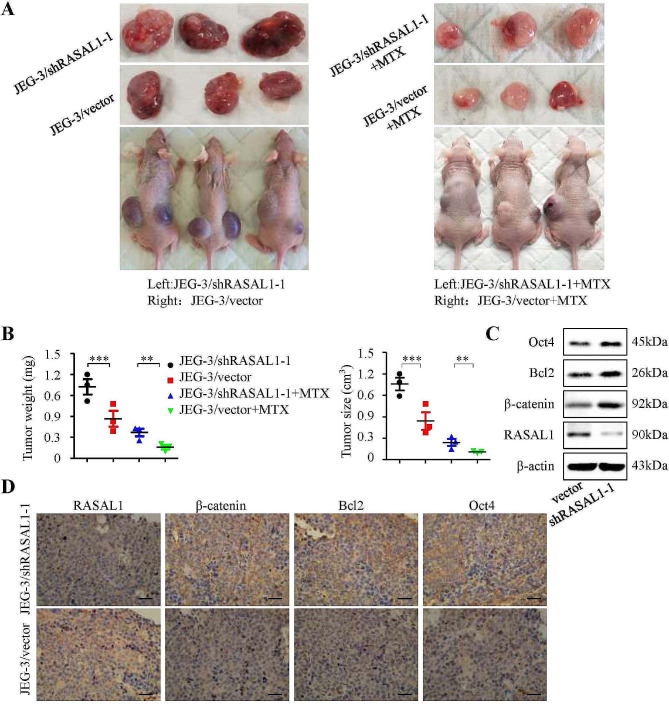
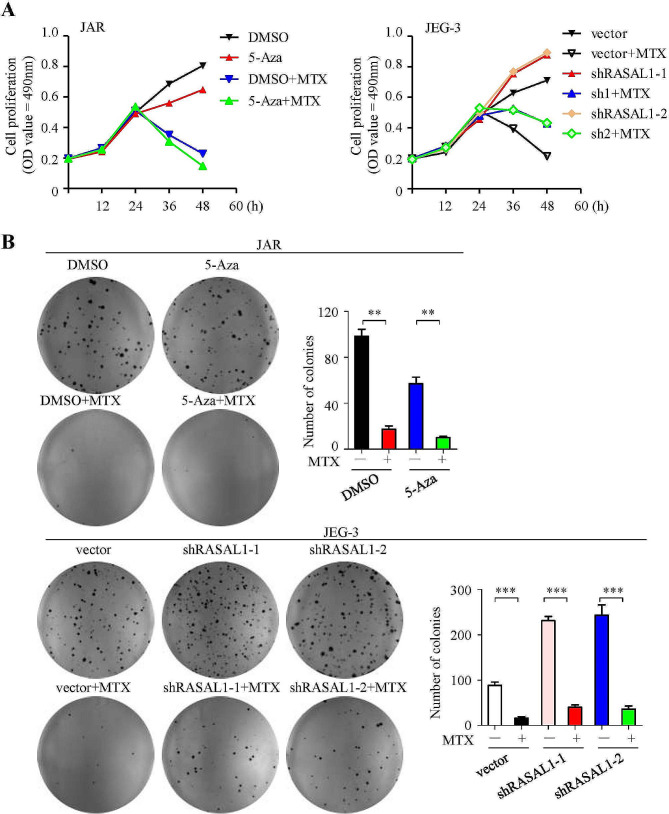
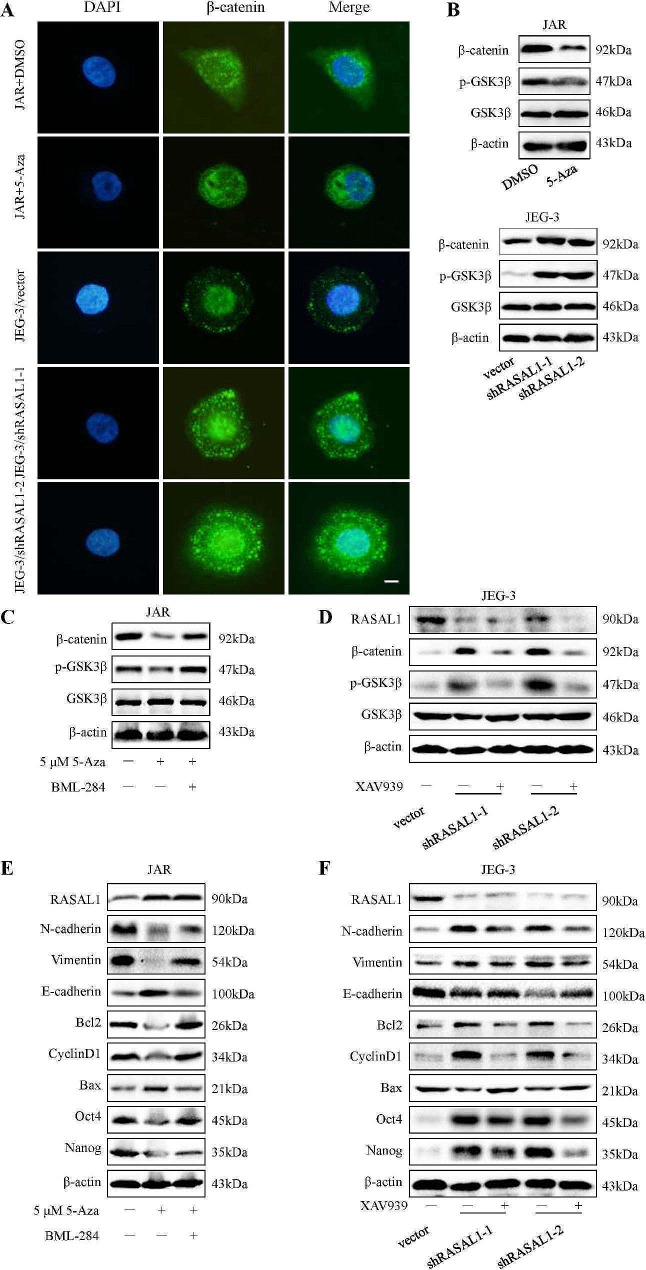
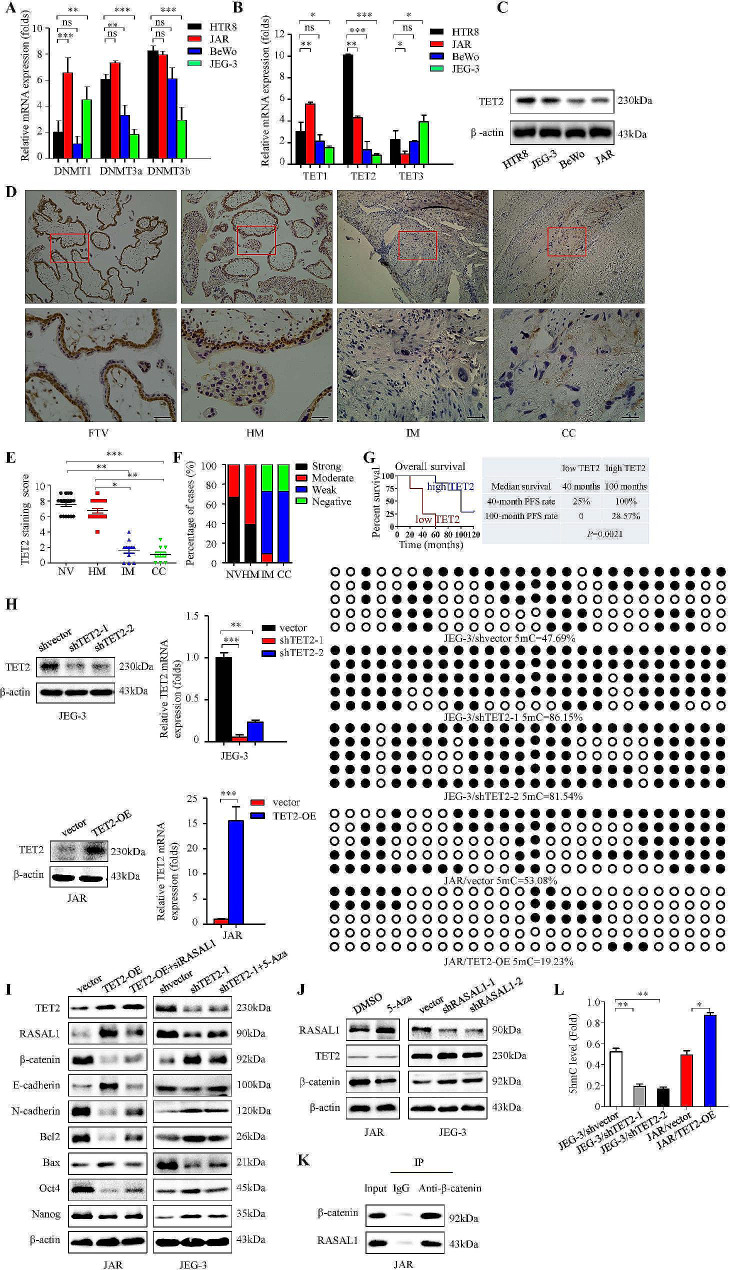
The expression of RASAL1 was reduced both at the protein and mRNA levels in CC tissues and cells compared to hydatidiform mole (HM) and invasive mole (IM). Loss of RASAL1 was attributed to its promoter hypermethylation and could be restored by 5-Aza. Knock-down of RASAL1 promoted the viability, proliferative potential, stemness and EMT phenotype of JEG-3 cells. However, induced overexpression of RASAL1 by 5-Aza significantly prohibited cell proliferation and stemness potential of the JAR cell. Additionally, the xenograft model indicated that knockdown of RASAL1 led to a remarkable increase of tumor volume and weight in comparison with its counterpart. Moreover, the stimulatory activity brought by decrease of RASAL1 could be deprived by β-catenin inhibitor XAV 939, yet the suppressive activity resulted from its promoter demethylation could be rescued by β-catenin activator BML-284, indicating that function of RASAL1 depends on β-catenin. Besides, the co-immunoprecipitation assay confirmed the physical binding between RASAL1 and β-catenin. Further investigations showed hypermethylated RASAL1 was regulated by TET2 but not DNMTs.
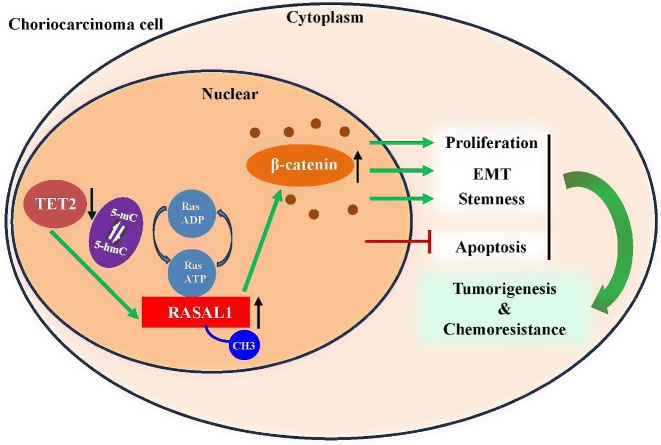
Taken together, the present data elucidated that reduced RASAL1 through its promoter hypermethylation regulated by TET2 promoted the tumorigenicity and chemoresistance of CC via modulating β-catenin both in vitro and in vivo.
伴有化疗耐药的绒癌(CC)患者通常预后较差。Ras 蛋白激活样 1(RASAL1)是否作为肿瘤促进剂或抑制剂发挥作用取决于肿瘤类型。然而,RASAL1 在 CC 化疗耐药过程中的作用及其潜在的分子机制仍不清楚。
采用 Western blot、免疫组化和 qRT-PCR 检测 RASAL1 在 CC 细胞和组织中的表达模式。MTT 法、Tunnel 法和流式细胞术分析检测细胞活力和增殖能力。此外,通过集落形成和肿瘤球体形成评估干性。应用甲氨蝶呤(MTX)检测 CC 细胞的化疗敏感性。
与葡萄胎(HM)和侵袭性葡萄胎(IM)相比,CC 组织和细胞中 RASAL1 的蛋白和 mRNA 水平均降低。RASAL1 的缺失归因于其启动子的超甲基化,5-Aza 可使其恢复。RASAL1 敲低促进了 JEG-3 细胞的活力、增殖潜能、干性和 EMT 表型。然而,5-Aza 诱导的 RASAL1 过表达显著抑制了 JAR 细胞的增殖和干性潜能。此外,异种移植模型表明,与对照组相比,RASAL1 敲低导致肿瘤体积和重量显著增加。此外,由 RASAL1 减少引起的刺激活性可被β-连环蛋白抑制剂 XAV 939 剥夺,而其启动子去甲基化引起的抑制活性可被β-连环蛋白激活剂 BML-284 挽救,表明 RASAL1 的功能取决于β-连环蛋白。此外,免疫沉淀实验证实了 RASAL1 与β-连环蛋白之间的物理结合。进一步的研究表明,TET2 调节高甲基化的 RASAL1,而不是 DNMTs。
综上所述,本研究数据表明,通过其启动子的超甲基化降低 RASAL1,通过调节β-连环蛋白,在体外和体内均促进了 CC 的致瘤性和化疗耐药性。