Division of Cancer Immunology and Microbiology, Medicine and Oncology Integrated Service Unit, School of Medicine, University of Texas Rio Grande Valley, McAllen, TX, 78504, USA.
South Texas Center of Excellence in Cancer Research (ST-CECR), McAllen, TX, 78504, USA.
J Ovarian Res. 2024 Aug 8;17(1):161. doi: 10.1186/s13048-024-01485-2.
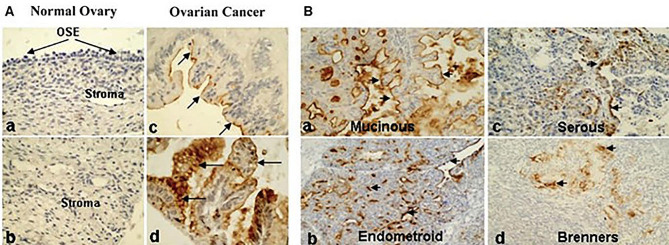
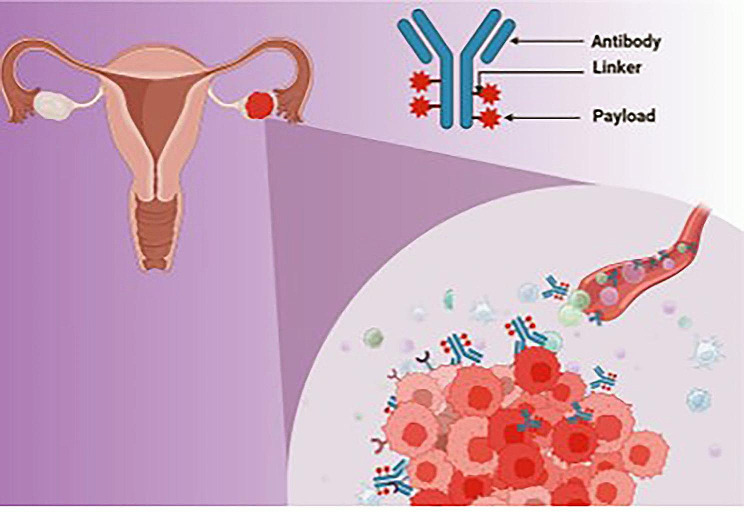
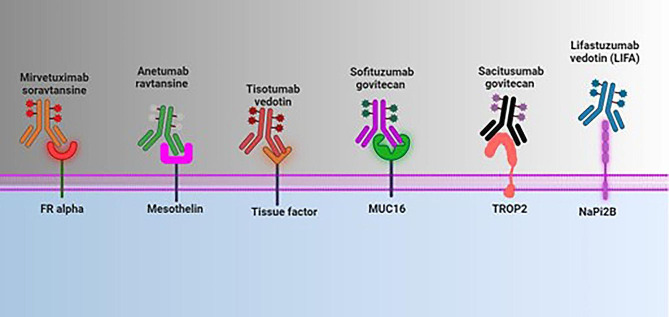
Ovarian cancer stands as the deadliest gynecologic malignancy, responsible for nearly 65% of all gynecologic cancer-related deaths. The challenges in early detection and diagnosis, coupled with the widespread intraperitoneal spread of cancer cells and resistance to chemotherapy, contribute significantly to the high mortality rate of this disease. Due to the absence of specific symptoms and the lack of effective screening methods, most ovarian cancer cases are diagnosed at advanced stages. While chemotherapy is a common treatment, it often leads to tumor recurrence, necessitating further interventions. In recent years, antibody-drug conjugates (ADCs) have emerged as a valuable tool in targeted cancer therapy. These complex biotherapeutics combine an antibody that specifically targets tumor specific/associated antigen(s) with a high potency anti-cancer drug through a linker, offering a promising approach for ovarian cancer treatment. The identification of molecular targets in various human tumors has paved the way for the development of targeted therapies, with ADCs being at the forefront of this innovation. By delivering cytotoxic agents directly to tumors and metastatic lesions, ADCs show potential in managing chemo-resistant ovarian cancers. Mucins such as MUC16, MUC13, and MUC1 have shown significantly higher expression in ovarian tumors as compared to normal and/or benign samples, thus have become promising targets for ADC generation. While traditional markers are limited by their elevated levels in non-cancerous conditions, mucins offer a new possibility for targeted treatment in ovarian cancer. This review comprehensively described the potential of mucins for the generation of ADC therapy, highlighting their importance in the quest to improve the outcome of ovarian cancer patients.
卵巢癌是致死率最高的妇科恶性肿瘤,约 65%的妇科癌症相关死亡由其导致。早期检测和诊断的困难,加上癌细胞广泛的腹膜内扩散和对化疗的耐药性,是导致该疾病高死亡率的主要原因。由于缺乏特异性症状和有效的筛查方法,大多数卵巢癌病例在晚期才被诊断出来。尽管化疗是一种常见的治疗方法,但它常常导致肿瘤复发,需要进一步干预。近年来,抗体药物偶联物(ADC)已成为靶向癌症治疗的有价值工具。这些复杂的生物疗法通过连接子将特异性靶向肿瘤特异性/相关抗原的抗体与高活性抗癌药物结合在一起,为卵巢癌治疗提供了一种有前途的方法。在各种人类肿瘤中鉴定分子靶标为靶向治疗的发展铺平了道路,ADC 处于这一创新的前沿。通过将细胞毒性药物直接递送至肿瘤和转移病灶,ADC 在治疗化疗耐药性卵巢癌方面显示出潜力。与正常和/或良性样本相比,MUC16、MUC13 和 MUC1 等黏蛋白在卵巢肿瘤中表达显著升高,因此成为 ADC 生成的有前途的靶标。虽然传统标志物受到其在非癌性条件下升高水平的限制,但黏蛋白为卵巢癌的靶向治疗提供了新的可能性。本综述全面描述了黏蛋白在 ADC 治疗中的应用潜力,强调了其在改善卵巢癌患者预后方面的重要性。