Department of Nephrology, Medical University of Lublin, Lublin, Poland.
Northwell Health, New York, NY, United States.
Transpl Int. 2024 Jul 25;37:12969. doi: 10.3389/ti.2024.12969. eCollection 2024.
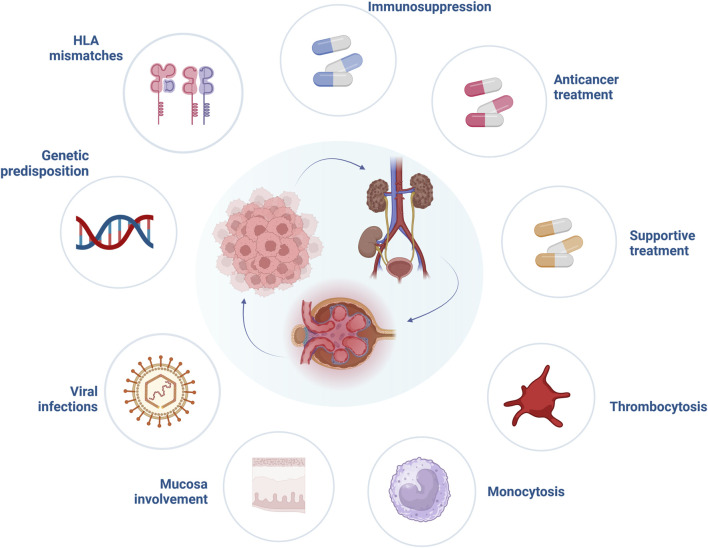
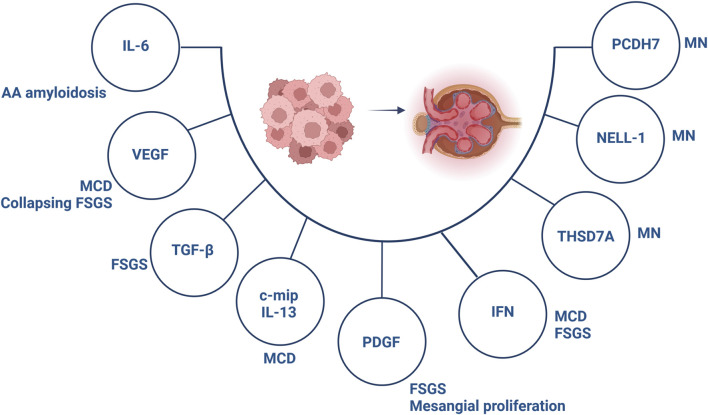
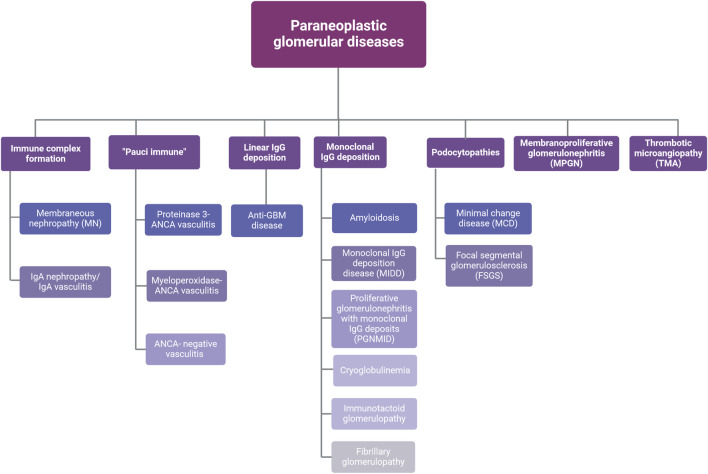
Posttransplant malignancies are an important complication of solid organ transplantation. Kidney transplant recipients are at particularly high risk of cancer development. The most relevant risk factors of carcinogenesis are the use of immunosuppressive agents and oncogenic viral infections. Additionally, immune dysregulation caused by these factors may predispose to various types of organ damage. Paraneoplastic glomerular diseases are one of the most interesting and understudied cancer manifestations. The appropriate diagnosis of paraneoplastic glomerular damage can be challenging in kidney transplant recipients, due to factors inherent to concomitant medication and common comorbidities. Recent advances in the field of molecular and clinical nephrology led to a significant improvement in our understanding of glomerular diseases and their more targeted treatment. On the other hand, introduction of novel anticancer drugs tremendously increased patients' survival, at the cost of kidney-related side effects. Our review aims to provide insights into diagnosis and treatment of paraneoplastic glomerular diseases, with a special attention to kidney transplant recipients.
移植后恶性肿瘤是实体器官移植的一个重要并发症。肾移植受者发生癌症的风险特别高。致癌的最重要危险因素是免疫抑制剂的使用和致癌性病毒感染。此外,这些因素引起的免疫失调可能使各种类型的器官损伤易感性增加。副肿瘤性肾小球疾病是最有趣和研究最少的癌症表现之一。由于同时使用药物和常见合并症的固有因素,肾移植受者中副肿瘤性肾小球损伤的适当诊断具有挑战性。分子和临床肾脏病学领域的最新进展极大地提高了我们对肾小球疾病及其更有针对性治疗的理解。另一方面,新型抗癌药物的引入极大地提高了患者的生存率,但代价是肾脏相关的副作用。我们的综述旨在深入了解副肿瘤性肾小球疾病的诊断和治疗,特别关注肾移植受者。