Taylor Brett, Tang Nanyun, Hao Yue, Lee Matthew, Peng Sen, Bybee Rita, Hartman Lauren, Garcia-Mansfield Krystine, Sharma Ritin, Pirrotte Patrick, Ma Jianhui, Parisian Alison D, Furnari Frank, Dhruv Harshil D, Berens Michael E
Cancer and Cell Biology Division, The Translational Genomics Research Institute, Phoenix, Arizona, USA.
Collaborative Center for Translational Mass Spectrometry, The Translational Genomics Research Institute, Phoenix, Arizona, USA.
Neurooncol Adv. 2024 Jun 20;6(1):vdae104. doi: 10.1093/noajnl/vdae104. eCollection 2024 Jan-Dec.
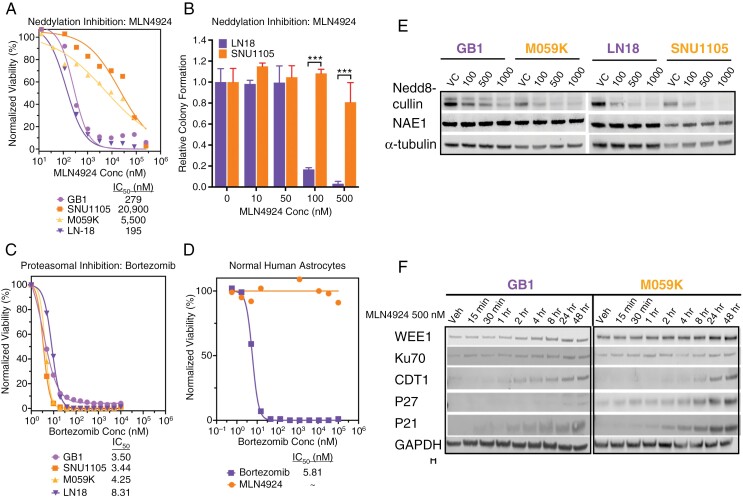
Neddylation (NAE) inhibition, affecting posttranslational protein function and turnover, is a promising therapeutic approach to cancer. We report the cytotoxic vulnerability to NAE inhibitors in a subset of glioblastoma (GBM) preclinical models and identify genetic alterations and biological processes underlying differential response.
GBM DNA sequencing and transcriptomic data were queried for genes associated with response to NAE inhibition; candidates were validated by molecular techniques. Multi-omics and functional assays revealed processes implicated in NAE inhibition response.
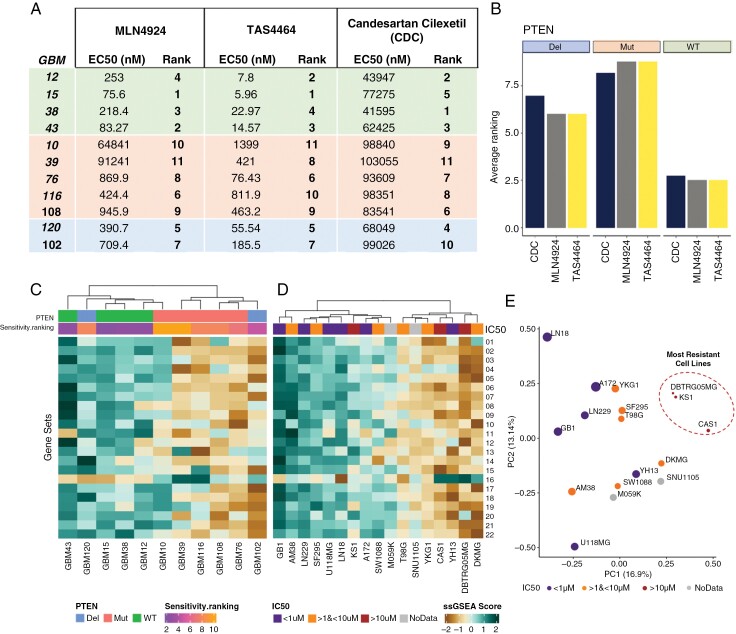
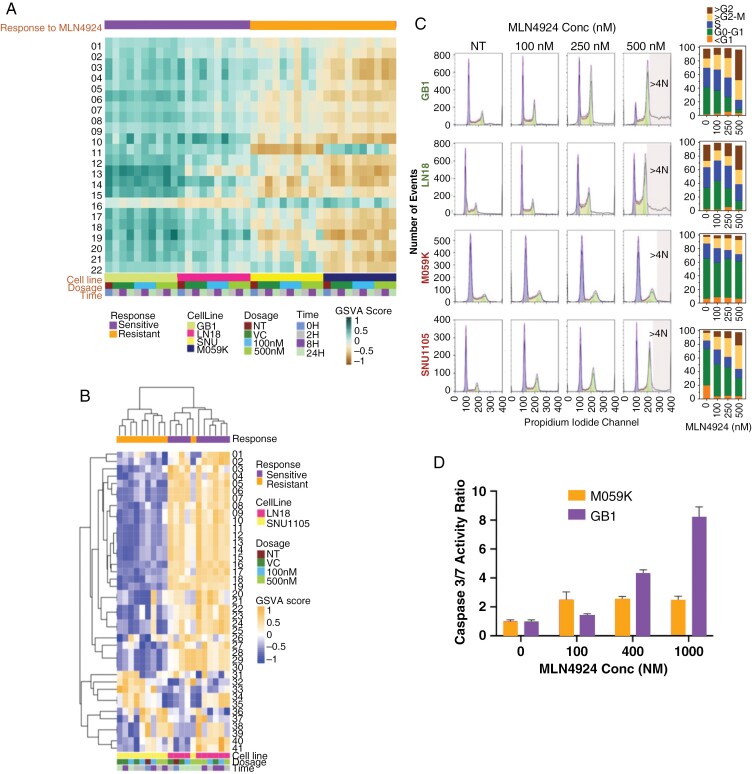
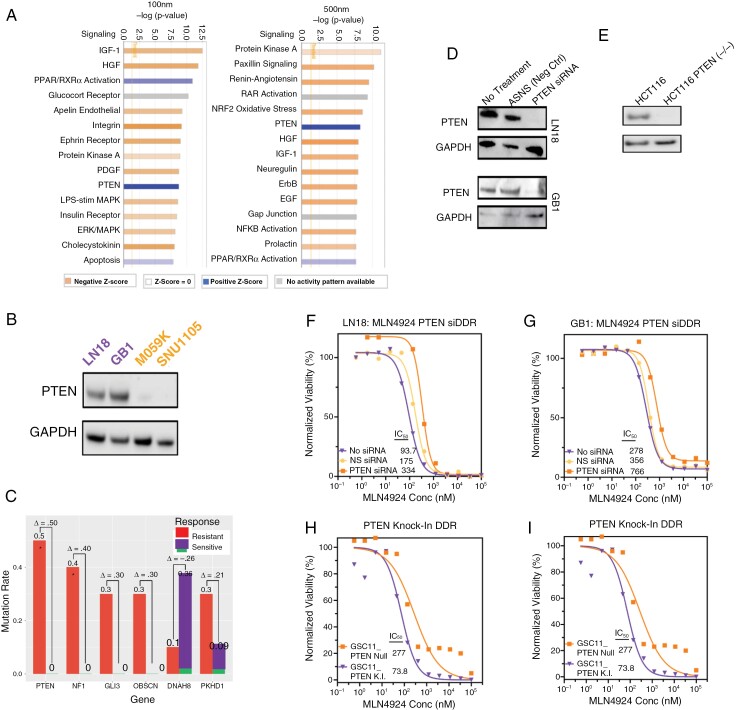
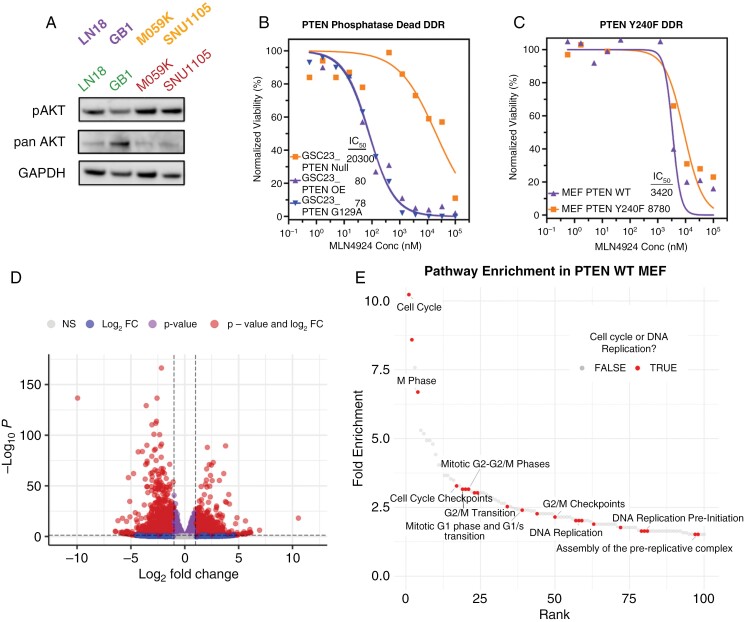
Transcriptomics and shotgun proteomics depict PTEN signaling, DNA replication, and DNA repair pathways as significant differentiators between sensitive and resistant models. Vulnerability to MLN4924, a NAE inhibitor, is associated with elevated S-phase populations, DNA re-replication, and DNA damage. In a panel of GBM models, loss of WT is associated with resistance to different NAE inhibitors. A NAE inhibition response gene set could segregate the GBM cell lines that are most resistant to MLN4924.
Loss of WT is associated with non-sensitivity to 3 different compounds that inhibit NAE in GBM. A NAE inhibition response gene set largely consisting of DNA replication genes could segregate GBM cell lines most resistant to NAEi and may be the basis for future development of NAE inhibition signatures of vulnerability and clinical trial enrollment within a precision medicine paradigm.
Neddylation(NAE)抑制作用会影响蛋白质翻译后功能及周转,是一种很有前景的癌症治疗方法。我们报告了在一部分胶质母细胞瘤(GBM)临床前模型中对NAE抑制剂的细胞毒性易感性,并确定了差异反应背后的基因改变和生物学过程。
查询GBM DNA测序和转录组数据中与NAE抑制反应相关的基因;通过分子技术对候选基因进行验证。多组学和功能分析揭示了与NAE抑制反应相关的过程。
转录组学和鸟枪法蛋白质组学表明,PTEN信号传导、DNA复制和DNA修复途径是敏感模型和耐药模型之间的重要区分因素。对NAE抑制剂MLN4924的易感性与S期细胞群增加、DNA重新复制和DNA损伤有关。在一组GBM模型中,WT的缺失与对不同NAE抑制剂的耐药性相关。一个NAE抑制反应基因集可以区分对MLN4924最耐药的GBM细胞系。
WT的缺失与对GBM中抑制NAE的3种不同化合物不敏感有关。一个主要由DNA复制基因组成的NAE抑制反应基因集可以区分对NAEi最耐药的GBM细胞系,并且可能成为在精准医学范式下未来开发NAE抑制易感性特征和进行临床试验入组的基础。