LIPME, INRAE/CNRS UMR 0441/2594, Université de Toulouse, Université Paul Sabatier Toulouse 3, UMR, Castanet-Tolosan, 31320, France.
PHIM, Université de Montpellier, IRD, CIRAD, INRAE, Institut Agro, Montpellier, France.
BMC Genomics. 2024 Aug 9;25(1):777. doi: 10.1186/s12864-024-10684-6.
Bacteria of the genus Xanthomonas cause economically significant diseases in various crops. Their virulence is dependent on the translocation of type III effectors (T3Es) into plant cells by the type III secretion system (T3SS), a process regulated by the master response regulator HrpG. Although HrpG has been studied for over two decades, its regulon across diverse Xanthomonas species, particularly beyond type III secretion, remains understudied.
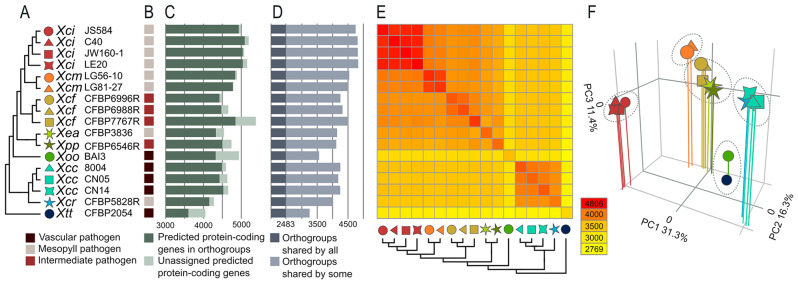
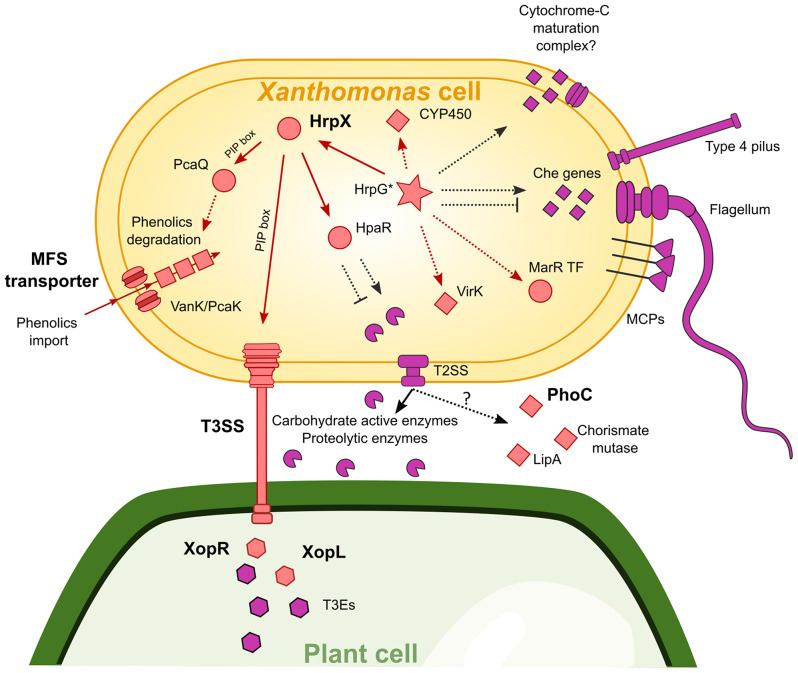
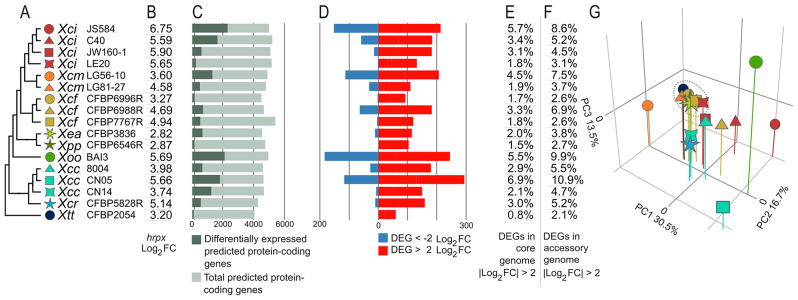
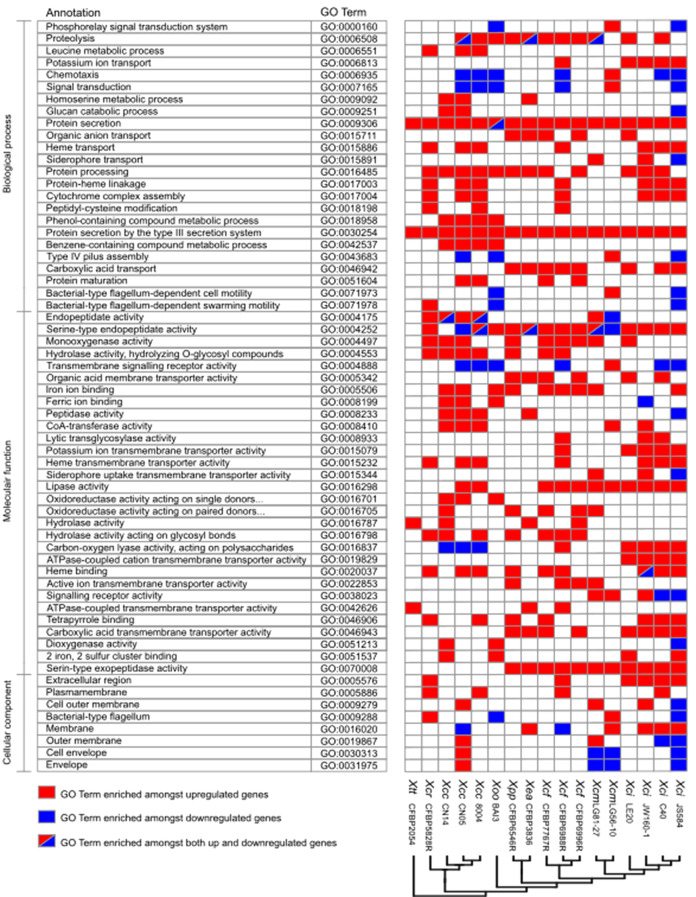
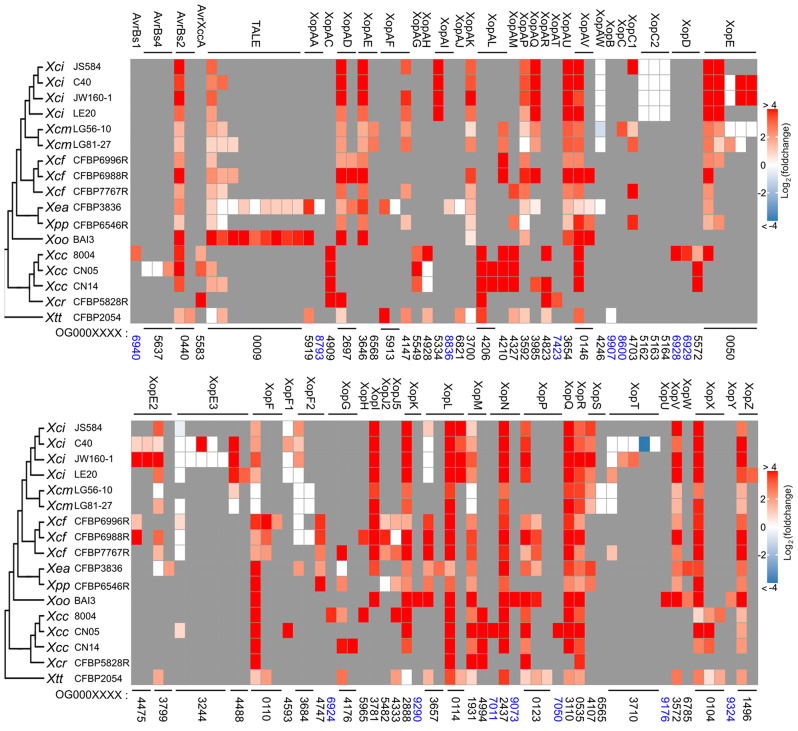
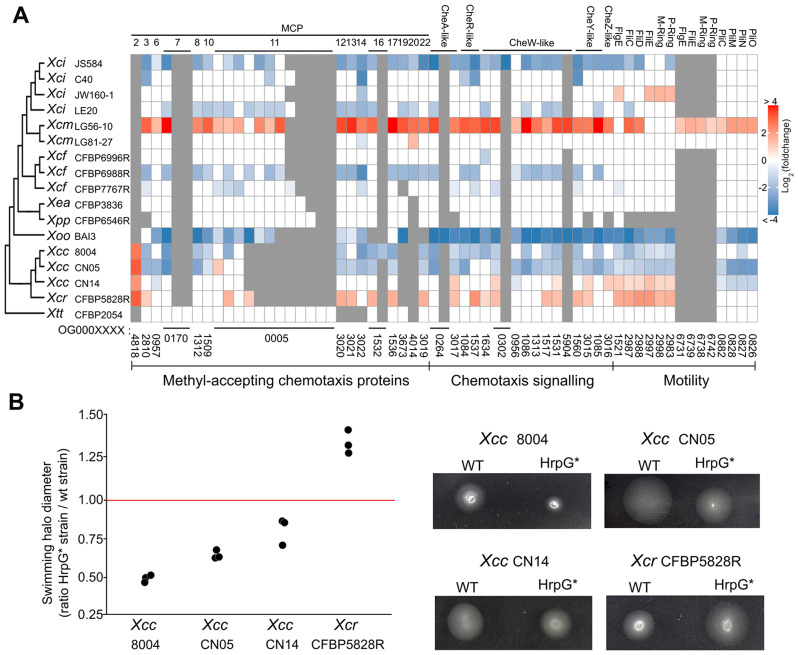
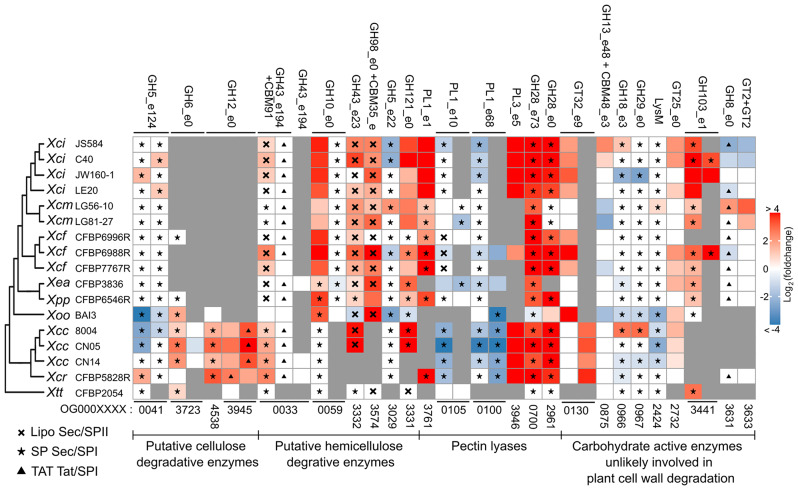
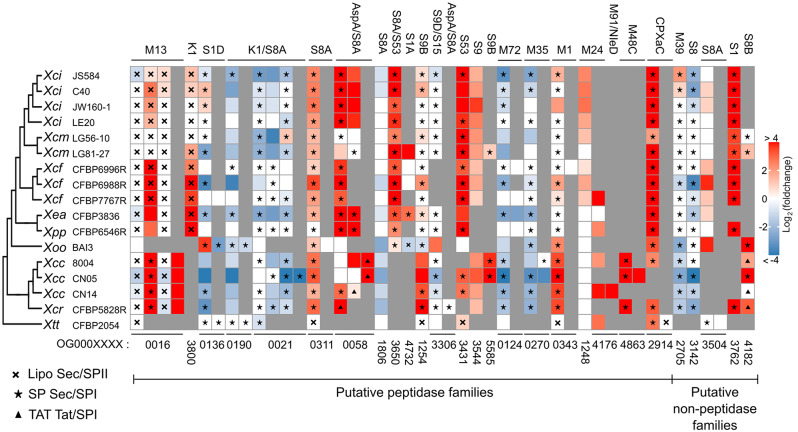
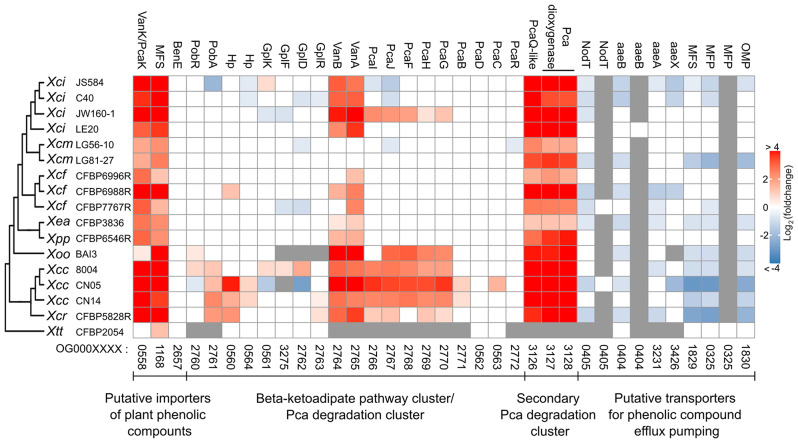
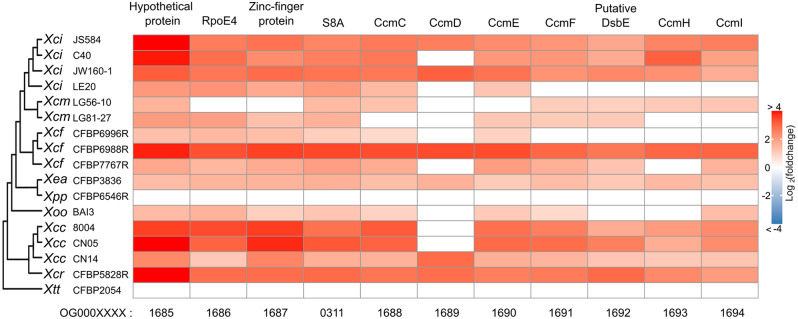
In this study, we conducted transcriptome sequencing to explore the HrpG regulons of 17 Xanthomonas strains, encompassing six species and nine pathovars, each exhibiting distinct host and tissue specificities. We employed constitutive expression of plasmid-borne hrpG*, which encodes a constitutively active form of HrpG, to induce the regulon. Our findings reveal substantial inter- and intra-specific diversity in the HrpG* regulons across the strains. Besides 21 genes directly involved in the biosynthesis of the T3SS, the core HrpG* regulon is limited to only five additional genes encoding the transcriptional activator HrpX, the two T3E proteins XopR and XopL, a major facility superfamily (MFS) transporter, and the phosphatase PhoC. Interestingly, genes involved in chemotaxis and genes encoding enzymes with carbohydrate-active and proteolytic activities are variably regulated by HrpG*.
The diversity in the HrpG* regulon suggests that HrpG-dependent virulence in Xanthomonas might be achieved through several distinct strain-specific strategies, potentially reflecting adaptation to diverse ecological niches. These findings enhance our understanding of the complex role of HrpG in regulating various virulence and adaptive pathways, extending beyond T3Es and the T3SS.
黄单胞菌属的细菌会导致各种作物的经济上重要的疾病。它们的毒性依赖于 III 型效应器(T3E)通过 III 型分泌系统(T3SS)进入植物细胞的易位,这一过程受主响应调节剂 HrpG 调控。尽管 HrpG 已经研究了二十多年,但它在不同的黄单胞菌物种中的调控组,特别是在 III 型分泌之外,仍然研究不足。
在这项研究中,我们进行了转录组测序,以探索 17 株黄单胞菌菌株的 HrpG 调控组,涵盖了六个种和九个致病变种,每个种都表现出不同的宿主和组织特异性。我们采用质粒携带的组成型表达 hrpG*,这编码了一种组成型激活的 HrpG,来诱导调控组。我们的研究结果揭示了在这些菌株中,HrpG调控组在种间和种内存在很大的多样性。除了直接参与 T3SS 生物合成的 21 个基因外,核心 HrpG调控组仅局限于另外五个基因,它们编码转录激活因子 HrpX、两个 T3E 蛋白 XopR 和 XopL、一个主要设施超家族(MFS)转运蛋白和磷酸酶 PhoC。有趣的是,参与趋化作用的基因和编码具有碳水化合物活性和蛋白水解活性的酶的基因,HrpG*的调控方式不同。
HrpG*调控组的多样性表明,黄单胞菌中 HrpG 依赖的毒性可能通过几种不同的菌株特异性策略来实现,这可能反映了对不同生态位的适应。这些发现增强了我们对 HrpG 在调节各种毒力和适应性途径中的复杂作用的理解,这些途径超出了 T3E 和 T3SS。