Zhang Yuan, Yu Peiyao, Wei Lijiao, Zhang Bing, Shen Dezhan, Zhao Zhenhua, Guo Xinbo
Agricultural Machinery Research Institute, Guangdong Engineering Technology Research Center of Precision Emission Control for Agricultural Particulates, Key Laboratory of Agricultural Equipment for Tropical Crops, Ministry of Agriculture and Rural Affairs, Chinese Academy of Tropical Agricultural Sciences, Zhanjiang 524091, China.
School of Food Science and Engineering, Guangdong Province Key Laboratory for Green Processing of Natural Products and Product Safety, Engineering Research Center of Starch and Vegetable Protein Processing Ministry of Education, South China University of Technology, Guangzhou 510640, China.
Foods. 2024 Aug 3;13(15):2458. doi: 10.3390/foods13152458.
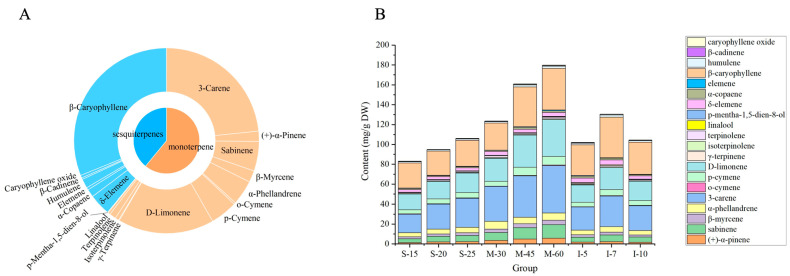
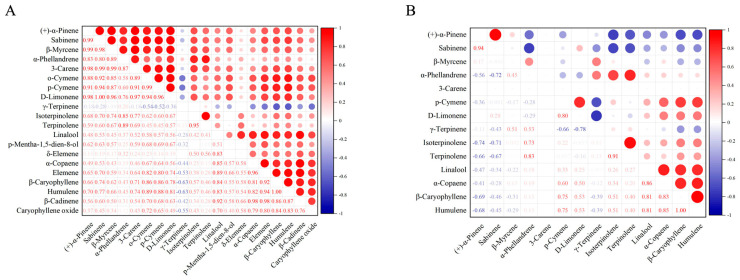
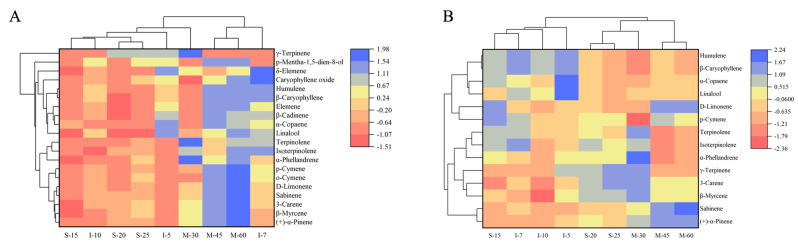
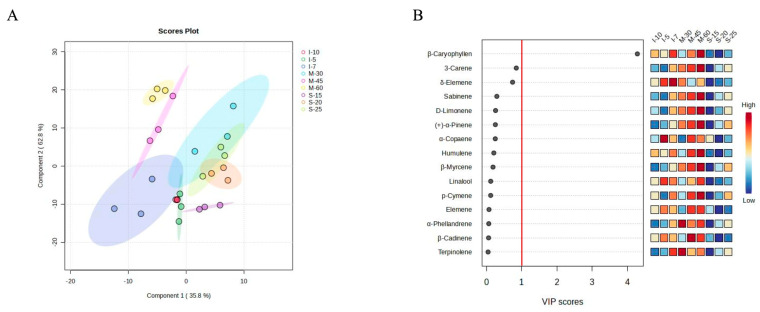
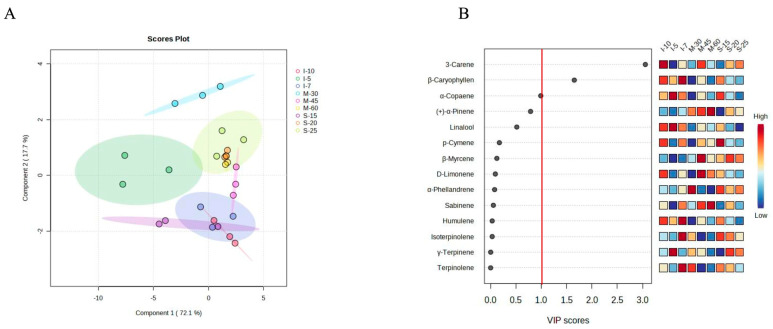
Mechanical peeling is more efficient and environmentally friendly compared to manual peeling. However, comparative studies on the quality of mechanically peeled pepper and manually peeled pepper are limited. This study utilized GC-MS to investigate the effects of immersion, steaming, and peeling machinery speed on the volatile composition of white pepper. A total of thirteen monoterpenes and seven sesquiterpenes were detected, with 3-carene, D-limonene, and sabinene being the most abundant monoterpenoids and β-caryophyllene, δ-elemene, and α-copaene being the most abundant sesquiterpenes. The total volatiles increased with longer steaming times and higher peeling machinery speeds. Compared to manual peeling or steaming followed by mechanical peeling, the volatile content of pepper was higher when using mechanical peeling alone. Additionally, relative odor activity values showed that 3-carene and D-limonene were the main contributors to flavor, with 3-carene, β-caryophyllene, and α-copaene being key volatiles responsible for flavor distinctions. This research aims to provide theoretical support for developing a superior and environmentally friendly mechanical method to replace manual labor.
与手工去皮相比,机械去皮更高效且环保。然而,关于机械去皮胡椒和手工去皮胡椒品质的比较研究有限。本研究利用气相色谱 - 质谱联用技术(GC - MS)来研究浸泡、蒸煮和去皮机械速度对白胡椒挥发性成分的影响。共检测到13种单萜类化合物和7种倍半萜类化合物,其中3 - 蒈烯、D - 柠檬烯和桧烯是含量最丰富的单萜类化合物,β - 石竹烯、δ - 榄香烯和α - 古巴烯是含量最丰富的倍半萜类化合物。总挥发性成分随着蒸煮时间延长和去皮机械速度提高而增加。与手工去皮或蒸煮后再机械去皮相比,单独使用机械去皮时胡椒的挥发性成分含量更高。此外,相对气味活性值表明,3 - 蒈烯和D - 柠檬烯是风味的主要贡献者,3 - 蒈烯、β - 石竹烯和α - 古巴烯是造成风味差异的关键挥发性成分。本研究旨在为开发一种更优且环保的机械方法以取代手工劳动提供理论支持。