School of Basic Medical Sciences, Xinxiang Medical University, Xinxiang, 453003, China; Xinxiang Key Laboratory of Tumor Vaccine and Immunotherapy, School of Basic Medical Sciences, Xinxiang Medical University, Xinxiang, 453003, China; Xinxiang Engineering Technology Research Center of Immune Checkpoint Drug for Liver-Intestinal Tumors, Henan, 453003, China.
School of Basic Medical Sciences, Xinxiang Medical University, Xinxiang, 453003, China.
Redox Biol. 2024 Sep;75:103297. doi: 10.1016/j.redox.2024.103297. Epub 2024 Aug 3.
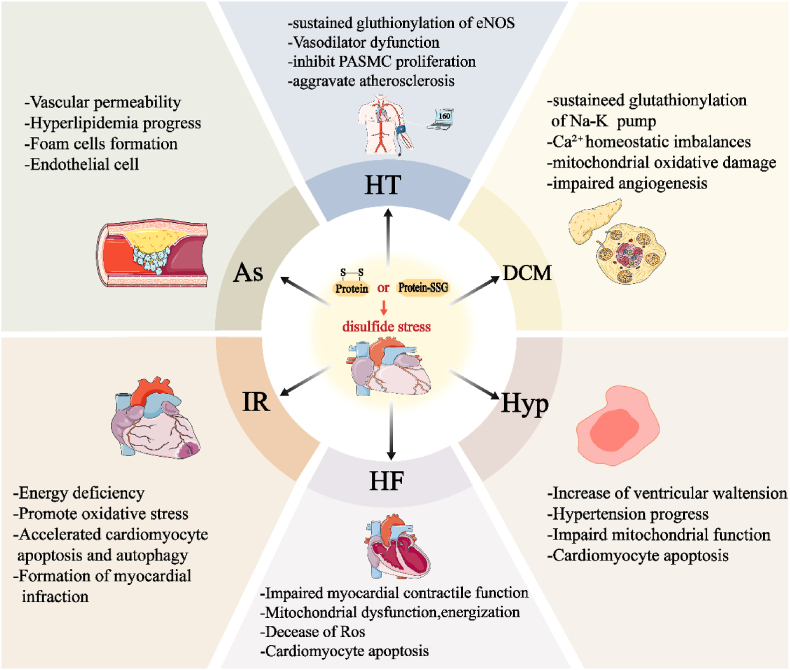
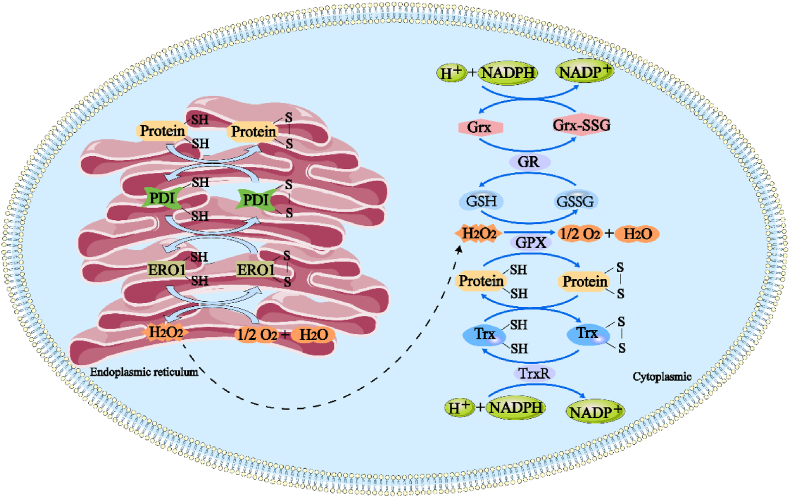
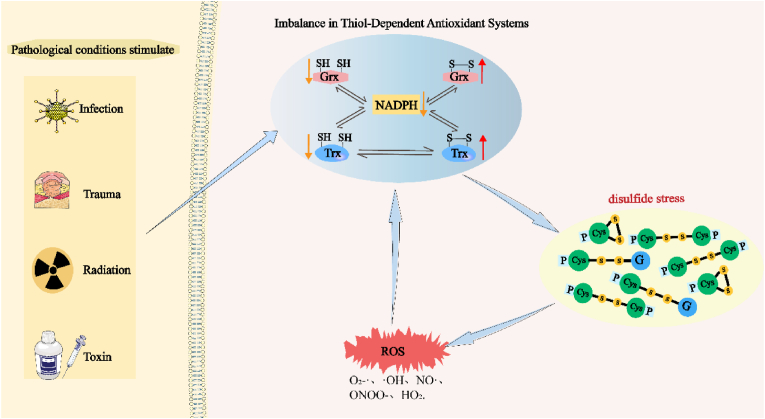
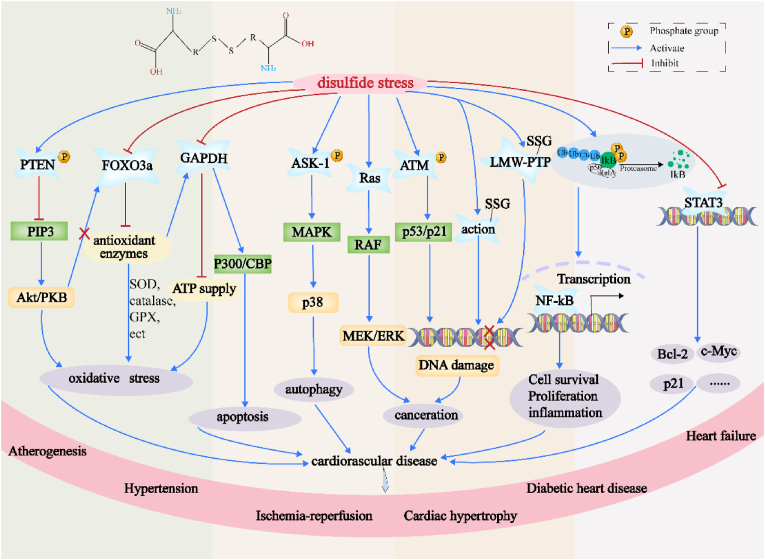
Cardiovascular disease (CVD) is one of the leading causes of mortality in humans, and oxidative stress plays a pivotal role in disease progression. This phenomenon typically arises from weakening of the cellular antioxidant system or excessive accumulation of peroxides. This review focuses on a specialized form of oxidative stress-disulfide stress-which is triggered by an imbalance in the glutaredoxin and thioredoxin antioxidant systems within the cell, leading to the accumulation of disulfide bonds. The genesis of disulfide stress is usually induced by extrinsic pathological factors that disrupt the thiol-dependent antioxidant system, manifesting as sustained glutathionylation of proteins, formation of abnormal intermolecular disulfide bonds between cysteine-rich proteins, or irreversible oxidation of thiol groups to sulfenic and sulfonic acids. Disulfide stress not only precipitates the collapse of the antioxidant system and the accumulation of reactive oxygen species, exacerbating oxidative stress, but may also initiate cellular inflammation, autophagy, and apoptosis through a cascade of signaling pathways. Furthermore, this review explores the detrimental effects of disulfide stress on the progression of various CVDs including atherosclerosis, hypertension, myocardial ischemia-reperfusion injury, diabetic cardiomyopathy, cardiac hypertrophy, and heart failure. This review also proposes several potential therapeutic avenues to improve the future treatment of CVDs.
心血管疾病 (CVD) 是人类死亡的主要原因之一,氧化应激在疾病进展中起着关键作用。这种现象通常源于细胞抗氧化系统的减弱或过氧化物的过度积累。本综述重点介绍了一种特殊形式的氧化应激——二硫键应激,它是由细胞内谷胱甘肽还原酶和硫氧还蛋白抗氧化系统失衡引发的,导致二硫键的积累。二硫键应激的产生通常是由破坏硫醇依赖性抗氧化系统的外在病理因素引起的,表现为蛋白质持续谷氨酰化、富含半胱氨酸的蛋白质之间形成异常的分子间二硫键,或硫醇基团不可逆地氧化为亚磺酸和磺酸。二硫键应激不仅会导致抗氧化系统崩溃和活性氧积累,从而加剧氧化应激,还可能通过信号通路级联反应引发细胞炎症、自噬和细胞凋亡。此外,本综述还探讨了二硫键应激对各种 CVD 如动脉粥样硬化、高血压、心肌缺血再灌注损伤、糖尿病心肌病、心肌肥厚和心力衰竭的进展的有害影响。本综述还提出了几种潜在的治疗途径,以改善 CVD 的未来治疗。